Introduction: A New Season for Aspinal of London #
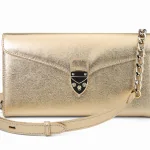
A few seasons back, Aspinal of London pulled off one of the more interesting collaborations to come out of British accessories that year: a limited-edition capsule with Olivia Palermo, unveiled at an event at Fortnum & Mason. For a brand built on the quiet confidence of English leather goods, teaming up with one of fashion’s most photographed street-style figures was a deliberate pivot toward a bigger, more international audience.
The Aspinal of London Olivia Palermo collection landed as part of the brand’s SS15 range, and it’s worth revisiting now for anyone tracking Aspinal’s design evolution or shopping the resale market for one of these pieces. We sat down with Mariya Dykalo, Aspinal’s Creative Director at the time, to get the real story behind the collection, the thinking that shaped it, and what it was actually like working with Palermo rather than the polished press-release version. What follows pulls together her account with context on where this collaboration sits in the wider luxury handbag conversation, plus the practical details buyers actually want to know.
Meet Mariya Dykalo: The Creative Force Behind Aspinal #
Dykalo’s path to Creative Director wasn’t a lateral hire from a competing house, which is part of what makes her design voice distinct. She trained for three years at a technical college in Ukraine, focused specifically on pattern cutting and fashion design, before completing a seven-year course at Lviv National Academy that culminated in a Masters in Art and Design. That’s a long, technically grounded runway before ever touching a handbag brief, and it shows in how methodically Aspinal’s silhouettes were built during her tenure.
She moved to England to study English at Chichester College and, almost by chance, spotted an internship listing for Aspinal of London. That internship turned into nine years inside the company, working up through the design ranks before she was named Creative Director in 2013. SS15 was her third full collection in that role, which matters for context: this wasn’t a debut season where a new director is still finding footing. It was a collection from someone who’d already had two full cycles to establish her point of view.
Her personal style, in her own words: fun, colourful and polished. She’s a hat person, and mentioned a Helene Berman piece with ear detailing picked up from Fenwick on Bond Street. That preference for playful accents over minimalism tracks directly with the SS15 output, which leaned into colour and print rather than the understated tan-and-black leather goods Aspinal is often associated with.
Inside the SS15 Collection: Colour, Prints and Silhouettes #
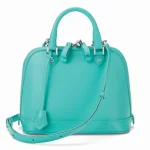
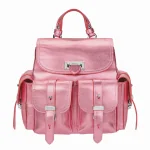
The brief, as Dykalo described it, was built around English weather. Not as a joke about rain, but as a genuine colour story moving through raindrops, thunderclouds and rainbows across the spring and summer months. That translated into neon flashes, metallic finishes and watercolour-style prints layered onto Aspinal’s existing silhouette library.
Crucially, this wasn’t a collection of new shapes. The stated focus was refining bestselling silhouettes rather than launching a fresh archive, which is a meaningfully different design exercise. Reworking an existing bag with new colour and print, while keeping the proportions and hardware placement that made it sell in the first place, requires more restraint than starting from a blank page. It also protects the brand’s “designed to be loved for a lifetime” positioning, since customers who already owned an earlier version of a silhouette weren’t being asked to abandon it, just offered a seasonal variant.
The Marylebone Tote, up close #
Dykalo named the monochrome Marylebone Tote as her personal favourite from the range, and it’s easy to see why it got the spotlight. The new medium size added an optional cross-body strap and interchangeable handles, effectively giving the owner three carry configurations from one bag. That’s a practical feature, not a gimmick, particularly for a tote positioned as a daily workhorse rather than an occasion piece.
The more distinctive detail was the tech pack option, an add-on that charges a phone or other device on the go. Aspinal had launched the original Marylebone Tech Tote back in February 2014, pairing smooth and textured black leather with a hidden interior pocket built specifically to hold the charging pack. It performed well enough that the brand carried the concept into its men’s business bag the following season, then folded it into the new midi Marylebone for SS15.
Worth noting for buyers today: this was 2014-2015 tech, built around the battery packs of that era. If you’re evaluating a secondhand Marylebone Tech Tote now, the leather may have held up fine, but don’t expect the charging hardware to be useful without checking compatibility, and factor in that a built-in battery adds weight the standard tote doesn’t carry.
Beyond the tote #
The published interview material centres almost entirely on the Marylebone, and Aspinal didn’t release a full line sheet detailing every piece in the capsule. What is confirmed is that the collection’s colour and print treatment was applied across Aspinal’s existing signature silhouettes, not isolated to a single bag. If you’re hunting for other pieces from this specific capsule on the resale market, expect smaller leather goods and crossbody styles carrying the same watercolour and metallic treatments as the tote, but treat any listing claiming to be part of the Palermo capsule with the same scrutiny you’d apply to authenticating a designer bag from any era: the paperwork and photography matter as much as the seller’s description.
Working with Olivia Palermo: The Collaboration Story #
Dykalo was direct about the logic behind the pairing: Palermo was, in her words, one of the few women who can build an entire outfit around her accessories, which made her a natural fit for a brand whose bags are meant to be the focal point of an outfit rather than a backdrop to it. She called it “a match made in heaven,” and whatever you think of that phrase, the strategic logic holds up. A brand trying to translate British craftsmanship into global relevance benefits from a face who reads as international rather than strictly domestic.
The collaboration also had a charitable component that’s easy to overlook in the coverage: proceeds from the limited-edition bag went to ADCAM (Asociación de Desarrollo, Comercio Alternativo y Microcrédito), a nonprofit established in 2005, with funds directed toward building a new school in Africa. That’s a meaningful detail for anyone weighing this collaboration against the flood of celebrity handbag tie-ins that followed in later years, many of which offered little beyond a name on a hangtag.
On the question of how hands-on Palermo actually was in the design process, the honest answer is that the public record here is thin. Dykalo began to describe Palermo’s level of involvement, indicating she wanted to be closely engaged, but the specifics of her direct input, whether that meant sign-off on colours, involvement in the print development, or input on the charging-pack feature, were never fully detailed in the materials available. If you see marketing copy claiming Palermo personally designed specific elements of the bag, treat that as brand storytelling rather than a confirmed fact. What’s verifiable is the styling and campaign role; the depth of her hands-on design contribution isn’t something Aspinal documented in detail.
Design Details That Define Aspinal’s Craftsmanship #
The recurring phrase from Dykalo, “designed to be loved for a lifetime,” is the closest thing Aspinal has to a design manifesto, and it’s worth taking at face value because it shows up in the product decisions rather than just the messaging. The interchangeable strap system on the Marylebone isn’t a seasonal novelty, it’s a structural choice that extends how long a single bag stays useful as the owner’s needs change. The tech pack function is the same idea applied to utility rather than aesthetics: a bag that adapts to how people actually use their phones rather than assuming a static lifestyle.
This is also where the collection’s craftsmanship claims get tested against reality. A tote that converts between three carry styles needs hardware, particularly the strap attachment points, robust enough to handle repeated reconfiguration without the leather stretching or the fittings loosening. That’s a harder engineering problem than it sounds, and it’s the kind of detail worth checking closely on any secondhand Marylebone: look at the D-rings and strap clasps for wear, and test the handle attachment points for give before buying.
Why This Collection Matters for Luxury Handbag Lovers #
Positioned against its contemporaries, Aspinal sat, and largely still sits, in the accessible-luxury tier below houses like Mulberry’s upper range or Smythson, but above mass-market totes from brands like Longchamp. A celebrity collaboration at that price point, built around a genuine style icon rather than a manufactured influencer partnership, was a comparatively bold move for a British leather goods brand in 2015. Tory Burch and Anya Hindmarch were running similar accessible-luxury playbooks around the same period, but Aspinal’s tech-tote angle gave it a functional differentiator those competitors weren’t pursuing as aggressively.
For collectors, the appeal isn’t just the Palermo name. It’s the combination of a limited production run, a charitable cause attached to the proceeds, and an early example of smart-bag functionality before that became a broader industry trend. That combination tends to hold interest on the resale market longer than a collaboration that was purely cosmetic, because there’s a genuine story and a genuine feature set behind it, not just a name printed on a dust bag.
Craftsmanship and Materials #
Aspinal has built much of its brand identity around “Made in England” manufacturing and leather sourced and finished domestically, a positioning that matters more to serious handbag buyers than it might initially seem. English leather tanning tends to favour a firmer, more structured hand-feel compared to the softer, more slouchy leathers common in some Italian-made totes, which is consistent with the Marylebone’s boxy, structured silhouette holding its shape over time rather than collapsing with use.
The combination of smooth and textured black leather on the original Tech Tote is a practical design choice as much as an aesthetic one: textured leather panels hide surface scuffing better than smooth leather in high-contact areas like the base and side edges, while smooth leather panels showcase the print and colour work that defined the SS15 range. If you’re evaluating a piece from this collection secondhand, check the textured sections first for cracking, since that’s usually where a heavily used tote shows its age before the smooth panels do. Also inspect stitching density along the handle attachment points and the base seams, since that’s the first place a working tote (rather than an occasion bag) tends to fail structurally.
The honest downside worth flagging: “Made in England” and hand-finishing claims don’t automatically mean the hardware and zips match the standard you’d get from a house like Hermès or [[[Bottega Veneta](/brands/bottega-veneta-sardine-bag/)](/buying-guides/5-bottega-veneta-bags-worth-knowing-before-you-buy/)](/buying-guides/party-season-bags-4-silhouettes-guide/) at a much higher price point. Aspinal’s craftsmanship is genuinely solid for its market tier, but buyers coming from a background in Kelly bags or top-tier European leather goods should calibrate expectations to what this brand is actually promising, which is durability and design intelligence rather than ultra-luxury hardware finishing.
FAQ: Aspinal of London x Olivia Palermo Collection #
When was the Aspinal of London Olivia Palermo collection released? It launched as part of Aspinal’s SS15 range, unveiled at an event held at Fortnum & Mason. Exact retail dates for individual pieces weren’t published in Aspinal’s own materials, but the season places it firmly in spring/summer 2015.
Is the collection still available to buy new? No. This was a limited-edition capsule tied to a specific season and a charitable cause, so it isn’t part of Aspinal’s current range. Anyone interested in owning a piece today is shopping the resale and pre-owned market.
What made the Marylebone Tote in this collection different from a standard Marylebone? The SS15 medium Marylebone added interchangeable handles and an optional cross-body strap, plus an optional tech pack that could charge a phone on the go, using a hidden interior pocket built specifically for that purpose.
How much did pieces from the collection cost? Aspinal didn’t publish specific pricing for the Palermo capsule in the materials reviewed here. As a general reference point, Aspinal totes in that period typically sat in the low-to-mid hundreds of pounds, positioning the brand below top-tier European leather houses but above mass-market totes. For accurate historical pricing, archived retailer listings or resale platforms with sold-price history are more reliable than relying on memory of launch-era press coverage.
How involved was Olivia Palermo in designing the bag? Publicly available information confirms she wanted to be closely involved and that the collaboration was framed as a genuine creative partnership, but the specific details of her design input weren’t fully documented in the available interview material. Treat marketing claims about her exact contribution with some caution.
Which charity benefited from the collaboration? Proceeds from the limited-edition bag supported ADCAM (Asociación de Desarrollo, Comercio Alternativo y Microcrédito), a nonprofit established in 2005, with funds directed toward building a new school in Africa.
Who was the Creative Director behind the SS15 collection? Mariya Dykalo, who joined Aspinal as an intern and worked there for nine years before being named Creative Director in 2013. SS15 was her third full collection in that role.
Is this collection worth seeking out on the resale market? If the price is right and the piece authenticates cleanly, yes, particularly for the Tech Tote’s early smart-bag functionality and the collaboration’s genuine backstory. Just inspect hardware, strap attachment points and leather condition carefully, since these were working totes rather than display pieces, and verify any capsule-specific claims against reference photography rather than taking a listing description at face value.
Related Articles #
- Why Buy a Pre-Loved Hermès Kelly Bag? Hidden Benefits
- Why the Chanel Crossbody Bag Never Goes Out of Style
- Best Tory Burch Handbags Every Closet Needs (2024)
- 4 Reasons Bally Bags Are Worth Buying: A Buying Guide
- Popular Handbag Brands: Which One Is Right for You?
Related guides
- Online Bag Authentication: What Photos Can and Cannot Prove
- Blue Crocodile Lady Dior Tote: Buying Guide
- Chanel Vintage Flap Bag Buying Guide: Navy Lambskin
- Louis Vuitton Palm Spring Backpack: Complete Buyer's Guide
- How to Buy an Authentic Luxury Bag from China Safely
- New vs Pre-Owned Luxury Bags: Which Route Is Right for You?
- Chanel Bag Guide: What to Know Before You Buy
- Luxury Bag Houses


Keyword index