Introduction: A Sandal That Sparked a Global Debate #

Few [[[luxury footwear](/buying-guides/why-golden-goose-sneakers-so-expensive/)](/buying-guides/types-of-designer-heels-2025-style-guide/)](/buying-guides/best-luxury-sneakers-2026-buying-guide/) stories have traveled as far, or as fast, as Prada’s Kolhapuri sandal controversy. What started as a ninety-second moment on a Milan runway in June 2025 turned into a sustained conversation about who gets credit, and who gets paid, when a global house borrows from a regional craft tradition.
Nearly a year later, Prada has answered its critics with something more substantial than a press statement. In 2026, the house launched a “Made in India” collection built with the artisans whose work it was accused of copying, alongside a multi-year training program and formal acknowledgment of the Kolhapuri chappal’s heritage. Whether that response resolves the underlying tension, or simply manages it, is worth examining closely. Below is the full arc of the story: what happened, why it escalated the way it did, what Prada has actually committed to, and an honest read on what it means for how luxury brands source inspiration going forward.
The Original Controversy: Milan Fashion Week, June 2025 #
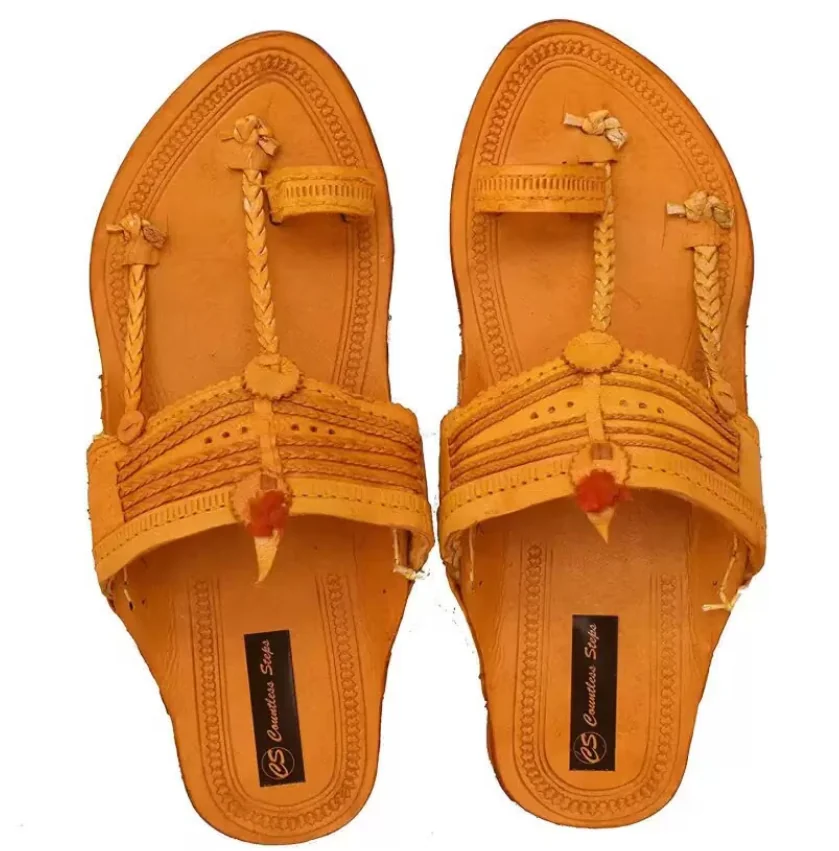
On June 22, 2025, Prada presented its Spring-Summer 2026 menswear collection in Milan. Among the pieces was a pared-back leather sandal with a braided T-strap, styled as minimalist “leather footwear” in the show notes. Within hours of the images circulating, the resemblance to India’s Kolhapuri chappal was impossible to miss.
The braiding pattern, the toe loop, the overall silhouette, all of it tracked closely with a design that has been made by hand in Kolhapur, Maharashtra for centuries. What drew attention wasn’t just the similarity itself. It was the absence of any reference to where that design came from. No mention of Kolhapur, no nod to the artisans or the craft, nothing in the show materials that acknowledged the sandal’s origins. For a house with Prada’s resources and design research capacity, that omission read to many as a choice rather than an oversight.
Why the Backlash Went Viral #
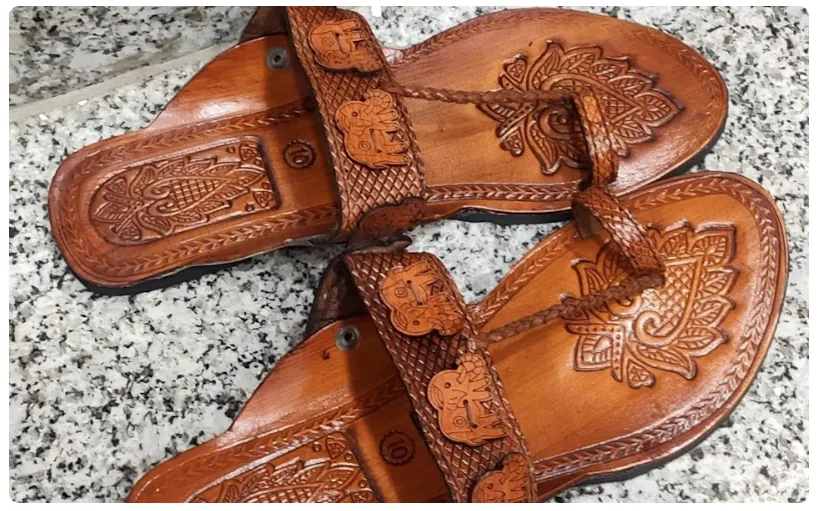
The story didn’t stay in fashion-industry circles for long. It moved onto X and Instagram almost immediately, and the reaction was less about aesthetics than about money and recognition.
The pricing gap did most of the work. Kolhapuri chappals typically sell for ₹300 to ₹1,500 (roughly $4 to $18) in local markets, made by artisans who often earn ₹250 to ₹400 ($3 to $5) per pair. Prada’s version was expected to carry a price near ₹1.2 lakh ($1,400). One X user, @WokePandemic, called it a “shameless cash grab,” a phrase that stuck and got repeated across thousands of posts. Another account, @thebetterindia, framed the human side of it more plainly: “These iconic sandals, handmade in Maharashtra for centuries, tell stories of tradition, resilience, and royalty. Yet, artisans still battle low profits and fading recognition.”
Fashion watchdog account Diet Sabya added fuel by resurfacing runway footage alongside a broader pattern of Western labels drawing on Indian design without credit. Then Kareena Kapoor Khan posted a photo of her own Kolhapuri chappals with the caption “Sorry not Prada… but my OG Kolhapuri,” which pulled the story well outside fashion media and into mainstream celebrity news. Political figures joined too. BJP MP Dhananjay Mahadik described it as a “serious infringement on Maharashtra’s cultural identity” and called for legal action. The hashtag #KolhapuriChappals became the shorthand for the entire debate.
What made this cycle different from other appropriation controversies was the specificity of the outrage. This wasn’t a vague “that looks familiar” reaction. People could point to an exact product, an exact price gap, and an exact community of artisans being left out of the profit.
The Heritage Behind Kolhapuri Chappals #
To understand why this landed the way it did, it helps to know what a Kolhapuri chappal actually represents. The design dates back to the 12th century and is traditionally made by artisans from marginalized communities, including the Dalit Chamar community, using hand-braided leather with no synthetic materials in its original form. The construction, the tanning methods, and the braiding techniques have been passed down through generations, largely unchanged.
In 2019, Kolhapuri chappals were granted Geographical Indication (GI) status in India, a legal recognition tying the product to its specific region and craft lineage, similar in spirit to protections for Champagne or Parmigiano-Reggiano in Europe. The problem, as IP expert Sonal Madan pointed out during the controversy, is that GI status has no automatic enforcement outside India. A brand overseas can reference a similar silhouette without violating any law, even if it clearly draws on protected regional heritage.
Fashion historian Swati Sharma’s framing of cultural appropriation is useful here: it occurs when “elements of culture, particularly those of historically oppressed or colonized societies, are adopted by dominant groups without consent, attribution, or compensation.” That’s precisely the gap Prada’s silence created. The craft has real, documented cultural weight and legal recognition at home, but essentially no protection once it crosses into a European luxury house’s design vocabulary. That imbalance, more than the design similarity itself, is what turned this into a genuine controversy rather than a passing style comparison.
2026 Update: Prada’s “Made in India” Response #
In May 2026, Prada launched a “Made in India” collection developed in direct collaboration with artisans based in Maharashtra and Karnataka. This is the house’s clearest corrective action to date, and it goes further than a typical crisis-response gesture.
A few specifics worth noting:
- Prada is funding a three-year training program for 180 Indian artisans, run in partnership with the National Institute of Fashion Technology (NIFT) and other craft bodies, focused on design development and technical skill-building rather than just production capacity.
- The collection formally credits the Kolhapuri chappal’s centuries-old heritage in its marketing and product storytelling, something the original June 2025 collection notably did not do.
- Prada states the line complies with GI-tag requirements tied to the Kolhapuri craft, which is a meaningful shift from operating in the enforcement gap that let the original design go unattributed.
- This launch comes as the Prada Group reported a 14% revenue increase in early 2026, while continuing to integrate Versace following its acquisition, so the brand is making this move from a position of commercial strength, not financial distress.
From a craft-preservation standpoint, the training investment is the part that matters most long term. Pricing controversies fade from headlines quickly; skill transfer and design ownership don’t, if the program is run in good faith over its full three years.
What This Means for Prada and the Luxury Industry #
Here’s where I’ll push back on treating this as a clean redemption story, because it isn’t one yet.
Prada deserves real credit for doing more than most houses do after an appropriation controversy. A funded, multi-year training program with a named institutional partner (NIFT) is a concrete commitment, not a one-season PR gesture. Formally crediting the Kolhapuri chappal and structuring the collection around GI compliance is a meaningful reversal from the silence that defined the original launch. Compare this to how most luxury brands handle these moments: a vague apology, maybe a quiet SKU pull, and no further public accounting. Prada’s response is more substantial than that baseline, and it should be acknowledged as such.
That said, a few things temper my enthusiasm. First, we don’t yet know the retail pricing of the “Made in India” line or how artisan compensation compares to the ₹250-₹400 per pair figure that fueled the original outrage. Fair credit without fair pay would just be a more polished version of the same problem. Second, the timing is convenient. This launch arrives while Prada is posting a 14% revenue increase and absorbing Versace, meaning the brand has both the cash and the motivation to rehabilitate its image at a moment when it’s already winning financially. That doesn’t make the artisan program insincere, but it does mean the goodwill narrative is doing commercial work for the brand at the same time it’s doing cultural repair.
For the wider luxury industry, this sets a real precedent, and it’s one worth watching closely. Houses have gotten away with “inspired by” sourcing from non-Western craft traditions for decades, largely because, as the GI enforcement gap shows, there’s rarely a legal mechanism forcing accountability. What changed here wasn’t law, it was public pressure amplified by social media and a celebrity moment that made the story impossible to ignore. If Prada’s artisan program becomes a genuine template, expect it to be pointed to often, both as a benchmark for future collaborations and as a comparison point when the next brand gets caught borrowing without credit. If it turns out to be underfunded or quietly discontinued after the news cycle moves on, it will just as quickly become the example of performative repair. Three years is long enough to tell the difference, and I’d treat any brand claiming this as a resolved story before then with some skepticism.
FAQ: Prada’s Kolhapuri Sandal Controversy Explained #
What is the Prada Kolhapuri sandals controversy? It’s the backlash that followed Prada’s June 2025 Milan Fashion Week show, where the brand presented leather sandals closely resembling India’s traditional Kolhapuri chappal without crediting the design’s origin, prompting accusations of cultural appropriation.
What are Kolhapuri chappals? They are handcrafted leather sandals with a centuries-old history rooted in Kolhapur, Maharashtra, traditionally made by artisans from marginalized communities including the Dalit Chamar community. They received Geographical Indication (GI) status in India in 2019.
Did Prada apologize for the sandal design? Prada did not issue an immediate public apology when the controversy broke in June 2025. Its more substantial response came in 2026 with the “Made in India” collection, which formally credits the Kolhapuri heritage and involves direct artisan collaboration.
What is Prada’s “Made in India” collection? Launched in May 2026, it’s a sandal collection developed with artisans in Maharashtra and Karnataka, compliant with GI-tag requirements, and paired with a Prada-funded three-year training program for 180 artisans run with NIFT.
Does the GI tag on Kolhapuri chappals offer legal protection internationally? No. GI status protects the craft within India but has no automatic enforcement abroad, which is part of why Prada’s original design could go to market without legal consequence despite the resemblance.
Has Prada’s response resolved the controversy? It’s addressed the core criticisms, lack of credit and lack of artisan involvement, more directly than most brands do after similar controversies. Whether it fully resolves the issue depends on pricing transparency and artisan compensation details that haven’t been fully disclosed yet, plus whether the training program is sustained over its full three-year term.
Related Articles #
- YSL Tribute Sandals: Why This Iconic Style Still Reigns
- Golden Goose Sneakers: Are They Worth the Price?


Keyword index