Introduction#

Some fashion controversies fade in a news cycle. This one didn’t. When Prada sent a braided leather sandal down its Milan runway in June 2025, the internet didn’t see minimalist menswear — it saw a Kolhapuri chappal, the handcrafted sandal that’s been made in Maharashtra and Karnataka for roughly eight centuries, suddenly rebranded as European luxury with no mention of where the design actually came from.
Nearly a year later, Prada is back with an answer: a “Made in India” collection built with the artisans it was accused of erasing, complete with training programs and formal GI-tag recognition. The question worth asking now isn’t whether the backlash was justified — it was — but whether Prada’s response actually fixes anything, or just quiets the conversation long enough for the next scandal to take its place. For collectors and resale watchers, that distinction matters. Brand reputation is a real input into resale value, and this saga is a case study in how quickly it can move in either direction.
Here’s the full timeline, the cultural context most coverage skipped, and an honest read on what the 2026 collaboration means for Prada going forward.
The Original Controversy: Prada’s Kolhapuri-Inspired Design (June 2025)#
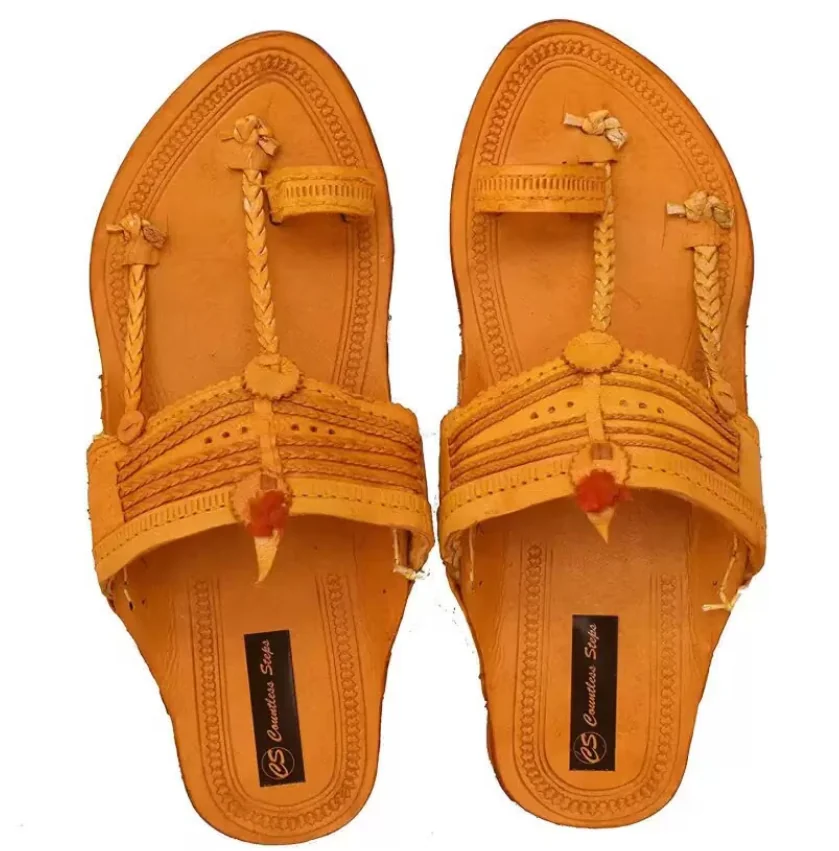
On June 22, 2025, at Milan Fashion Week, Prada unveiled its Spring-Summer 2026 menswear collection. Buried among the tailoring and accessories was a slipper-style sandal with a braided T-strap — described in Prada’s own materials simply as “leather footwear.”
That description didn’t hold up for long. The sandal’s braiding pattern, toe-loop construction, and overall silhouette were nearly identical to the Kolhapuri chappal, a handcrafted leather sandal that originated in Kolhapur, Maharashtra, and carries centuries of regional and artisanal history. Kolhapuris aren’t a niche reference — they’re worn across India by farmers, office workers, and increasingly by younger urban buyers rediscovering traditional footwear. It’s the equivalent of a heritage item most Indians grew up seeing on their own streets, suddenly reappearing on a European runway with a designer price tag and zero attribution.
Prada didn’t credit the design’s origin in its show notes or initial press materials. That omission — not the resemblance itself — is what turned a design conversation into a controversy.
Why the Backlash Went Viral#
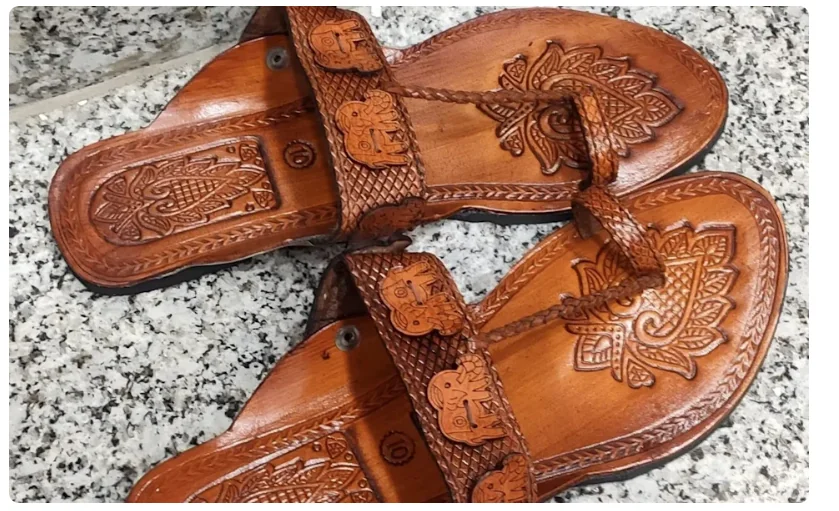
The story didn’t stay in fashion circles. It became a viral cultural moment within days, for three overlapping reasons.
The price gap was the spark. Authentic Kolhapuri chappals typically sell for ₹300 to ₹1,500 (roughly $4 to $18) in local Indian markets. Reports on Prada’s version pointed to a price point near ₹1.2 lakh, or about $1,400. That’s not a stylistic upgrade — it’s a nearly 100x markup on a design lifted from artisans who, by most accounts, earn somewhere around ₹250 to ₹400 (about $3 to $5) per pair they make. Once that math started circulating, “inspiration” was a hard sell.
Social media did what social media does. X and Instagram lit up almost immediately, with users identifying the sandal as a Kolhapuri chappal before most fashion outlets had even published on it. The hashtag #KolhapuriChappals trended alongside memes and pointed commentary. One widely shared post from @WokePandemic called the launch a “shameless cash grab.” Fashion watchdog account Diet Sabya added fuel by resurfacing runway footage next to side-by-side comparisons of traditional chappals, framing it within a longer pattern of Western luxury houses borrowing from South Asian design without credit.
Celebrity amplification pushed it past the fashion bubble. Kareena Kapoor Khan posted a photo of her own Kolhapuri chappals on Instagram captioned “Sorry not Prada…but my OG Kolhapuri.” It was short, sharp, and it worked — the post moved the story out of fashion-industry commentary and into mainstream entertainment news, which is a big part of why this controversy had more staying power than most.
There was also a political dimension. BJP MP Dhananjay Mahadik called the design a “serious infringement on Maharashtra’s cultural identity” and pushed for legal action, which added institutional weight to what started as an online callout.
Cultural Appropriation vs. Cultural Inspiration: The Bigger Debate#
This is where I’ll give you the honest editorial take rather than the diplomatic one: Prada’s initial silence was the actual failure here, not the design resemblance on its own.
Luxury fashion borrows constantly. Runways are full of references to regional dress, historical uniforms, and craft traditions from around the world, and a lot of that borrowing is legitimate creative dialogue. Fashion historian Swati Sharma’s framing is the one I’d use to judge these cases: cultural appropriation happens when elements of a culture — particularly one that’s been historically marginalized or economically disadvantaged relative to the borrower — are adopted without consent, attribution, or compensation. All three were missing in Prada’s original launch.
Kolhapuri chappals were granted Geographical Indication (GI) status in India in 2019, which is meant to legally protect the name and craft heritage tied to the region. But as IP specialists have pointed out, GI status doesn’t carry international enforcement power. A GI tag protects artisans in Indian courts; it does nothing to stop a European luxury house from referencing the same design abroad. That’s a real gap in global IP law, and it’s the mechanism that let this happen in the first place.
What makes this particular case sting more than most appropriation debates is the economics. This isn’t an abstract question of representation — it’s artisans earning a few dollars per pair while a design nearly identical to their work sells for over a thousand. Designer Ritu Beri’s response gets at the actual fix: not outrage for its own sake, but structural change — royalty-sharing, co-branding, and formal credit built into the business relationship, not just the marketing copy.
I’d also flag the more optimistic view some artisans themselves expressed, because it’s worth taking seriously. Artisan Shivaraj Soudagar noted that global attention on Kolhapuri craftsmanship, even attention sparked by controversy, could genuinely globalize demand for the real thing — provided the people making them actually see the benefit. That “provided” is the entire ballgame, and it’s exactly what the 2026 collection needed to prove.
Prada’s Response: The 2026 ‘Made in India’ Collection#
Nearly a year after the runway show, Prada launched its answer: a “Made in India” collection developed directly with Kolhapuri artisans in Maharashtra and Karnataka. A few specifics worth knowing:
- The collection formally credits the Kolhapuri chappal’s origins and complies with GI-tag requirements, which is the attribution piece that was missing from the original launch.
- Prada is funding a three-year training program for 180 Indian artisans, run in partnership with NIFT (National Institute of Fashion Technology) and other bodies, focused on design development and technical skill-building rather than just production labor.
- The launch landed in the same window as broader financial news for the Prada Group, which reported a 14% revenue increase in early 2026 while continuing to integrate [Versace](/brands/versace-eros-pour-femme-fragrance-launch/) following its acquisition — context that matters if you’re tracking the group’s overall trajectory, even if it’s not directly tied to this specific collaboration.
Credit where it’s due: this is a materially better response than most brands manage after an appropriation controversy. A lot of houses issue an apology, quietly shelve the product, and move on. Prada instead built an actual artisan partnership with training infrastructure attached to it, which is the kind of structural response critics like Ritu Beri were asking for.
That said, I’d hold off on calling it a full correction until there’s more transparency on compensation. The training program is real and specific. What’s less clear from what Prada has published is exactly how artisans are being paid relative to retail pricing on the finished product, and whether the royalty-sharing model critics called for is actually in place or whether this is closer to a fair-wage manufacturing partnership dressed in more generous language. Those are two very different things, and the difference matters if you’re evaluating this as genuine repair versus well-executed reputation management.
What It Means for Prada’s Reputation and Resale Value#
For collectors and resale-market watchers, controversies like this tend to move value in two ways, and it’s worth separating them.
Short-term, the original scandal was reputationally costly. Cultural appropriation callouts that reach celebrity and political commentary — as this one did with Kareena Kapoor Khan and MP Dhananjay Mahadik — create the kind of brand association that shows up in how a house is discussed for months afterward, independent of sales figures. That’s not nothing for a heritage brand whose value proposition is built partly on taste and cultural credibility.
Medium-term, Prada’s follow-through is what actually determines whether this becomes a footnote or a lasting mark. A brand that responds to appropriation criticism with a real artisan partnership, documented training investment, and GI-tag compliance is doing meaningfully more repair work than a brand that issues a statement and disappears. If Prada sustains this program past its initial launch window and is transparent about artisan compensation over time, I’d expect this to age as a recoverable, even reputation-neutral event — the kind of thing serious collectors file under “handled it” rather than “avoid this brand.”
For resale specifically, I haven’t seen evidence that the original controversy meaningfully dented resale values on existing Prada pieces, and that tracks with how these stories typically play out — appropriation controversies generate a lot of social media heat but rarely translate into resale-market repricing unless they compound with broader brand mismanagement. The 14% revenue growth reported alongside the Versace integration suggests the controversy didn’t dent Prada’s commercial momentum either. Where I’d watch closely is the “Made in India” line itself: if it’s positioned and priced thoughtfully, with real artisan collaboration visible in the storytelling, it has a chance to become a genuinely interesting collector category — a rare instance of a controversy producing a collection with more cultural substance than the brand’s average seasonal drop. If it comes across as controversy-driven marketing dressed up as reconciliation, it likely underperforms and gets forgotten quickly.
My honest verdict: Prada handled the aftermath better than most luxury houses do, but “better than most” is a low bar in this industry. The original failure — launching a near-identical reproduction of a protected regional craft without a word of attribution — was avoidable and should never have made it past internal review at a house with Prada’s resources. The 2026 collection is a genuine step toward accountability, not just optics, but it arrived a year late and only after sustained public pressure. That sequence — harm, backlash, then repair — is not the same as getting it right the first time, and it’s worth remembering the next time a major house references a non-Western craft tradition on a runway.
FAQ#
What exactly caused the Prada Kolhapuri sandals controversy? Prada showed a braided leather sandal at Milan Fashion Week on June 22, 2025, that closely resembled the traditional Kolhapuri chappal from Maharashtra and Karnataka, without crediting the design’s Indian origins. The lack of attribution, combined with the steep price difference compared to authentic Kolhapuris, drove the backlash.
How much did Prada’s sandals cost compared to real Kolhapuri chappals? Authentic Kolhapuri chappals typically sell for ₹300–₹1,500 ($4–$18) in India. Prada’s version was reported to carry a price point of around ₹1.2 lakh (roughly $1,400), which became a major flashpoint in the controversy.
Did Prada apologize or respond to the criticism? Prada’s initial response was largely silence on the design’s origins. The more substantive response came almost a year later, in May 2026, with the launch of a “Made in India” collection developed with Kolhapuri artisans, including GI-tag compliance and a funded artisan training program.
What is the Prada “Made in India” collection? It’s a 2026 collaboration between Prada and artisans in Maharashtra and Karnataka, formally crediting Kolhapuri chappal heritage and complying with GI-tag requirements. It includes a Prada-funded, three-year training program for 180 artisans, run with NIFT and other partner organizations.
Is the “Made in India” collection available now? Yes, it launched in May 2026 as an active collection, positioned specifically as a response to the 2025 controversy rather than a standard seasonal release.
Has the controversy affected Prada’s resale value or brand reputation? There’s no clear evidence the controversy dented Prada’s broader commercial performance — the Prada Group reported 14% revenue growth in early 2026. Reputationally, how this affects long-term perception depends largely on whether the artisan partnership and compensation model prove durable rather than a one-time PR response.
Related Articles#
- How Pre-Owned Luxury Fashion Is Reshaping the Industry
- Why Are Golden Goose Sneakers So Expensive? Real Reasons
- Prada Buys Versace: Inside the €1.25B Luxury Merger
- Designer Handbag Trends 2025: What’s Actually Worth Buying


Keyword index