Introduction #
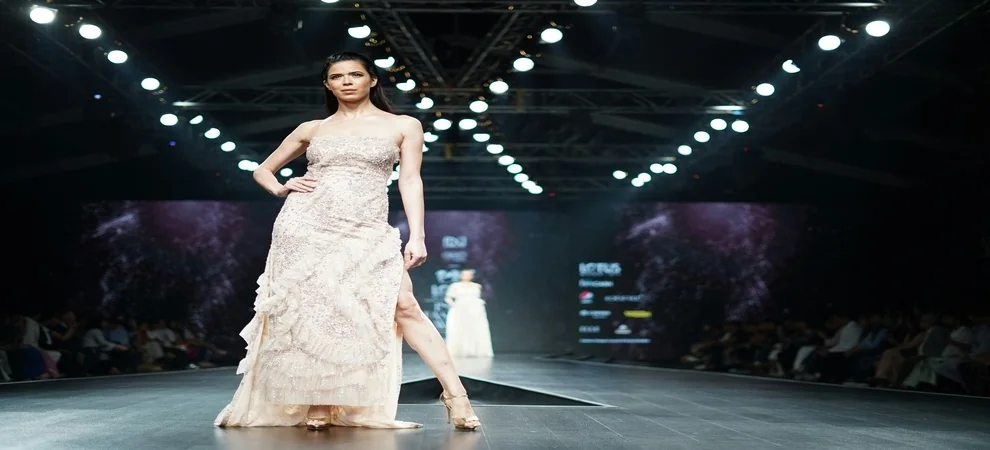
Australian Fashion Week has never been short on drama, but the 2025 edition tested the event’s survival instincts more than any season before it. Just months out from showtime, industry whispers turned into headlines: would AFW even happen this year? The answer came wrapped in a story of last-minute rescue, corporate reshuffling, and a fashion council stepping into a void left by its longtime producer.
Against that backdrop, AFW 2025 also carried real emotional weight. A tribute to Carla Zampatti, one of Australian fashion’s most enduring names, gave the week a sense of legacy and continuity that cut through the commercial noise. And in a signal of where the industry’s money and attention are heading, Shark Beauty stepped in as a new principal partner, pairing runway spectacle with backstage tech in a way AFW hasn’t seen from previous sponsors.
For anyone who follows Australian design, or who tracks how fashion weeks reinvent themselves to stay relevant, 2025 is a genuinely interesting case study. Here’s the full picture: how AFW got here, who’s backing it, what nearly went wrong, and what actually walked the runway.
From Local Showcase to Global Platform: The History of Australian Fashion Week #
AFW’s origin story is unglamorous by design. Simon Lock, a PR consultant with a background in ski journalism rather than couture, launched the event in 1996 with the specific goal of giving Australian designers a stage that didn’t require flying to Europe to be taken seriously. It was not an instant success. British fashion writer Susan Owens famously nicknamed it “Fashion Weak,” a jab that stung precisely because it wasn’t entirely unfair. Early seasons were logistically rough, under-resourced, and viewed with skepticism by an industry used to looking overseas for validation.
What changed the trajectory was Mercedes-Benz. The automaker’s backing turned the event into Mercedes Australian Fashion Week, and the association did double duty: it gave the week a veneer of European polish, and it told international buyers and press that this was worth their time. Credibility, in fashion weeks as in most industries, is often borrowed before it’s earned.
The bigger structural shift came in 2005, when Lock sold the event to IMG, the same company behind fashion weeks in New York, London, and Milan. That sale mattered more than a change of ownership on paper. IMG brought scheduling discipline, an international buyer and press network, and the operational muscle to run a week that could sit credibly alongside the majors. For nearly two decades, that partnership defined AFW’s identity as a professionally run, globally plugged-in event — which is exactly why its abrupt end in late 2024 caused so much anxiety heading into 2025.
The Sponsorship Timeline: From Mercedes-Benz to Shark Beauty #
Sponsors don’t just fund an event like AFW — they shape its tone. Tracking the naming-rights history is almost a shortcut to tracking how the Australian fashion industry itself has changed.
- 1996–2005, Mercedes-Benz. The founding partner. Its involvement gave a scrappy regional event instant international legitimacy and set the template for luxury-brand naming rights in Australian fashion.
- Mid-2000s–2010s, Rosemount Estate. Under Rosemount Australian Fashion Week, the tone shifted toward lifestyle and hospitality — garden-party glamour paired with runway shows, reflecting a more relaxed, distinctly Australian take on fashion-week culture.
- 2020–2022, Afterpay. This is the partnership that actually changed consumer behavior. Afterpay’s buy-now-pay-later model turned runway looks into instantly shoppable product, pushing AFW toward a see-now-buy-now format at exactly the moment digital retail was accelerating industry-wide.
- 2023–2024, Pandora. The jewelry brand’s tenure leaned into identity and personal storytelling rather than pure spectacle, a softer, more narrative-driven sponsorship era.
- 2025, Shark Beauty. The current chapter. Shark’s tools-and-tech background points AFW toward performance and innovation rather than lifestyle indulgence — styling lounges, backstage tech activations, and a beauty-meets-fashion pitch that’s more Silicon Valley than garden party.
Read in sequence, the pattern is clear: AFW has moved from borrowed European prestige, to lifestyle branding, to fintech-driven accessibility, to tech-forward beauty partnerships. Each sponsor reflects what was culturally ascendant at the time, and Shark Beauty’s arrival suggests the next phase is about performance tech and content-ready backstage moments as much as the clothes themselves.
The Australian Fashion Council: A New Beginning for AFW #
The sponsorship story alone doesn’t explain 2025’s biggest structural change. In late 2024, IMG confirmed it was exiting as producer after roughly twenty years running the event. That left a real gap — not a sponsor gap, but an operational one, since IMG had handled scheduling, venue logistics, and international press relations for two decades.
The response was the formation of the Australian Fashion Council (AFC), a new industry body assembled specifically to take over production and give the local industry direct ownership of its own flagship event, rather than outsourcing it to a multinational producer. It’s a meaningful shift: less polished corporate machinery, more industry self-governance, with all the funding and logistical uncertainty that transition implies in year one.
Inside AFW 2025: Near-Cancellation Drama and the Carla Zampatti Tribute #
The IMG exit is the direct cause of the “will it even happen” narrative that dogged AFW through early 2025. Losing a producer with two decades of institutional knowledge, existing venue relationships, and sponsor pipelines is not a small gap to fill on short notice. Industry reporting through the lead-up months painted a genuinely uncertain picture — funding needed to be secured, a venue and production team assembled, and designers reassured that a 2025 show was actually going to happen, all under a brand-new organizing body with no prior track record running an event of this scale.
That the AFC pulled it off at Carriageworks in Sydney’s Eveleigh, the venue AFW has used in recent years, says something about the depth of industry investment in keeping the week alive. It also means 2025 should be read as a transition year rather than business as usual: expect a leaner operation, more visible reliance on principal sponsors like Shark Beauty to cover costs IMG’s scale previously absorbed, and probably some rough edges as the AFC finds its footing.
The Carla Zampatti tribute gave the week its emotional center. Zampatti was one of the true architects of Australian fashion’s professional era — a designer whose four-decade career helped define what local ready-to-wear could look like on an international stage, and whose death in 2021 left a genuine gap in the industry’s sense of itself. A tribute built around her legacy at a week that itself nearly didn’t happen carried extra resonance: it framed 2025 as a moment about continuity as much as reinvention. Her daughter, designer Bianca Spender, has carried the family’s design sensibility forward in her own label, which made the tribute feel less like a static retrospective and more like a living thread connecting AFW’s earliest, most establishment-defining era to its uncertain present.
Runway Trends and Standout Moments at AFW 2025 #
Style-wise, AFW 2025 leaned into a few clear directions rather than scattering across trends for their own sake.
- Tailoring with movement. Sharp, structured silhouettes softened by draping and asymmetric cuts — a middle ground between the strict tailoring cycles of recent years and a growing appetite for ease.
- Earth-and-outback palette. Ochres, rust, sun-bleached neutrals, and deep greens dominated over the saturated brights that have cycled through past seasons, a color story that reads as distinctly Australian rather than borrowed from European trend forecasts.
- Technical and sustainable fabrics. Increased use of recycled and technical textiles, reflecting broader industry pressure on sustainability credentials, paired in places with fluid natural fibers for contrast.
- Accessories as statement pieces. Structured top-handle and box-style bags showed up repeatedly as finishing pieces on otherwise minimal outfits — a reminder that Australian labels are increasingly styling accessories the way European maisons do, treating the bag as the outfit’s punctuation mark rather than an afterthought. Anyone who tracks how runway accessory silhouettes filter down into what buyers chase on the resale and pre-owned market will recognize the pattern: structured, architectural bag shapes tend to have real staying power once they’ve had a runway moment.
Designer-wise, the week leaned on a mix of established names and emerging labels, consistent with the AFC’s stated goal of using its first year to showcase both industry stability and new talent — a sensible strategy for a transition year where the safest bet was letting the clothes, not the production drama, hold the headlines.
History of Australian Fashion Week #
Zooming out from origin story to full timeline, AFW’s three decades break into fairly distinct eras. The founding era (1996–2005) was about proving the concept existed at all — that Australia could sustain a fashion week rather than just exporting its best designers to show elsewhere. The IMG era (2005–2024) was about professionalization: consistent scheduling, international buyer attendance, and a production standard that let AFW sit on calendars alongside the traditional “big four” without embarrassment.
Within that IMG era, a few inflection points stand out. The 2020–2021 seasons forced a pivot to digital and hybrid formats during pandemic restrictions, a shift that, combined with the Afterpay partnership, accelerated AFW’s embrace of livestreamed, shoppable content years before that became standard practice at other fashion weeks globally. Alumni from that period and earlier — designers like [Zimmermann](/buying-guides/designer-beachwear-buying-guide/), Dion Lee, and Romance Was Born — used AFW as a launchpad before establishing international wholesale and retail footprints, which is arguably the strongest evidence for AFW’s stated mission actually working: it produced designers who no longer need it.
The 2024–2025 transition marks the third era, defined by industry self-governance through the AFC rather than an external producer. It’s too early to call this era’s defining characteristic, but the near-cancellation scare and reliance on a single principal beauty sponsor suggest a leaner, more financially exposed model than the IMG years — one worth watching over the next two or three seasons before drawing conclusions about long-term stability.
Official Sponsors and Partners #
For 2025, the sponsor structure looks different from the single-naming-rights model of earlier decades, reflecting both the AFC’s fresh start and the tighter budget realities of a first-year producer.
- Principal partner: Shark Beauty. The headline sponsor, providing backstage styling tools and beauty tech activations, and lending the week its 2025 branding emphasis on performance and innovation.
- Producing body: Australian Fashion Council. Not a sponsor in the traditional sense, but the organization now responsible for financing and running the week after IMG’s exit — arguably the most consequential “partner” this year given its role in whether the event happened at all.
- Venue: Carriageworks, Sydney. The week’s home base in recent years, an industrial-heritage arts venue in Eveleigh that’s become synonymous with AFW’s runway aesthetic.
- Legacy retail and fintech ties. Earlier retail-facing partnerships, particularly the Afterpay-era shift toward shoppable runway content, continue to influence how current sponsors and participating labels approach livestream and e-commerce integration, even without Afterpay itself in the naming-rights seat.
The honest read here: 2025’s sponsor roster is thinner than the IMG-backed years, which tracks with the transition-year narrative. Whether the AFC can diversify its sponsor base beyond a single principal partner will likely determine how sustainable this new model is past year one.
FAQ #
When did Australian Fashion Week start, and who founded it? AFW launched in 1996, founded by Simon Lock. It began as a regional showcase and grew into Australia’s most prominent fashion event.
Why was AFW 2025 almost cancelled? IMG, the producer that had run AFW since acquiring it in 2005, announced its exit in late 2024. The newly formed Australian Fashion Council had to secure funding and logistics on a tight timeline to keep the 2025 event alive.
Who is the 2025 sponsor of Australian Fashion Week? Shark Beauty is the principal partner for 2025, succeeding Pandora (2023–2024), Afterpay (2020–2022), Rosemount Estate, and the founding sponsor, Mercedes-Benz.
What was the Carla Zampatti tribute at AFW 2025? A dedicated tribute honoring designer Carla Zampatti, one of Australian fashion’s most influential figures, who died in 2021. It highlighted her decades-long legacy and connected to her daughter, designer Bianca Spender.
Where is Australian Fashion Week held? Recent editions, including 2025, have been staged at Carriageworks in Sydney’s Eveleigh precinct.
Who runs Australian Fashion Week now? The Australian Fashion Council, a newly formed industry body, took over production after IMG’s 2024 exit, marking the first time in nearly two decades that AFW is run by a local industry organization rather than an external producer.
Related Articles #
- Dubai Fashion Week SS26: Heritage Meets Global Glamour
- How Pre-Owned Luxury Fashion Is Reshaping the Industry
- Dior Granville Bag Review: Honest Take After Years
- Milan Fashion Week Fall/Winter 2015: Top Runway Moments
- 8 Emily in Paris Designer Bags You Can Actually Buy
Related guides
- Online Bag Authentication: What Photos Can and Cannot Prove
- Blue Crocodile Lady Dior Tote: Buying Guide
- Chanel Vintage Flap Bag Buying Guide: Navy Lambskin
- Louis Vuitton Palm Spring Backpack: Complete Buyer's Guide
- How to Buy an Authentic Luxury Bag from China Safely
- New vs Pre-Owned Luxury Bags: Which Route Is Right for You?
- Chanel Bag Guide: What to Know Before You Buy
- Luxury Bag Houses

Keyword index