Introduction #
Every serious wardrobe eventually runs into the same problem: you’ve spent real money on pieces built to last decades, but the way you store them between wears often undoes half of what you paid for. I’ve seen a barely-worn Chanel jacket ruined by a wire hanger, an Hermès scarf permanently creased from being tossed in a drawer under sweaters, and a wedding dress yellowed after five years in a sealed plastic bag from the bridal shop. None of these were manufacturing flaws. They were storage mistakes.
[[[[Designer clothing](/brands/mulberry-brand-history/)](/brands/louis-vuitton-bags-quiz/)](/brands/lauras-closet-carolina-herrera-floral-gown-outfit/)](/brands/best-luxury-designer-clothing-brands/) is engineered with better fabrics, cleaner construction, and finishing details that cheaper pieces skip, which is exactly why it responds so visibly to neglect. A silk lining shows oxidation faster than polyester. Natural fibers absorb humidity and hold creases longer than synthetics. And if resale or consignment value matters to you, condition is the single biggest factor buyers and appraisers look at, more than brand or even rarity in many cases.
This guide breaks storage down by garment type because “hang it up” or “fold it neatly” isn’t specific enough advice for pieces this varied. A cashmere coat and a leather jacket have almost opposite storage needs. Below you’ll find what I actually do with my own closet, plus the checklist I run through before anything goes into long-term storage.
Storing Evening Gowns & Wedding Dresses #
Formalwear is the category people get most wrong, usually because it’s worn once or twice a year and then forgotten. Here’s the sequence that actually protects it.
- Clean before storing, always. Even if a gown looks spotless, invisible residue from perfume, deodorant, or skin oils oxidizes over time and can set into permanent yellow-brown stains you won’t see until you unpack the dress years later. Use a cleaner who specifically handles couture and beaded fabrics, not a standard dry cleaner.
- Choose hanging or boxing based on the fabric, not convenience. Structured gowns with boning or heavy beadwork (think Valentino couture or embellished Dior) should be boxed flat, because hanging puts sustained strain on the shoulder seams and can distort the bodice over months. Simpler silk or crepe gowns with a fitted bodice can hang safely if you use a padded, contoured hanger with the internal support straps clipped in.
- Use acid-free boxes and tissue, not the box it came in. Retail boxes and cardboard bridal preservation kits are often not truly acid-free despite marketing claims. Look for lignin-free, pH-neutral tissue and boxes specifically labeled for textile archiving.
- Stuff strategically, not generously. Loosely pad the bodice, sleeves, and any structured areas with crumpled acid-free paper to hold shape and prevent sharp folds. Overstuffing is as bad as underpadding, it stretches the fabric.
- Skip the plastic garment bag. This is the most common wedding dress mistake I see. Sealed plastic traps moisture and off-gasses chemicals that yellow fabric over time. A breathable cotton muslin bag or cloth box does the job without the risk.
- Store somewhere genuinely cool and dry. Attics and basements are the two worst places in most homes, one runs hot and dry, the other damp. A closet interior wall, away from exterior temperature swings, is usually your best option.
Storing Cashmere Sweaters & Coats #
Knitwear has one main enemy: gravity. The second is moths, and the two problems require different fixes.
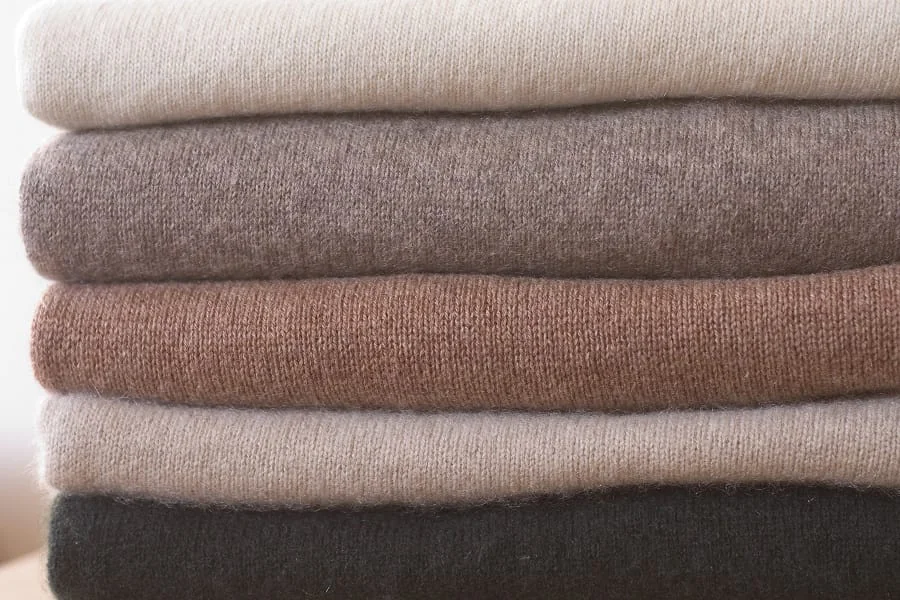
Fold, don’t hang. This is non-negotiable for anything knit. Hanging a cashmere sweater, even on a padded hanger, lets the weight of the fabric pull down over weeks and months, stretching the shoulders and neckline out of shape. I’ve watched a $2,000 cashmere coat develop hanger dimples in the shoulders after a single season on a hook. Fold flat, ideally with acid-free tissue between folds for anything with embroidery or delicate trim, and stack no more than four or five sweaters per pile so the bottom pieces don’t get crushed.
Clean before storage, every time, even if the garment looks fine. This is the part people skip and regret. Moths aren’t attracted to clean wool, they’re attracted to the food residue, skin oils, and sweat trapped in worn fibers. A cashmere sweater stored dirty for a season is essentially a moth buffet.
Use breathable cotton storage bags with a secure closure rather than leaving items exposed on open shelving. This keeps moths and dust out while letting the wool breathe, which matters because sealed plastic bins trap humidity and can cause mildew, especially in coastal or humid climates. Cedar blocks or lavender sachets inside the bag are a reasonable deterrent, though they lose potency over time and need refreshing every few months, they’re not a permanent fix.
Storing Leather Jackets #
Leather behaves more like skin than fabric, which is a useful way to think about its storage needs. It needs support, airflow, and stable humidity, and it punishes you slowly rather than immediately when those needs aren’t met.
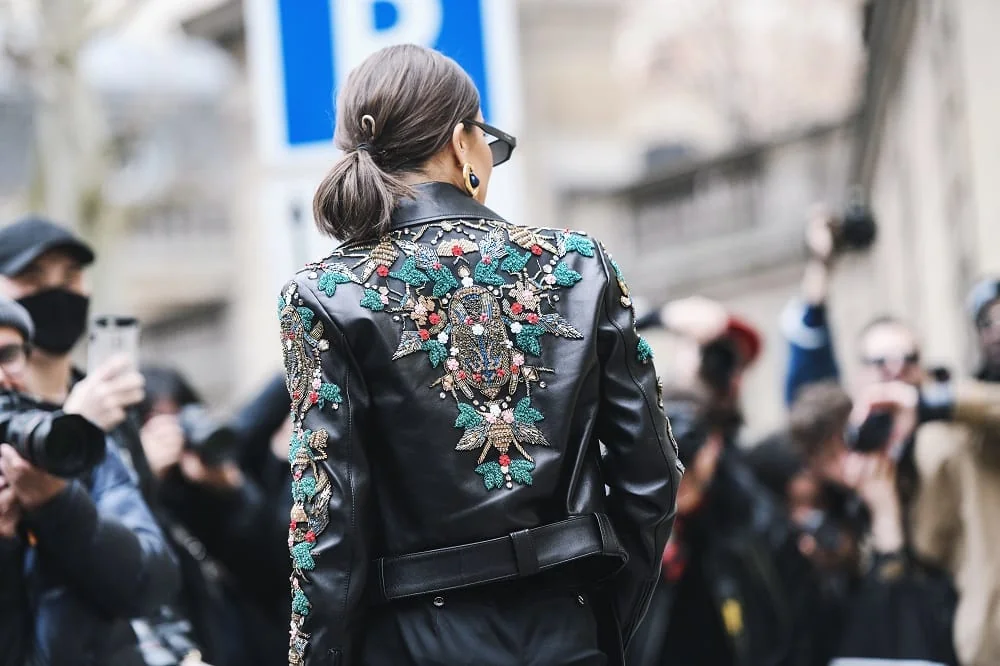
Hanger choice matters more than most people realize. A wide, contoured wooden or padded hanger distributes weight across the shoulders properly. Thin wire or flat plastic hangers create pressure points that show up months later as permanent shoulder dimples or a stretched neckline, this is one of the most common ways a beautiful leather jacket ends up looking cheap.
Garment bags should be breathable cloth, never plastic. Leather is technically still “alive” in the sense that it continues to react to its environment, plastic traps whatever humidity is in the air against the surface and accelerates both drying and, confusingly, mold growth in humid conditions. A cotton or canvas garment bag lets moisture escape without exposing the jacket to dust.
For structured jackets, especially anything with shoulder padding like a Chanel tweed-style jacket or a fitted moto style, loosely stuff the sleeves and shoulders with acid-free tissue to preserve the silhouette. Don’t overdo it, the goal is gentle support, not rigidity.
Environment is the part most people underestimate. Leather wants a stable temperature and moderate humidity, roughly 40-50% is ideal. Too dry and it cracks; too humid and you risk mold on the surface or lining. Give jackets breathing room in the closet too, leather pressed tightly against other garments for months can develop permanent creases where it’s been folded against a neighboring piece.
Storing Silk Scarves, Ties & Other Delicate Accessories #
Silk is deceptively fragile for how expensive it is. It creases almost as easily as paper and holds those creases permanently if left folded the same way for too long, which is why an Hermès scarf that’s been folded in a drawer for two years often shows faint lines even after steaming.
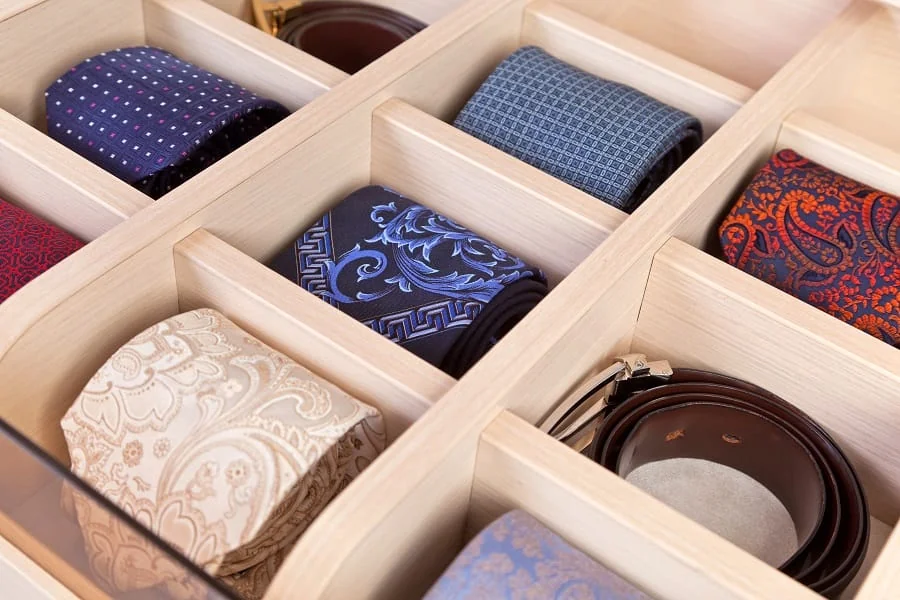
For scarves, storage in the original box is genuinely one of the better options, provided the box isn’t airtight plastic-lined. If you don’t have the box, a flat drawer with nothing stacked on top works, or roll the scarf loosely around an acid-free tube rather than folding it flat. Rolling avoids the sharp crease lines that folding creates over time.
Avoid plastic bags entirely for silk. They trap moisture against the fiber and, in my experience, silk stored this way for more than a few months tends to pick up a faint musty smell that’s genuinely difficult to air out.
Ties are lower maintenance but not maintenance-free. Make sure there’s no knot left in when storing, a tie left knotted for weeks develops a permanent kink at that point. Draping over a tie rack with a light dust cover works fine, or roll loosely and place in a drawer if rack space is limited.
For both scarves and ties, keep them away from direct sunlight even in storage. Silk dye fades unevenly with UV exposure, and it happens faster than most people expect, sometimes within a single season if a drawer or shelf gets consistent afternoon light.
Common Storage Mistakes to Avoid #
- Sealing everything in plastic. Dry cleaner bags and plastic garment covers feel protective but trap humidity and off-gas chemicals that yellow fabric over time. Use breathable cotton or cloth instead.
- Overcrowded closets. Garments pressed tightly together develop permanent creases, leather and silk especially, and airflow drops enough to encourage mildew in humid climates. Leave real space between pieces.
- Using the wrong hanger for the garment. Wire hangers on anything structured, thin plastic hangers on heavy coats, or hanging knitwear at all are the fastest routes to stretched shoulders and warped shapes.
- Ignoring humidity. Both extremes cause damage, dry air cracks leather and yellows paper-based padding, humid air invites mold and mildew on natural fibers. A basic hygrometer in your closet is a worthwhile five-dollar investment.
- Storing dirty. Skipping a clean before storage because the item “looks fine” is how moths and oxidation stains get their start. Clean first, every time.
- Forgetting rotation. Garments left completely undisturbed for years benefit from being taken out, aired, and reinspected occasionally. Damage from moths, mildew, or pest activity is far easier to catch and stop early.
Designer Clothing Storage Checklist #
Run through this before putting any high-value piece away for the season:
- Garment is professionally cleaned by someone experienced with the fabric
- Correct storage method chosen (hang vs. fold vs. box) based on fabric and structure
- Appropriate hanger used, wide and padded for structured pieces, none for knitwear
- Breathable cotton or cloth covering used, no sealed plastic
- Acid-free tissue used for padding, embellishments, and fold lines
- Storage space is cool, dry, and out of direct sunlight
- Adequate spacing from neighboring garments
- Moth deterrent in place for wool and cashmere
- Calendar reminder set to check on the piece every few months
FAQ: Designer Clothing Storage #
How often should stored designer clothing be checked or aired out? Every three to four months for actively stored pieces, and at minimum once a year for long-term archival storage like a wedding dress. This catches moth activity, mildew, or pest damage early enough to address it.
Is it ever okay to use plastic garment bags? Only for very short-term transport, a day or two at most. For anything longer, plastic traps moisture and can cause yellowing or a musty smell, especially with silk and leather.
Do I need a climate-controlled closet for designer clothing? Not necessarily a dedicated system, but stable temperature and moderate humidity (roughly 40-50%) make a real difference for leather and natural fibers. An interior closet away from exterior walls, attics, or basements usually gets you close enough without extra equipment.
Does proper storage actually affect resale value? Yes, significantly. Condition is one of the top factors consignment platforms and private buyers evaluate, often weighted more heavily than rarity. A well-stored piece with no odor, discoloration, or shape distortion will consistently sell for more than an identical piece that shows storage damage.
What’s the biggest storage mistake you see with high-value pieces? Sealing them in plastic immediately after purchase or cleaning. It feels protective but it’s usually the single fastest way to cause the yellowing, odor, or mildew issues people are trying to avoid.
Related Articles #
- Why the Chanel Crossbody Bag Never Goes Out of Style
- Popular Handbag Brands: Which One Is Right for You?
- How to Style a Grey Outfit This Season | Guide
- How Pre-Owned Luxury Fashion Is Reshaping the Industry


Keyword index