Introduction #

Owning a Hermès handbag comes with a certain quiet pride, and if you’ve been lucky enough to add a Birkin, Kelly, Constance, or Picotin to your collection, you already know it’s not “just a bag.” It’s leather that took years of craft to earn its place on that shelf, hardware that was hand-polished before it ever touched your wrist, and, increasingly, an asset that can hold or even grow in value if you treat it right.
That last part is where a lot of owners get caught out. I’ve seen beautifully maintained Birkins fetch strong resale prices, and I’ve also seen bags with barely any wear lose serious value because of preventable things: dry, cracked corners, a musty interior, dulled hardware, or handles that sagged out of shape from being hung on a hook. Hermès leather is forgiving in some ways and completely unforgiving in others, and knowing the difference matters.
For this guide, I sat down with Nicola Ghin, [[[The Luxury Closet](/news/the-luxury-closet-essa-walla-sale/)](/news/the-luxury-closet-adds-designer-clothing/)](/news/farfetch-second-life-middle-east-luxury-closet/)’s Senior Authentication Manager, who has handled thousands of pre-owned Hermès bags and has a very clear view of what separates a bag that holds its value from one that doesn’t. Her advice, combined with what I’ve observed handling and buying these bags myself, forms the backbone of everything below. Consider this your practical, no-nonsense reference for how to care for Hermès handbags, whether you carry yours daily or keep it for special occasions.
Cleaning Your Hermès Bag the Right Way #
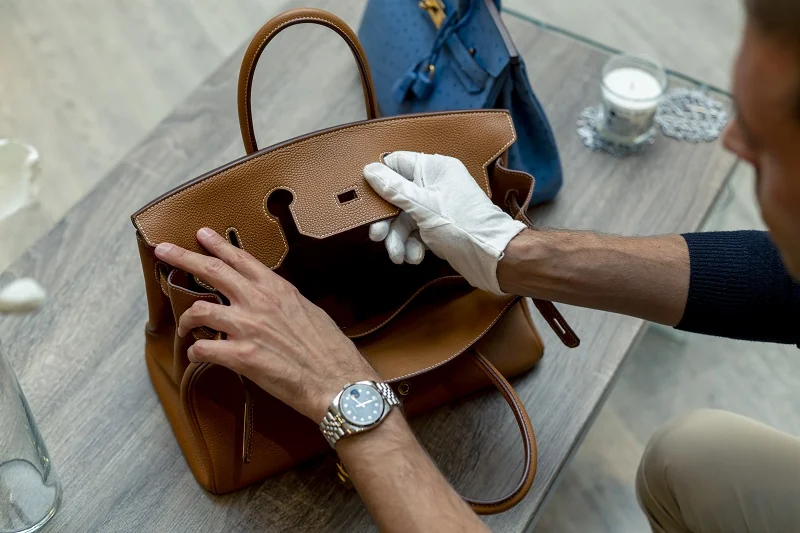
Cleaning a Hermès bag isn’t a once-in-a-while chore, it’s something you should be doing almost every time you put it away. The habit matters more than the product.
Start by emptying the interior completely after every wear. Crumbs, pen residue, and makeup dust settle into the lining faster than people expect, and once they set in, they’re much harder to lift out. If your bag’s structure and material allow it (canvas totes and softer styles are more forgiving than a stiff Kelly), turn it inside out to shake loose any debris. If that’s not possible, a lint roller worked slowly along every seam and corner does the job without stressing the leather.
For the exterior, the cleaning method depends entirely on the leather:
- Hard or pressed-grain leathers like Togo, Epsom, and Clemence can be wiped down with an absorbent, non-pilling cloth, or an alcohol-free baby wipe for light surface marks. These leathers are relatively hardy, which is part of why they’re so popular for everyday bags like the Birkin and Kelly in daily rotation.
- Untreated, suede, or exotic leathers (lizard, ostrich, crocodile) should only ever be dusted with a dry paper towel or soft cloth. No wipes, no moisture. Exotic skins in particular are far more porous and reactive than people assume, and a “quick clean” with the wrong product can leave a permanent watermark.
A tip I’d add from experience: never use household cleaners, leather conditioners not made for Hermès-grade leather, or anything with alcohol on delicate skins. It’s tempting to reach for a multi-purpose product when you see a mark, but the wrong treatment is often more damaging than the mark itself. If a stain doesn’t lift with a dry or barely-damp cloth, it’s genuinely worth taking the bag to a professional leather specialist rather than experimenting.
Keeping Shape: Stuffing and Filling Techniques #

An empty Hermès bag left to sit for weeks is one of the fastest ways to lose its structure, and structure is a huge part of what buyers are paying for when a bag is resold. A Birkin with slouchy, collapsed sides simply doesn’t command the same price as one that still stands proud.
Stuffing your bag properly, every time you put it away, is non-negotiable. Nicola’s approach, and the one I follow myself, is straightforward:
- Use neatly rolled acid-free paper or bubble wrap to fill out the body of the bag. Skip newspaper entirely; the ink can transfer and permanently stain light-colored linings.
- Don’t overstuff. The goal is to hold the bag’s natural shape, not to stretch the leather or strain the seams. If you’re pushing to get the flap closed, you’ve used too much.
- Wrap any exposed hardware pieces, like the clochette, lock, or keys, in tissue paper before tucking them inside or against the bag. Left loose, these small metal pieces can scratch or leave impressions on the leather over time, especially in soft leathers like Chevre or Swift.
This is a small habit that takes an extra two minutes, but it’s one of the clearest tells, to someone like Nicola authenticating and grading a bag for resale, of whether an owner genuinely cared for the piece.
Protecting the Exterior: Dustbags and Avoiding Color Transfer #
The original Hermès dustbag isn’t just packaging, it’s part of the bag’s long-term protection system, and ideally it should be used every single time the bag isn’t in your hands.
A few things worth knowing here. Cotton dustbags, including the original, can occasionally transfer dye onto very light-colored leathers, particularly in humid conditions or with new, unwashed bags. If you’re storing a pale bag like a white or light pink Birkin, an unbranded, neutral, colorfast cotton dustbag can actually be a safer choice than a dyed one. Just make sure it’s roomy enough that the fabric isn’t pressing tightly against the leather.
Color transfer isn’t limited to dustbags, though. It’s one of the most common (and preventable) forms of damage I see on pre-loved bags:
- Never let two bags touch directly in storage, even briefly. Dark leathers, especially black and navy, can leave dye marks on lighter bags they rest against.
- For bags with chains or shoulder straps, wrap the hardware in tissue paper before bagging them, so the metal doesn’t dig into the leather over time.
- Be mindful of denim, dark clothing, and even car seat dye when carrying a light-colored bag. This is genuinely one of the top causes of “damage” claims I see on bags that are otherwise in excellent condition.
Correct Storage: Placement and Environment #
Where and how you store a Hermès bag between uses matters almost as much as how you clean it.
Never hang your bag by its handles, on a hook, a closet rod, or anywhere else. It’s a common habit with everyday tote bags, but for a Hermès piece it puts constant strain on the handles and can permanently distort their shape, which is very hard to reverse and very visible to a future buyer or authenticator.
Instead, the bag should lie flat, fully stuffed, and dust-bagged, ideally in its original box. If the box has been lost or damaged over the years, a sturdy, breathable alternative works fine, the goal is simply to keep the bag supported and shielded from dust and light.
Environment matters more than most owners realize:
- Keep bags away from direct sunlight, which fades leather and dries it out unevenly.
- Avoid damp basements, garages, or anywhere humidity fluctuates, as this encourages mold on both leather and lining, particularly inside pockets.
- Extreme heat (think attics, car trunks, radiators) is one of the fastest ways to dry out and crack fine leather.
- Store bags in a stable, climate-controlled space, a bedroom closet at normal room temperature is genuinely ideal, no need for anything elaborate.
If you’re storing several bags together, give each one its own shelf space rather than stacking them, and avoid pressing them against each other or against shoe boxes and other hard-edged items that can dent the leather over time.
Why Proper Care Protects Your Investment #
This is the part collectors care about most, and rightly so. Hermès bags, particularly Birkins and Kellys in classic leathers and neutral colorways, have a well-documented track record of holding and sometimes exceeding their retail price on the resale market. But that value is entirely condition-dependent, and condition is something the owner controls almost completely.
When Nicola and her team authenticate and grade a bag for resale, care history shows up everywhere: in whether the corners are still crisp or worn soft, whether the hardware still has its original shine or shows pitting and scratches, whether the interior smells clean or musty, and whether the handles have kept their shape. Two bags of the same model, color, and age can be graded very differently, and priced very differently, based purely on how they were maintained.
The honest takeaway is that care isn’t glamorous. It’s rolling paper into the bag every night, wiping it down after use, keeping it out of the sun, and resisting the urge to hang it on a hook because it looks nice that way. But that unglamorous consistency is exactly what protects both the everyday pleasure of carrying the bag and its eventual resale value. If you ever plan to sell, trade, or pass the bag down, the effort you put in now is what a future buyer, or authenticator, will be evaluating later.
FAQ: Common Hermès Handbag Care Questions #
How often should I clean my Hermès bag? Wipe down the exterior and empty the interior after every wear, or at minimum weekly if you’re carrying it daily. Light, frequent cleaning prevents dirt and oils from setting into the leather, which is much harder to remove later.
Can I use leather conditioner on my Hermès bag? Generally, no, not without professional guidance. Conditioners formulated for other leathers can alter the color or finish of Togo, Epsom, or exotic skins. If your bag’s leather feels dry or is showing wear, it’s safer to have it assessed by a Hermès spa service or a trusted leather specialist.
Is it okay to store my Hermès bag without the box? Yes, the box is helpful but not essential. What matters most is that the bag lies flat, is properly stuffed, and is protected in a breathable dustbag, away from heat, humidity, and direct sunlight.
Does color transfer really affect resale value? Yes, noticeably. Dye transfer marks on light-colored leather are difficult and sometimes impossible to fully remove, and they’re one of the more common issues flagged during authentication and grading, which directly affects resale price.
How do I know if my bag’s leather is exotic and needs different care? Exotics like crocodile, alligator, lizard, and ostrich have a distinct scale or texture pattern and typically feel more delicate to the touch than calfskin. When in doubt, treat any unfamiliar material as exotic and stick to dry-cloth cleaning only until you can confirm the leather type.
Should I get my Hermès bag professionally cleaned? For anything beyond light surface dust or marks, yes. A professional leather care service that specifically works with luxury handbags will know how to treat Hermès leathers without risking the finish, and it’s a worthwhile investment if you’re maintaining the bag for long-term resale value.


Keyword index