Introduction: Why Gucci Remains the World’s Most Coveted Bag Brand #
Gucci doesn’t just sell handbags, it sets the pace for what the entire luxury market chases next. Lyst’s 2019 Index confirmed what anyone working in resale already knew: Gucci was the most searched luxury brand on the planet, pulling in over 6 million product searches in a single quarter. That kind of demand doesn’t happen by accident, and it doesn’t fade quickly either, which is exactly why Gucci sits at the center of so many “should I buy this” conversations among serious handbag buyers.
Part of that staying power comes from the house’s design DNA. The interlocking GG, the red-and-green Web stripe, the bamboo handle born out of postwar material shortages, the Jackie shoulder bag that predates the term “It bag” entirely. Alessandro Michele’s era layered maximalist, vintage-inspired detailing onto that archive without erasing it, which is why a bag designed in 2015 can still sit comfortably next to a style from the 1960s in the same collection story.
For buyers thinking about a bag as more than a purchase, meaning something that holds its value, gets worn for a decade, and can be resold without a loss that stings, that blend of heritage and design consistency matters. Below, we’ve pulled together seven Gucci styles that consistently show up in resale listings, retain strong demand secondhand, and represent the label’s most recognizable design moments. We’ll also cover how to price them (new and pre-owned), how to check their condition honestly, and how to avoid the counterfeits that flood this category more than almost any other brand.
What Makes a Gucci Handbag a Smart Investment #
Not every Gucci bag holds value the same way, and treating “investment” as a blanket label for the whole brand is where a lot of buyers overpay. Three factors actually drive resale performance.
Brand recognition at a glance. Bags with an instantly identifiable signature, the bamboo handle, the tiger-head clasp on Dionysus, the double G on Marmont, tend to depreciate slower than logo-free or seasonal pieces. Resale buyers want a bag that reads as “Gucci” from across a room, because that’s what they’re paying a premium for over a blank leather tote.
Craftsmanship and material quality. Full-grain and pebbled leathers age better and photograph better in resale listings than coated canvas, which is one reason GG Supreme pieces often sell for less proportionally than their leather counterparts of the same style. Hardware plating quality also matters: solid, well-finished metal holds its finish longer and is harder for counterfeiters to replicate convincingly, which indirectly protects resale confidence.
Cultural and archival relevance. Bags tied to a specific design moment, Tom Ford’s Jackie, the original 1947 bamboo bag, Michele’s maximalist Dionysus era, tend to get referenced again in later collections or campaigns. That repeated visibility keeps searches and demand alive years after the original release, which is the single biggest driver of stable resale pricing.
None of this means Gucci is immune to depreciation. Most bags still lose 30 to 50% of retail value the moment they leave the store, same as the rest of the luxury category. The styles below are simply the ones that have historically lost less, held demand longer, and are easier to resell without months of relisting.
Structured Icons: Queen Margaret and GG Marmont #
Queen Margaret #
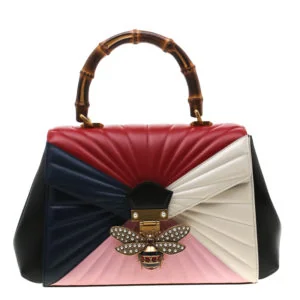
The Queen Margaret takes Gucci’s most recognizable hardware, the bamboo top handle, and pairs it with a structured, boxy silhouette and an embellished bee motif on the front flap. It reads more formal than most of Michele’s shoulder bag output, which makes it a genuinely versatile piece: it works for office days as easily as evening occasions. Retail on the leather version typically runs in the $2,200 to $2,800 range depending on size and hardware finish, with pre-owned examples in very good condition landing between $1,000 and $1,600. Because it’s less ubiquitous than Marmont or Dionysus, it can take slightly longer to sell secondhand, but it also tends to attract buyers specifically looking for it rather than casual browsers.
Capacity-wise, it’s a mid-size structured bag, generally around 11 to 12 inches wide, enough for a phone, cardholder, compact, and slim pouch, but not a daily-carry-everything bag. If you need to fit a tablet or a water bottle, this isn’t your workhorse.
GG Marmont #
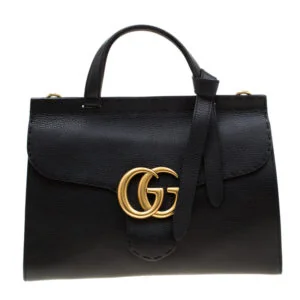
Marmont is Gucci’s best-selling shoulder bag for a reason: it’s the most wearable interpretation of the double-G logo the brand has produced. The matelassé chevron leather and antique gold GG hardware give it enough presence to be recognizable without tipping into loud. It comes in small, medium, and large sizes, plus top-handle and shoulder-bag configurations, which gives buyers real flexibility on price and capacity.
Retail runs from roughly $1,590 for the small shoulder bag up to $2,500+ for larger top-handle versions. Pre-owned, expect $700 to $1,400 for pieces in excellent condition, with small sizes at the lower end and top-handle versions holding value best. This is also one of the more heavily counterfeited Gucci styles because of its volume, so authentication matters more here than on rarer pieces, more on that below.
Statement Shoulder Bags: Dionysus and Other Signature Styles #
Dionysus #
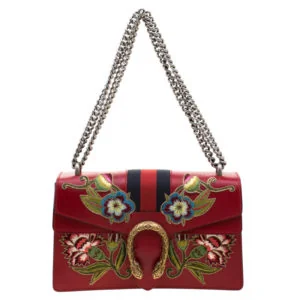
Introduced for Fall/Winter 2015, Dionysus is Michele’s most theatrical shoulder bag, built around a metal clasp finished with two tiger heads, a direct nod to the Greek god’s mythology. Embroidered and embellished versions, like the floral GG Dionysus, are the ones that actually appreciate in collector circles, while plain leather versions behave more like standard shoulder bags in resale terms.
Retail pricing for embroidered or exotic-material Dionysus bags can run from $2,800 to well over $4,000, with standard GG canvas versions closer to $1,600 to $2,200. Pre-owned, expect $800 to $1,500 for canvas versions and $1,800 to $3,000+ for embellished pieces in strong condition, embroidery and embellishment condition affects resale price more than almost anything else on this bag, since restoration isn’t realistic.
Broadway Pearly Bee Bag #
The Broadway shoulder bag, reintroduced in Fall/Winter 2015, is smaller and more evening-oriented, a compact envelope-style flap decorated with a bee motif and pearl embellishment across the exterior. It’s not a daily-carry bag by any measure, capacity is limited to essentials only, phone, cards, lipstick, but that’s exactly why it holds a niche resale demand among buyers looking for occasion pieces rather than workhorses. Original retail sat around $1,800 to $2,200; pre-owned examples in good condition typically trade between $700 and $1,200, with pearl condition (loose or missing pearls are common) being the main price differentiator.
Modern Everyday Classics from the Gucci Archive #
Sylvie #
Part of Spring/Summer 2016, Sylvie combines the Web stripe with chunky, structured hardware in a way that feels distinctly Michele-era rather than archival. It’s a stiffer, more architectural bag than Marmont, which makes it better suited to buyers who want a shoulder bag that holds its shape without a bag insert. Retail runs roughly $1,800 to $2,400 depending on size and leather; pre-owned pricing sits around $700 to $1,300. Sylvie’s resale demand is steady but noticeably softer than Marmont’s, worth knowing if liquidity matters to you.
Bamboo Top-Handle Bag #
The original: born from postwar leather rationing in 1947, when Gucci turned to bamboo for handles simply because better materials weren’t available. That scarcity-driven design decision became one of fashion’s most enduring symbols. The saddle-shaped silhouette and minimalist detailing mean it wears well across decades without looking dated, and it’s one of the few Gucci styles where vintage pieces from the 1960s-1980s hold genuine collector value separate from current retail lines. Modern versions retail around $2,200 to $2,800; vintage pieces in good condition sell anywhere from $600 to $1,800 depending on age, rarity, and condition of the bamboo itself, which can dry out, crack, or discolor over decades and should be inspected closely.
Gucci Duffle Bag #
The GG duffle rounds out this list as the practical outlier: a soft-structured, larger-capacity bag built for actual daily use rather than occasion wear. It fits a laptop, a change of clothes, or a full work day’s essentials, which makes it genuinely more useful than most bags on this list, though that everyday-use positioning also means condition depreciates faster since it gets carried harder. Retail runs $2,000 to $2,600; pre-owned pricing typically lands between $700 and $1,300, with corner wear and canvas soiling being the main condition issues to check before buying.
How to Authenticate a Gucci Handbag Before You Buy #
Gucci is one of the most counterfeited brands in the world, which means authentication isn’t optional, it’s part of the purchase process. A few checkpoints that actually matter:
Serial numbers and date codes. Bags made before 2021 typically have a leather tag sewn into the interior lining stamped with a serial number, usually formatted as two lines of numbers. Since 2021, Gucci moved to a QR-code authentication system embedded on an interior label, scannable through the Gucci app, alongside a printed alphanumeric code. Neither system alone is foolproof, counterfeiters copy both, but a missing, smudged, or oddly placed code is an immediate red flag.
Hardware weight and finish. Genuine Gucci hardware feels heavy and cold to the touch, with clean, sharp engraving on logos and zipper pulls. Fakes often use lightweight metal with shallow, blurry stamping, run a finger over the engraving; if it feels shallow or inconsistent in depth, be suspicious.
Stitching consistency. Authentic Gucci bags use even, tight stitching with no loose threads, and stitch count per inch is generally higher and more consistent than on counterfeits. Check high-stress points, handle attachments and corners, since that’s where cheap construction shows fastest.
Leather smell and texture. This sounds unscientific, but experienced resellers rely on it constantly: authentic leather has a specific, not-overwhelming scent, while many fakes use chemically treated materials with a sharp, plasticky odor.
Interlocking G alignment. On GG canvas and Marmont hardware, the interlocking G logo should be symmetrical and evenly spaced. Misaligned, stretched, or unevenly sized Gs are one of the most common counterfeit tells.
When in doubt, buy from platforms that offer in-house authentication with a written guarantee, or have a third-party authentication service check photos before you commit. It costs $20 to $40 typically and can save you from a total loss.
The 7 Investment-Worthy Gucci Bags #
- Queen Margaret — structured, bamboo-handled, best for buyers who want formal versatility over everyday capacity.
- Dionysus — statement hardware and embellishment, strongest [resale value](/buying-guides/best-time-to-buy-a-luxury-handbag-1/) in embroidered or exotic versions.
- GG Marmont — the most liquid resale style on this list, easiest to buy and resell across sizes.
- Sylvie — Web-stripe structured shoulder bag, steady but softer resale demand than Marmont.
- Broadway Pearly Bee Bag — occasion-focused, niche demand, check pearl condition carefully before buying.
- Bamboo Top-Handle Bag — the archival original, vintage pieces carry genuine collector premiums.
- Gucci Duffle Bag — the practical, daily-use pick, highest usability, faster cosmetic wear.
FAQ: Investing in Gucci Handbags #
Do Gucci bags actually appreciate in value, or do they just depreciate slower? Almost none of these bags appreciate above original retail in real terms once you account for inflation. What “investment-worthy” really means here is slower depreciation and reliable resale demand, a bag you can sell in weeks rather than months, at 40-60% of retail rather than 20%. True appreciation is reserved for rare vintage pieces, like early bamboo bags in exceptional condition, or discontinued embellished styles no longer in production.
What condition grading should I look for when buying pre-owned? Most resale platforms use a scale roughly equivalent to Excellent (barely visible wear, no odor, hardware intact), Very Good (light corner wear or minor hardware scuffing), Good (visible wear, possible leather softening, still structurally sound), and Fair (noticeable damage, repairs needed). Always ask for close-up photos of corners, handle attachment points, and interior lining before buying anything above Good condition pricing.
Where is it safe to buy pre-owned Gucci? Stick to platforms with in-house or third-party authentication guarantees, established resale marketplaces built specifically for luxury goods, or Gucci’s own certified pre-owned channel where available. Avoid unauthenticated peer-to-peer marketplace listings and social media sellers unless you’re independently verifying every detail yourself, this is where the majority of counterfeit losses happen.
Which Gucci bag is easiest to resell? GG Marmont, hands down. High original production volume means strong demand across resale platforms, and its size range gives buyers flexibility, which keeps turnaround times short.
How do I care for Gucci leather to protect resale value? Store bags stuffed with tissue or a shaper to hold form, keep them in a breathable dust bag rather than plastic, and avoid direct sunlight, which dries and cracks leather and fades canvas. Clean surface dirt with a slightly damp microfiber cloth only, never household cleaners, and have leather conditioned professionally once a year if worn regularly. For GG canvas pieces, avoid over-wetting, since the coating can peel if soaked rather than gently wiped.
Is buying vintage Gucci riskier than buying current styles? It carries different risks, not necessarily more. Vintage pieces need closer inspection for material degradation, dried bamboo, cracked piping, oxidized hardware, but they’re also often easier to authenticate since older construction techniques and materials are well documented among specialists. The bigger risk is overpaying for “vintage” pricing on a bag that’s simply old rather than genuinely rare.
Related Articles #
- Gucci Sylvie Shoulder Bag Review: Grey Leather Spotlight
- 5 Iconic Gucci Bags Every Collector Should Own
- Gucci Dionysus Bag Review: Is It Worth Buying Resale?
- Gucci Ophidia Shoulder Bag Review: Bag of the Week
- Why the Chanel Crossbody Bag Never Goes Out of Style
Related guides
- Online Bag Authentication: What Photos Can and Cannot Prove
- So Kate Pumps Authentication Guide: Spot Real vs Fake
- Blue Crocodile Lady Dior Tote: Buying Guide
- Chanel Vintage Flap Bag Buying Guide: Navy Lambskin
- How to Buy an Authentic Luxury Bag from China Safely
- New vs Pre-Owned Luxury Bags: Which Route Is Right for You?
- Chanel Bag Guide: What to Know Before You Buy
- Luxury Bag Houses


Keyword index