Introduction: A Winter-Ready Icon Resurfaces #
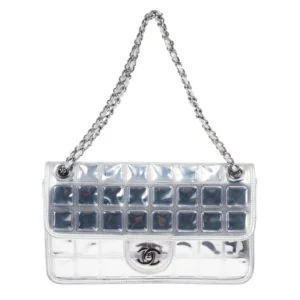
Every few years, a Chanel piece resurfaces that reminds collectors why the house’s runway experiments are worth chasing decades later. The Chanel Ice Cube bag is one of those pieces. It wasn’t a mainline classic like the 2.55 or the Boy, and that’s exactly the point — it was a limited, seasonal statement that sold through fast and never came back into regular production.
For anyone building a serious handbag collection, or anyone who authenticates and sources pre-owned Chanel for a living, the Ice Cube sits in an interesting category: recognizable enough to have cultural cachet, rare enough that most authenticators have only handled a handful in their careers. That combination is what drives both the appeal and the risk. Where there’s scarcity and renewed interest, counterfeiters follow. This piece breaks down the real history, the design differences between the tote and flap versions, what they’re worth today, and how to avoid getting burned if you go looking for one.
The Story Behind the Chanel Ice Cube Collection #
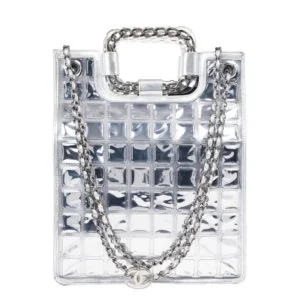
The Ice Cube bag debuted on the runway for Chanel’s Cruise 2008 show, staged in Los Angeles under Karl Lagerfeld’s direction. The collection leaned into a beach-meets-arctic theme, and the bags were styled with swimwear on the runway — a pairing that got attention precisely because it was unexpected. Silver hardware-heavy accessories paired with swimsuits wasn’t the safe, expected editorial choice, and that friction is a big part of why the look traveled so fast from runway to red carpet.
Chanel produced the Ice Cube in limited numbers as a Cruise-collection exclusive, not a mainline seasonal bag restocked across boutiques. Cruise collections have historically had smaller production runs than the ready-to-wear lines, and pieces from them rarely get reissued. That’s the key fact for buyers to understand: this isn’t a bag Chanel brings back with a new colorway every few seasons. Once the Cruise 2008 run sold out, that was effectively it. Anything you find today is secondary market stock, full stop.
Design Breakdown: Tote vs. Flap #
Chanel released the Ice Cube in two main silhouettes, and they serve genuinely different purposes rather than being the same bag in two sizes.
The Tote #
The tote is the larger, more casual version. It’s built with dual top handles and typically comes with an additional strap that converts it into a crossbody or shoulder bag, which makes it more practical for daily wear than most Chanel is at this price tier. This is the version you’d reach for running errands, traveling, or wearing over jeans and a jacket. The silver-toned hardware and quilted panels do the visual work, so the bag reads as dressed-up even in a casual outfit.
The Flap #
The flap is smaller, structured closer to Chanel’s classic flap silhouette but reworked with the Ice Cube’s angular hardware detailing and a more youthful, modern proportion. It’s less about capacity and more about the evening-and-cocktail occasion — think dinner, an event, a night out where you want a conversation-starting bag rather than one that holds your laptop. If the tote is the daytime workhorse of the collection, the flap is its dressed-up sibling.
Both versions share the same design language: quilted lambskin body, chunky silver hardware, and a distinctly icy, architectural feel that set them apart from Chanel’s softer classic lines that season.
Celebrity Icons Who Made It Famous #
The Ice Cube moved from runway to street fast, largely because it landed in the right closets at the right moment. Kim Kardashian carried hers in the late 2000s at a time when her personal style was heavily photographed and widely copied, and that visibility alone pushed recognition of the bag well beyond the runway audience. Paris Hilton, who was arguably the era’s most photographed handbag influencer, was seen with the Ice Cube at public events too, reinforcing it as a “get” among the paparazzi-era fashion set.
What’s worth noting for buyers today isn’t just that famous people carried it — it’s how they styled it. Both wore it as a statement piece against otherwise simple outfits: a plain dress, jeans and a top. Neither over-accessorized around it. That’s a useful cue for anyone building a wardrobe around a rare bag now, and we’ll come back to it in the styling section.
Why the Ice Cube Bag Is a Collector’s Item Today #
Three factors make the Ice Cube a genuine collector’s item rather than just a “vintage Chanel” bag with a nostalgic story attached.
First, production volume. Cruise collection pieces were never made at the scale of Chanel’s core lineup, and the Ice Cube specifically wasn’t a bag Chanel kept in rotation afterward. Second, discontinuation. There’s no current-season equivalent; Chanel hasn’t reissued this design, so supply only shrinks as bags age, get damaged, or get held permanently in private collections. Third, the runway story itself has aged well — Cruise 2008’s swimwear-and-hardware pairing is still referenced in retrospectives of Lagerfeld-era Chanel, which keeps demand alive among buyers who missed it the first time.
On original retail pricing: Chanel doesn’t publish historical price archives, and this wasn’t a bag with the kind of consistent global rollout that leaves a clean price trail the way the Classic Flap has. Cruise-exclusive pieces from that era generally retailed in the low-to-mid four figures depending on size and region. What’s better documented is resale behavior: because supply is fixed and shrinking, well-kept examples with original hardware and authentication paperwork tend to hold value more like a discontinued limited-edition piece than a depreciating mainline bag. If you’re shopping this as an investment, treat it the way you’d treat any discontinued limited run — condition and completeness (box, authenticity card, dust bag) matter more to resale value than they do on a bag Chanel still sells.
Buying Advice: Authenticating and Sourcing a Rare Chanel Piece #
This is the section where I’d tell a friend to slow down, because rarity is exactly what makes a bag attractive to counterfeiters. A bag that’s hard to find genuine comps for is also a bag where buyers are less likely to spot something off, and sellers of fakes know that.
Hardware. Chanel’s hardware on the Ice Cube is heavy, cold to the touch, and precisely finished — no visible mold lines, no uneven plating, no rough edges where pieces meet the leather. Cheap counterfeits often get the general shape right but feel light and slightly tacky or too shiny. Compare weight and finish against a known-authentic Chanel piece from the same era if you can.
Stitching. Genuine Chanel quilting is even, tight, and symmetrical across every diamond. Look at where the quilting meets the seams and the base — sloppy convergence points are a common tell on fakes. Stitch length should be consistent across the entire bag, not just the front panel sellers usually photograph.
Materials. The Ice Cube uses quilted lambskin, which has a distinct soft, slightly grainy hand-feel and a fine, natural texture — not the plasticky sheen you sometimes get on faux leather used in counterfeits. Lambskin is also more delicate than caviar leather, so check for consistent texture with no dry patches, cracking, or uneven sheen that would suggest a different (or synthetic) material.
Serial and authenticity cards. Chanel bags from this era typically carried a holographic sticker and authenticity card with a matching serial number. Because this is a discontinued, limited piece, don’t expect Chanel’s own verification services to have deep records on it — this is exactly why buying through a specialist resale platform with in-house authentication is worth the premium over a marketplace listing with no vetting.
Where to buy. Given how few of these exist in circulation, I’d avoid open marketplaces and auction sites with no authentication layer entirely for this piece. Reputable [[[[pre-owned luxury](/buying-guides/limited-edition-designer-bags-worth-collecting/)](/buying-guides/chanel-flap-bag-buying-guide/)](/buying-guides/chanel-19-bag-guide-history-prices-buying-tips/)](/brands/unique-chanel-bags-rare-novelty-designs/) platforms that physically inspect items, offer authenticity guarantees, and provide clear return policies are the safer route. Expect limited stock and be prepared to wait or set alerts — this isn’t a bag you’ll find in multiples at any given time, and that scarcity is itself a signal you’re looking at the right kind of seller when a listing looks too available or too cheap.
Size Guide With Everyday Object Comparisons #
Exact measurements vary slightly between individual listings since Chanel didn’t mass-produce this piece with the same standardized spec sheet as its core lines, but based on documented resale listings, here’s roughly what to expect:
- Tote: Roughly the footprint of a standard laptop bag — wide enough to fit a 13-inch laptop flat, deep enough for a folded cardigan or light jacket. Think slightly larger than a classic Longchamp Le Pliage in the medium size.
- Flap: Closer to a clutch-with-strap proportion — about the size of a hardback novel standing on its spine. It holds a phone, card case, lipstick, and keys comfortably, but it’s not built for daily-carry essentials beyond that.
If you’re used to Chanel’s Classic Flap sizing, picture the Ice Cube flap as sitting between the Classic Flap’s small and medium sizes, but boxier due to the structured hardware panels. The tote runs noticeably roomier than most Chanel totes from the same era, since it was designed as a genuine daytime carry-all rather than a going-out bag.
FAQ: Chanel Ice Cube Bag #
Is the Chanel Ice Cube bag still available new? No. It was a limited Cruise 2008 release and has never been reissued. Any bag available today is pre-owned or vintage stock through resale channels.
How much is a Chanel Ice Cube bag worth now? Resale value depends heavily on condition, completeness (box, card, dust bag), and which silhouette you’re looking at. Because supply is fixed and shrinking, well-documented examples in good condition tend to command a premium over comparable Chanel bags from the same era that were produced in higher volumes. Get a current appraisal from a specialist authenticator rather than relying on old listing prices, since this market moves in small, thin sales rather than a liquid, frequently-traded one.
What’s the difference between the tote and flap versions? The tote is larger, more casual, and typically converts between top-handle and crossbody carry. The flap is smaller, more structured, and better suited to evening wear. They’re stylistically related but serve different wardrobes.
How do I know if my Chanel Ice Cube bag is authentic? Check hardware weight and finish, stitching consistency, lambskin texture, and serial/authenticity card details. Given how rare this piece is, having it verified by a professional authentication service before or after purchase is worth the cost.
What should I wear with a Chanel Ice Cube bag? Keep the rest of the outfit simple, the way it was originally styled — a plain dress or jeans and a fitted top let the bag’s hardware and quilting do the visual work. For the tote, pair with casual daywear and minimal jewelry. For the flap, a monochrome evening outfit lets the silver hardware read as the statement piece rather than competing with other accessories.
Related Articles #
- Why the Chanel Crossbody Bag Never Goes Out of Style
- 5 Rare, Unique Chanel Bags Worth Collecting Now
- Which Chanel Bag to Buy? Style Guide by Body & Budget
- Chanel Royal Blue Boy Bag: Rare Pre-Owned Find
- Fendi First Bag Guide: History, Design & Resale Value
Related guides
- Online Bag Authentication: What Photos Can and Cannot Prove
- Blue Crocodile Lady Dior Tote: Buying Guide
- Chanel Vintage Flap Bag Buying Guide: Navy Lambskin
- Louis Vuitton Palm Spring Backpack: Complete Buyer's Guide
- How to Buy an Authentic Luxury Bag from China Safely
- New vs Pre-Owned Luxury Bags: Which Route Is Right for You?
- Chanel Bag Guide: What to Know Before You Buy
- Luxury Bag Houses


Keyword index