Introduction #
Valentino built its reputation on a specific kind of contradiction: couture-level rigor applied to ideas that shouldn’t work on paper but somehow become uniform for an entire generation. Since Valentino Garavani founded the house in Rome in 1960, the label has moved between red-carpet gowns and streetwear-adjacent accessories without losing its identity as a “serious” fashion house. That range is exactly why the Rockstud Spike Bag deserves a closer look this week. It’s not the house’s oldest design, and it’s not yet spoken about with the same reverence as Chanel’s quilted flap. But it’s the bag that made Valentino relevant to a buyer who wasn’t necessarily shopping for eveningwear, and it’s aged into one of the more interesting resale propositions in the designer bag market. This piece breaks down what the bag is actually made of, what it costs new versus preloved, how to check one for authenticity, and whether it’s holding value the way a “future classic” should.
The Rockstud Legacy: From Studs to Icon Status #
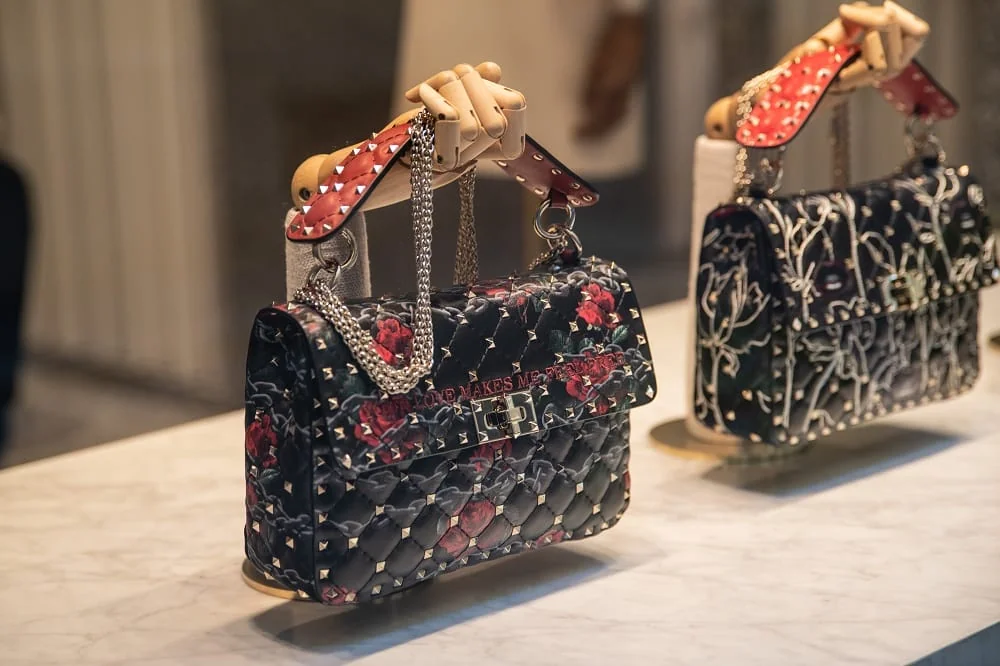
The Rockstud itself dates to 2011, when Valentino introduced a pyramid-shaped metal stud drawn from Roman architectural detailing, most visibly the coffered ceilings and geometric ornamentation found across the city’s classical buildings. It first appeared on footwear, then migrated to handbags, small leather goods, and eventually ready-to-wear hardware. What made it stick wasn’t novelty for novelty’s sake. The stud gave Valentino a signature that was instantly recognizable at a glance, in the way a Chanel CC lock or a Louis Vuitton monogram is recognizable, but one that felt edgier and more contemporary than anything else the heritage houses were putting out at the time.
The commercial reaction was immediate and, by most industry accounts, surprised even Valentino. What’s often called the “Rockstud Fever” pushed the studded line from a single shoe silhouette into a full accessories category, and a decade-plus later it remains the design most associated with the brand for a mainstream audience. The Rockstud Spike Bag sits inside that lineage as the handbag expression of the idea, and it’s worth noting it also marked a specific moment for the house: it debuted under Pierpaolo Piccioli’s tenure as sole Creative Director, introduced through a campaign built around individuality and self-expression rather than a single “It Girl” muse.
Design and Craftsmanship of the Rockstud Spike Bag #
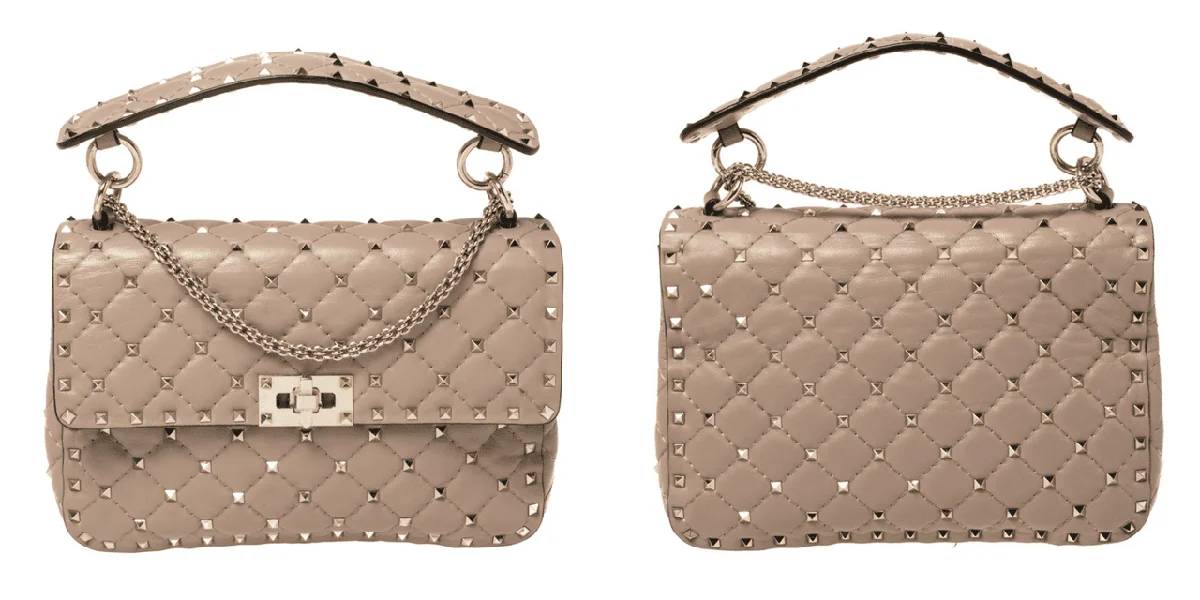
Strip away the studs and the bag underneath is a fairly classic rectangular flap silhouette, structured, boxy, with a flat base and a defined front flap. That’s a deliberate choice. Valentino wasn’t trying to reinvent bag architecture; it was trying to give a familiar shape a new surface language.
The build:
- Body: Structured leather, most commonly a soft calfskin or lambskin depending on the season, finished with diamond quilting across the front and back panels.
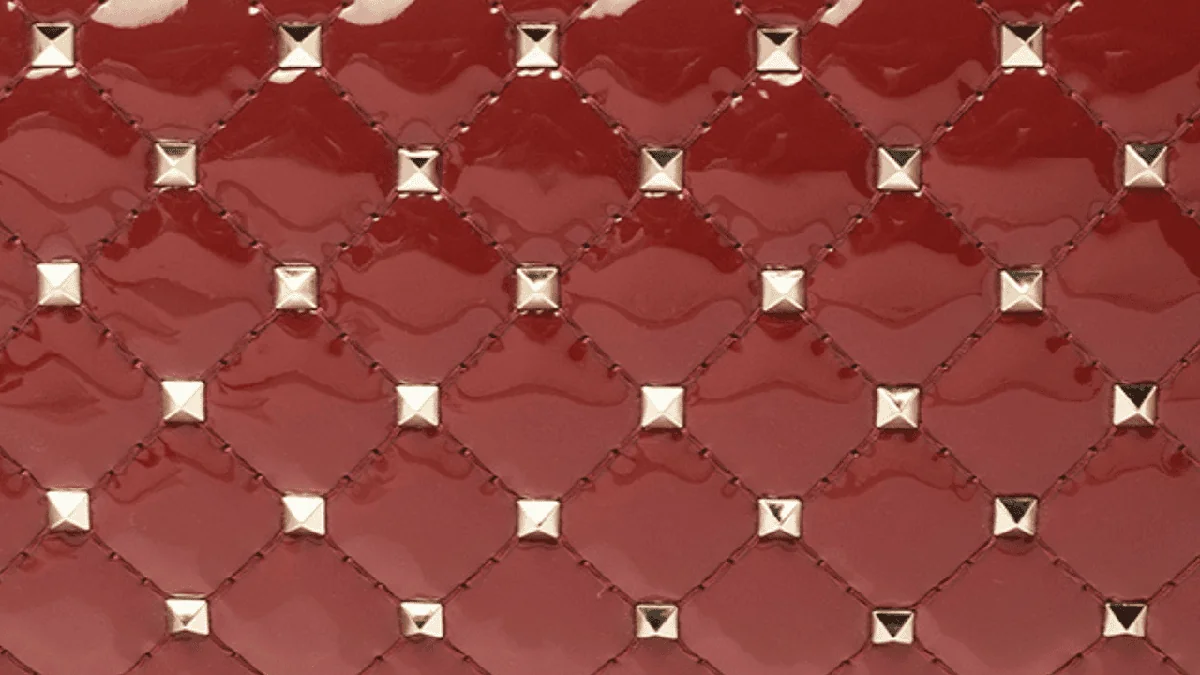
- Hardware: Pyramid-shaped studs, typically in light gold-tone, placed at the intersection points of the quilting. A “Pyramid Turn-lock” closure sits at the center of the flap, a hardware detail repeated across several other Valentino bag lines.
- Interior: Leather-lined, usually finished in contrast red leather for the branding label and a zip pocket, a small heritage nod that shows up across multiple Valentino collections rather than being unique to this bag.
- Carry options: A detachable chain strap that converts between crossbody and a doubled shoulder carry, plus a separate studded top handle for hand-carry. Three carry configurations from two straps is a genuinely useful bit of engineering, not just a spec-sheet bullet.
Against the obvious comparisons: The [[[Chanel Classic Flap](/buying-guides/classic-and-chic-handbags-style-icons/)](/buying-guides/which-chanel-bag-to-buy/)](/buying-guides/chanel-flap-bag-buying-guide/) and Dior Diorama get mentioned in the same breath as the Rockstud Spike constantly, and the comparison is fair on shape alone. But the construction philosophy differs. Chanel’s flap relies on lambskin softness and a chain that’s woven through leather strips, prioritizing slouch and drape. The Diorama leans on cannage stitching, a woven quilting pattern, and a more architectural, boxier stance. The Rockstud Spike splits the difference: it has the structure of the Diorama with a quilting pattern closer to Chanel’s, but the studs are what make it read as unmistakably Valentino from ten feet away. Where it currently loses ground to both is resale liquidity and consistency of value, which we’ll get into below. It hasn’t earned “grail bag” status the way the Classic Flap has, but it’s closer to that tier than most other Valentino leather goods.
Styling Versatility: From Rock ’n’ Roll to Refined Evenings #
The original campaign leaned hard into individuality, shooting the bag on a diverse cast of New Yorkers rather than a single celebrity face, and that framing still describes how the bag actually gets worn. In practice, three scenarios cover most of its real-world use:
- Daytime, casual: Crossbody on the chain strap, worn over jeans and a leather jacket or an oversized knit. The studs do enough visual work that the rest of the outfit can stay simple.
- Edgy, evening-adjacent: Doubled shoulder strap with a slip dress or tailored separates. This is where the “rock ’n’ roll” branding earns its keep, the hardware reads as intentional toughness rather than accessory overload.
- Dressed-up, formal: Top handle, hand-carried, paired with a blazer or a structured coat. The studs settle down visually when the strap is off, and the bag reads closer to a conventional evening flap.
That range is the bag’s actual selling point over a lot of competing “It bags” from the same era. Plenty of designer bags are styled one way and photograph poorly outside that lane. The Rockstud Spike genuinely moves between registers.
Price, Value and Investment Potential #
This is where buyers need the most honest information, because brand pages tend to skip it entirely.
Retail pricing for the Rockstud Spike varies by size and material, but current-collection medium-sized leather versions from Valentino typically land in the roughly $2,300 to $2,900 range at full retail, with smaller sizes starting lower and exotic or embellished versions running well above that. Prices have crept upward over the past several seasons in line with broader luxury leather goods inflation, not because of any specific scarcity move by the brand.
Resale value is the more important number for anyone treating this as a purchase decision rather than a pure want. On the preloved market, well-kept Rockstud Spike bags in common colorways (black, nude, old-rose leather) tend to retain somewhere in the 40–55% range of original retail price, depending on size, hardware condition, and how visibly worn the studs are. That’s a meaningfully lower retention rate than a Chanel Classic Flap in good condition, which often holds 60–75% or more depending on size and market timing, or a Hermès bag, which can hold or exceed retail. Limited colorways, exotic leathers, and mini sizes tend to hold value better than the standard medium in a common shade, which is worth factoring in if resale matters to the purchase.
The honest read: this is not currently an “investment bag” in the way a Kelly or Birkin is discussed on this site. It’s closer to a strong-but-standard designer bag depreciation curve, better than most contemporary brands, not as strong as the true heritage tier. Buy it because you want to wear it, not because you’re expecting it to appreciate.
Where and How to Buy the Valentino Rockstud Spike Bag #
Sizes and materials: The line typically runs in small, medium, and large, with occasional mini and micro releases in specific seasons. Leather is the standard material, but the bag has also appeared in suede, exotic skins (python, crocodile-embossed leather), and embellished or two-tone colorways. Hardware finishes shift between light gold-tone, dark gunmetal, and occasionally rose gold depending on the season.
New vs. preloved: Buying new guarantees condition and full authenticity but means absorbing the steepest depreciation the moment it leaves the store. Buying preloved through a reputable consignment platform can save 30–50%, but shifts the burden onto verifying condition and authenticity yourself, or trusting the platform’s authentication process.
Authentication checkpoints specific to this bag:
- Stud alignment and weight: Genuine Rockstuds are evenly spaced, uniformly sized, and have real heft. Lightweight, unevenly spaced, or slightly misshapen studs are a common tell on counterfeits.
- Turn-lock engraving: The pyramid turn-lock closure should have crisp, clean engraving with no blurring or shallow stamping. Fakes often get the pyramid shape close but botch the finish quality.
- Quilting stitch density: Authentic quilting has tight, even stitching at each diamond point. Loose or wavy stitching is a red flag.
- Interior label and heat stamp: Check the “Valentino Garavani” stamping for font weight and spacing consistency, and look for a serial or date code inside a interior pocket, depending on production year.
- Leather smell and texture: Genuine leather has a distinct, non-chemical scent and a slight give under light pressure. Overly stiff, plasticky material is a warning sign regardless of how good the hardware looks.
- Weight of the whole bag: Because of the metal studs, an authentic piece has noticeable heft. A suspiciously light bag is worth walking away from.
When in doubt, especially on a purchase in this price range, pay for a third-party authentication service before finalizing a preloved deal.
Real Talk: Durability and Living With the Studs #
Here’s what retail copy won’t tell you. The studs are the design’s biggest strength and its most consistent maintenance issue. They catch on fabric, they can snag on car seatbelts, and over years of use, some owners see individual studs loosen or, less commonly, fall off entirely if the bag sees rough daily use. It’s not a fragile bag, but it’s not a “toss it around” bag either.
Corners take the second hit. Because the silhouette is structured and boxy, the base corners are the first place visible wear shows up, especially on lighter colorways like the old-rose or nude leather, where scuffs are more noticeable than on black. The turn-lock hardware can also develop light tarnishing on the gold-tone finish after a few years of regular use, particularly if the bag is stored without a dust bag or exposed to humidity.
None of this makes it a bad bag. It makes it a bag that rewards actual care: rotating it rather than wearing it daily, storing it stuffed and in its dust bag, and having the hardware checked periodically if you’re using it hard. Buyers expecting Hermès-level structural resilience for the price point should recalibrate; this is a well-made contemporary luxury bag, not a bag built to survive being handed down for thirty years without touch-ups.
FAQ #
How much does the Valentino Rockstud Spike Bag cost new? Current retail generally falls between roughly $2,300 and $2,900 for a medium leather version, with smaller sizes priced lower and exotic or embellished materials priced significantly higher.
Does the Rockstud Spike Bag hold its resale value? It holds value better than most contemporary designer bags but not as well as heritage classics. Expect roughly 40–55% retention in good condition for common colorways, with rarer colors and smaller sizes performing better.
What sizes are available? Small, medium, and large are the standard offerings, with occasional mini or micro releases depending on the season and collection.
How do I know if a Rockstud Spike Bag is real? Check stud weight and spacing, the sharpness of the turn-lock engraving, quilting stitch consistency, interior stamping, and overall bag weight. When buying preloved at this price point, third-party authentication is worth the fee.
Is it comparable to the Chanel Classic Flap or Dior Diorama? Shape-wise, yes, all three are structured rectangular flaps. Construction and resale performance differ: Chanel holds value best, Diorama sits in the middle, and the Rockstud Spike currently trails both on liquidity despite being closer in design language than price would suggest.
Is it a good long-term investment? Treat it as a well-made, versatile designer bag rather than an appreciating asset. It’s a strong buy for someone who wants to wear and enjoy it, less compelling for someone purely chasing resale upside.
Related Articles #
- How to Style a Chanel Bag: Outfit Guide
- How to Style a Chanel Classic Flap Bag for Any Outfit
- Valentino Glam Lock Bag: Beaded Black Leather Review
- Dior Granville Bag Review: Honest Take After Years
- Valentino Roman Stud Shoulder Bag: Guide & Value
Related guides
- Online Bag Authentication: What Photos Can and Cannot Prove
- Blue Crocodile Lady Dior Tote: Buying Guide
- Chanel Vintage Flap Bag Buying Guide: Navy Lambskin
- Louis Vuitton Palm Spring Backpack: Complete Buyer's Guide
- How to Buy an Authentic Luxury Bag from China Safely
- New vs Pre-Owned Luxury Bags: Which Route Is Right for You?
- Chanel Bag Guide: What to Know Before You Buy
- Luxury Bag Houses


Keyword index