Introduction: Why Green Is the Color of the Season #
Saudi National Day falls on September 23, marking the day in 1932 when King Abdulaziz Al Saud unified the various regions of the Arabian Peninsula under one flag and one name — the Kingdom of Saudi Arabia. It’s a date that carries real historical weight: decades of tribal negotiation, military campaigns, and diplomatic groundwork condensed into a single declaration. Today it shows up as fireworks over Riyadh, green-lit skyscrapers, family gatherings, and streets full of people wearing the national color from head to toe.
That color isn’t arbitrary. Green on the Saudi flag sits behind the Shahada and the sword for reasons rooted in both faith and history. Green has long been associated with the Prophet Muhammad and is described in the Quran as the color of paradise, which gave it early religious weight across the Arab world. Separately, the Al Saud dynasty had used green banners since the 18th century, so by the time the modern flag was formalized, the color already carried both spiritual and dynastic meaning — generosity, peace, and legitimacy, all folded into one shade.
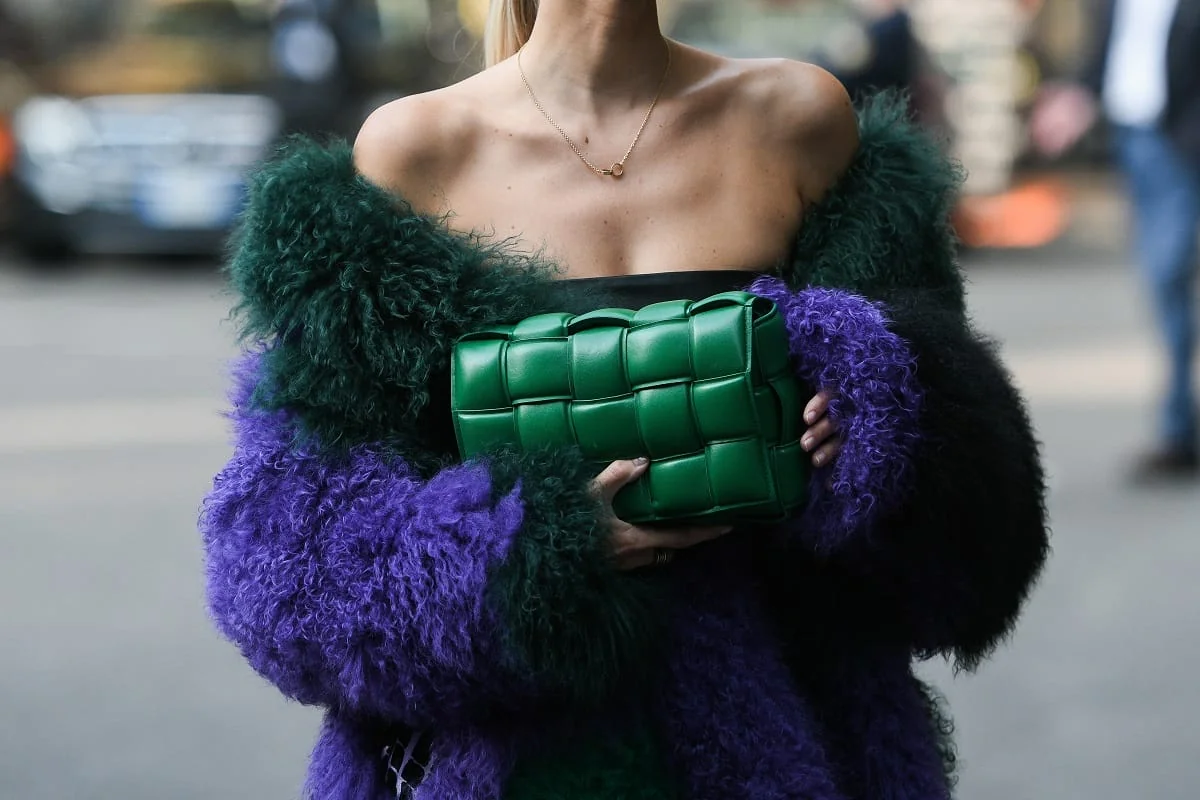
What’s interesting from a style standpoint is how that symbolism collided with an unrelated fashion moment. Around 2019, Bottega Veneta’s parakeet green — under then-creative director Daniel Lee — became one of the most photographed colors in luxury fashion, showing up on everything from the Pouch clutch to knitwear. That trend never really faded; it just kept resurfacing on runways and in [[[[designer handbags](/brands/celine-luggage-tote-guide-sizes-history-resale-value/)](/buying-guides/top-it-bags-worth-buying-2024/)](/brands/popular-handbag-brands/)](/buying-guides/chanel-flap-bag-buying-guide/), shoes, and clothing every season since. For Saudi shoppers, the timing is almost too convenient: a color with deep national meaning happens to also be having a genuine fashion moment. That overlap is exactly what makes green such a strong pick for Saudi National Day style tips this year — it reads as festive without looking costume-y, and it gives you a legitimate excuse to buy the green piece you’ve been eyeing anyway.
Below are four ways to wear it — for a party, for the office, for a casual day out, and for traditional dress — plus the practical details on shopping smart and avoiding the counterfeit surge that tends to follow any trending color.
Glitz, Glam, and a Bit of Green: Party-Ready Looks #
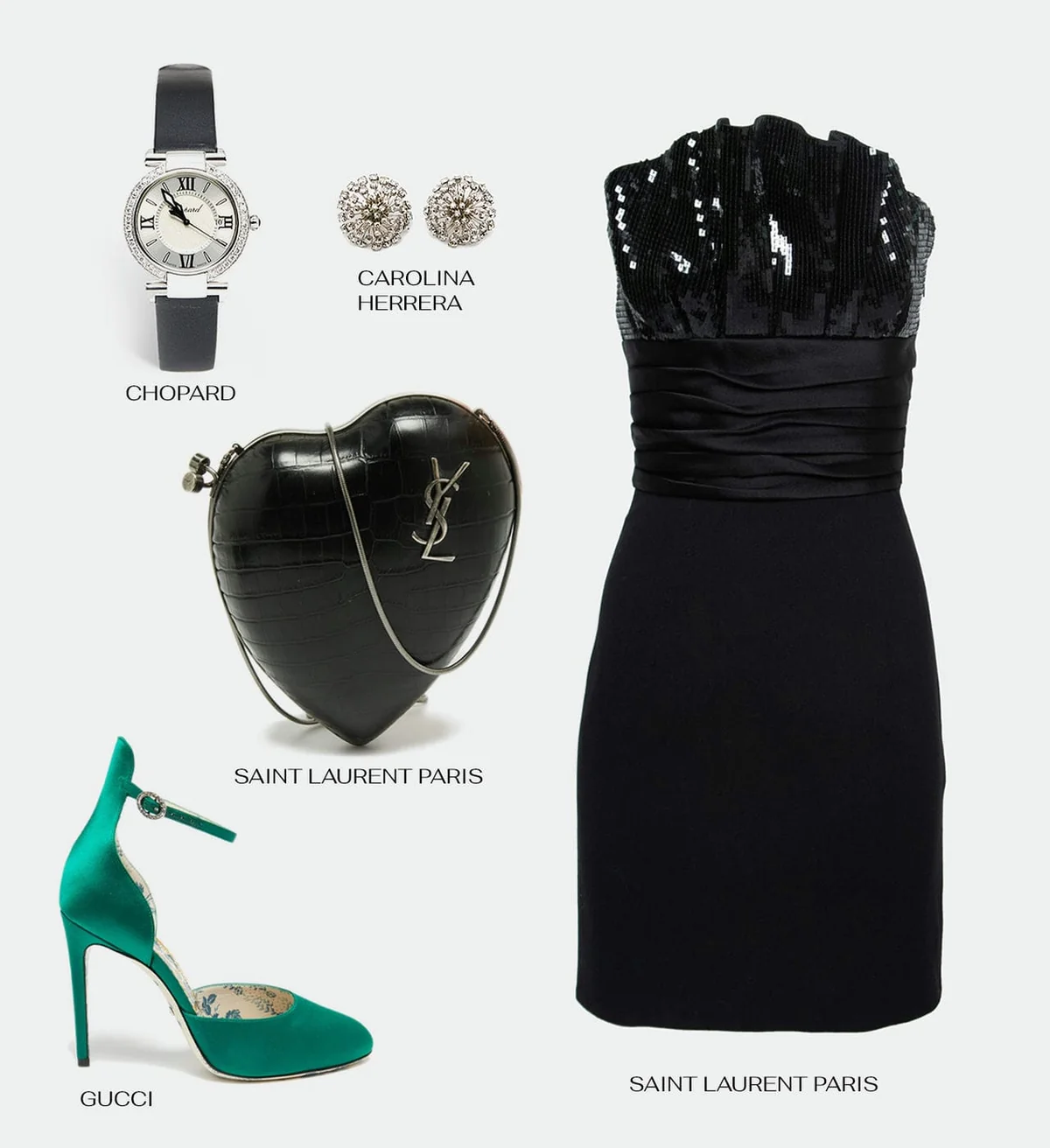
The easiest way to bring green into an evening look without turning it into a costume is to let it live in the accessories while a little black dress does the heavy lifting. A wool-and-sequin LBD with a ruffled or textured finish already has enough visual interest on its own — the green comes in through the shoes and one statement accessory, not the whole outfit.
A styled set that works well together:
- Green satin pumps with a decorative ankle strap or daisy detail — this is where the color gets to do most of the talking
- A black mini dress with sequin or ruffle detailing as the base
- A structured heart-shaped or croc-embossed clutch on a chain, ideally in black so it doesn’t compete with the shoes
- A satin-strap diamond watch for a bit of polish at the wrist
- Two-tone crystal earrings to catch the light without overwhelming the face
The reason this formula holds up: green suede or satin shoes photograph beautifully under evening lighting, but they’re also the single easiest place to introduce a bold color without long-term commitment. If you’re not sold on green as a “forever” color in your wardrobe, shoes and a clutch are a lower-risk entry point than, say, a green coat.
One honest caveat — satin and suede evening shoes in saturated colors like green show scuffs and water spots fast. If you’re wearing them outdoors for National Day festivities (fireworks viewing, outdoor events), budget for a proper suede protector spray beforehand, or expect some visible wear by the end of the night.
Workwear Reimagined: Power Dressing with a Green Twist #
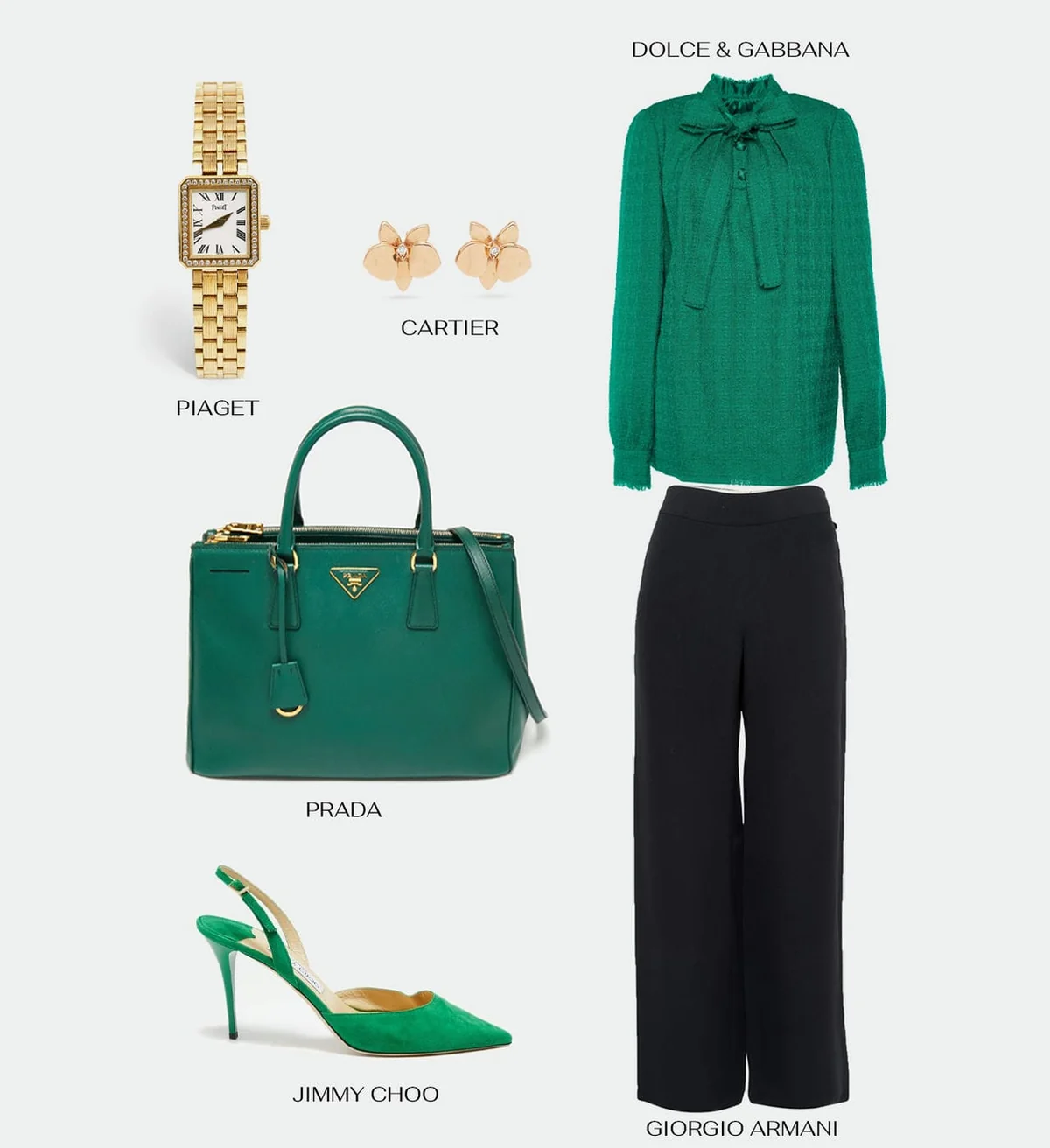
Green in a professional setting reads completely differently than green on a party shoe — it needs structure, and it needs a metal tone that grounds it. Gold hardware and gold jewelry do that job consistently better than silver, which tends to make green look colder and more casual than intended.
A workwear set built around this idea:
- A tweed or textured green blouse with a bow-tie neckline as the focal piece
- Wide-leg black trousers in a fluid fabric like silk, which balances the structure of the blouse
- Green suede slingback pumps to echo the blouse without matching it exactly
- A saffiano leather tote in the same green family, sized for a laptop and daily documents
- Rose gold diamond stud earrings and a yellow gold watch to tie the metal tones together
The styling logic here matters more than the specific pieces: pick one dominant green tone (say, a deep bottle green) and let the blouse and bag reference it, rather than mixing an olive top with an emerald bag. Mismatched greens look more like a mistake than a styling choice, especially in a boardroom setting where the outfit is supposed to project control, not experimentation.
Worth knowing before you invest: green suede pumps require noticeably more upkeep than black or nude ones, and they don’t resell as well either — a factor worth weighing if you’re buying pre-owned or plan to resell later.
Casual Day Out: Effortless Green Accents #
For a relaxed, everyday version — think a brunch with friends or a coffee run before an outdoor National Day event — green works best as texture rather than a flat block of color. A feather-embellished or metallic-finish cardigan does that job well over a simple base.
A casual set that keeps things wearable:
- A metallic green cardigan with feather or stud embellishment as the outer layer
- Blue denim jeans, ideally with a floral or embroidered detail to keep the outfit from feeling too plain underneath a busy cardigan
- A wallet-on-chain in green lizard or textured leather, sized for essentials only
- Black leather loafers to ground the look in something neutral
- A watch stacked with a bracelet on the same wrist for a bit of polish without dressing up the rest of the outfit
This is also the easiest look to recreate at a lower price point, since the “green moment” here is doing less structural work than in the party or office looks — a green cardigan or jacket from a mid-range label will read just as well as a designer one from a few feet away. Save the splurge for the bag or shoes if budget is limited, since those are the pieces people actually get close enough to notice.
Shop the Look: Where to Find These Designer Pieces #
If you’re shopping these looks with resale value or long-term wear in mind, a few things are worth knowing before you buy.
New-season green pieces from labels like Bottega Veneta, Chanel, and Saint Laurent carry a premium precisely because the color is trending — which means prices can drop faster than black or neutral equivalents once the trend cools. If you’re buying to wear once for National Day and don’t plan to keep it in rotation for years, buying pre-owned is usually the smarter financial move: you get the same construction and materials at 30-60% off retail, and green pieces from a season or two ago are often easier to find secondhand precisely because early buyers move on quickly.
That said, trending colors are also where counterfeits cluster hardest. Whenever a specific shade or bag becomes highly photographed — the way Bottega’s green did — counterfeit volume follows within months. Before buying secondhand green pieces, especially bags:
- Check hardware weight and finish. Genuine Bottega, Chanel, and Saint Laurent hardware has a specific heft and a matte or brushed finish that’s hard to replicate cheaply; overly shiny or lightweight hardware is a red flag.
- Verify stitching density and color-matched thread. Authentic leather goods use tight, even stitching in a thread color that matches the leather almost exactly.
- Ask for serial numbers, date codes, or microchip verification where applicable, and cross-check them against the brand’s known format for that production year.
- Buy from resellers who offer independent authentication or a clear return policy tied to authenticity disputes — not just “trusted seller” badges with no verification process behind them.
This is also where hardware quality tells you the most about a bag’s era and authenticity. If you’re newer to buying pre-owned luxury, it’s worth spending time comparing stitching and hardware on a few confirmed-authentic pieces in person before shopping green trend items specifically, since the color itself gives no clues about authenticity — only construction does.
Styling Tips: How to Wear Green Without Overdoing It #
Green is forgiving in small doses and unforgiving in large ones. A few rules that hold up across most of these looks:
Treat green as the accent, not the base — usually. The 60-30-10 rule works well here: let a neutral (black, white, beige, or camel) make up roughly 60% of the outfit, a secondary neutral or denim take another 30%, and let green fill the remaining 10% through shoes, a bag, or jewelry. All four looks above follow this ratio loosely, and it’s why none of them feel like “green outfits” so much as outfits with green in them.
Match your green’s temperature to your metals. Warmer greens (olive, moss, forest) pair better with gold and warm browns. Cooler greens (emerald, bottle, parakeet) sit better with silver, black, and white. Mixing a warm olive bag with cool silver jewelry is a common mismatch that makes an outfit look unplanned rather than styled.
Know your green undertone before buying. Emerald and jewel-toned greens tend to flatter deeper or warmer skin tones, while softer sage and mint work better on lighter, cooler undertones. If you’re unsure, hold the piece near your face in daylight before purchasing — online product photos consistently render green shades warmer or cooler than they are in person.
Avoid pairing two different greens unless they’re clearly from the same family. An olive jacket with an emerald bag reads as a styling error more often than an intentional layering choice. If you want to wear green head to toe, stick to one shade and vary the texture instead (suede shoe, leather bag, knit top, all in the same tone).
Green and red rarely work outside of overtly festive dressing. Since the two sit opposite each other, pairing them tends to look accidental rather than intentional unless the context (like a specific holiday theme) calls for it directly.
Green Thobe Styling Guide for Men #
Green doesn’t traditionally belong in the thobe itself — white remains the standard, and for good reason: it’s practical in the heat and it’s the culturally expected choice for daily and formal wear alike. The opportunity for green on National Day is almost entirely in what goes over or with the thobe, not the garment itself.
The bisht is your main canvas. A bisht (the open cloak worn over the thobe for formal occasions) in a deep bottle or forest green, often with gold bullion trim, is one of the most authentic ways to bring the national color into men’s traditional dress. It reads as celebratory without looking like a costume, since bisht in colored fabrics — including green, maroon, and black — are already a known formal-wear category, not a National Day invention.
Keep the ghutra and agal traditional. The red-and-white or all-white ghutra with a black agal is the expected pairing and shouldn’t be swapped for green — this is one area where straying from convention tends to look off rather than fashion-forward.
Use accessories for the rest. A green-dial watch (the “Kermit” green Rolex Submariner is the most recognizable reference point, but plenty of other brands make green-dial pieces at various price points), a green leather cufflink set, or green leather sandals are all low-risk ways to work the color in without altering the thobe itself.
For younger or more fashion-forward dressers, some contemporary thobe tailors now offer subtle green piping along the collar or cuffs, or a thobe in an ivory-green blend fabric rather than pure white. This is a newer trend and skews casual — appropriate for family gatherings and daytime events, less so for formal National Day functions where a classic white thobe and green bisht combination remains the safer, more respected choice.
Abaya and Modest Looks in Green Tones #
Green translates into modest dressing more naturally than almost any other trend color, since abayas already come in a wide range of solid tones beyond black. A few ways to wear it well:
A full emerald or bottle-green abaya with tonal embroidery works as a standalone statement piece — the kind of look that doesn’t need much else besides a simple hijab in black, gold, or a matching green a shade lighter or darker than the abaya itself. Crepe and silk-blend fabrics hold the color’s richness better than lighter cottons, which tend to look washed out in deep greens.
Layering green under black is the lower-commitment option: a black abaya open over a green underlayer — whether that’s a dress, a jalabiya, or even wide-leg trousers with a green top — lets the color show at the sleeves, hem, and neckline without dominating the whole silhouette. This is a practical choice for anyone attending both formal and casual events on National Day and wanting one abaya to work across both.
Gold embroidery detailing is doing a lot of the work in most higher-end green abayas — it’s the difference between a piece looking festive versus looking like plain colored fabric. If budget allows, this is where the investment is worth it over buying the cheapest solid-green abaya available, since embroidery detail is the hardest thing to fake well at a low price point.
Accessorize with texture, not more color. A structured top-handle bag in a complementary neutral (camel, black, or gold-tone hardware pieces) and a pair of low block-heel sandals keep the look modest-appropriate while still photographing well. Save a second green accessory — a scarf, a small pouch bag — for contrast rather than matching the abaya exactly; identical-tone matching between abaya and bag tends to flatten the outfit rather than elevate it.
One practical note on fabric: deep green silk and crepe abayas show sun fading faster than black over repeated wear, since darker saturated colors generally fade more visibly than black does. If you’re buying for repeat wear beyond this one occasion, ask about colorfastness treatment or stick to a slightly muted green rather than the most saturated emerald available.
A Few Common Questions #
Does the shade of green matter for National Day specifically, or is any green fine? Any green works symbolically, but bottle and emerald greens read closer to the flag’s actual shade than mint or sage, which lean more “spring fashion” than “national color.” If the goal is a clear nod to the occasion, go deeper and more saturated.
Is it worth buying a designer green piece I’ll only wear once a year? Only if it’s versatile beyond the occasion — a green bag or pair of shoes that pairs with your existing black and neutral wardrobe earns its keep; a green statement dress worn once a year usually doesn’t, unless you’re buying pre-owned at a price where the cost-per-wear makes sense.
How do I avoid overpaying for a “trend” green item right now? Compare pre-owned listings before buying new. Trending colors depreciate faster than neutrals once the initial hype passes, so the gap between retail and resale pricing on green pieces tends to be wider than on black or beige equivalents — which works in your favor as a buyer.
Related Articles #
- Why the Chanel Crossbody Bag Never Goes Out of Style
- Night Luxe Trend: Glitz & Glam Designer Style Guide
- How to Style a Chanel Bag: Outfit Guide
- 5 Most Popular Chanel Bags You Need to Know
- Which Chanel Bag to Buy? Style Guide by Body & Budget
Related guides
- Online Bag Authentication: What Photos Can and Cannot Prove
- Inside a Million-Dollar Closet: Pre-Loved Hermès & More
- Meet Marwa Azzam Aldabbagh: Kelly Bag Authentication Expert
- Luxury Handbag Authentication Process Explained
- How to Buy an Authentic Luxury Bag from China Safely
- New vs Pre-Owned Luxury Bags: Which Route Is Right for You?
- Chanel Bag Guide: What to Know Before You Buy
- Luxury Bag Houses


Keyword index