Introduction #
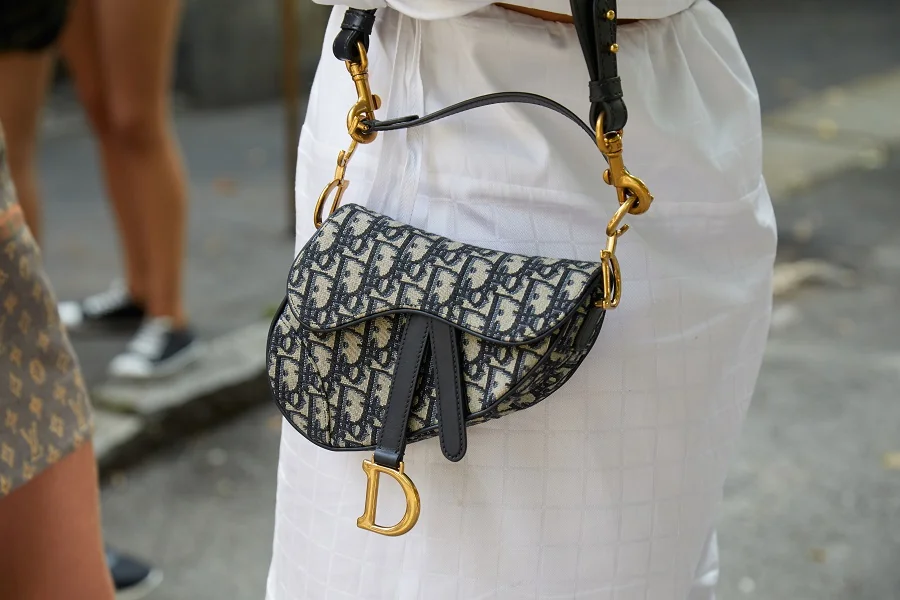
Every so often a bag comes along that refuses to be filed under “trend.” The Dior Oblique Jacquard Saddle Bag is one of those pieces. It has already lived one full life as the defining “It bag” of the early 2000s, disappeared for almost two decades, and returned to find itself just as relevant to a generation that wasn’t even shopping the first time around. That kind of staying power is rare in handbags, and it’s exactly why we’re putting it under the microscope as our bag of the week.
What follows isn’t a nostalgia piece. We’re breaking down the construction, the Oblique jacquard fabric that gives this version its identity, where it sits against Dior’s own lineup and against rivals like Gucci and [[[Saint Laurent](/brands/saint-laurent-opyum-pumps-buying-guide/)](/brands/saint-laurent-kate-bag-spotlight/)](/brands/saint-laurent-kate-bag-review/), and — because this is a bag that gets counterfeited relentlessly — what to check before you hand over money for a pre-owned one.
The Return of the Saddle Bag #
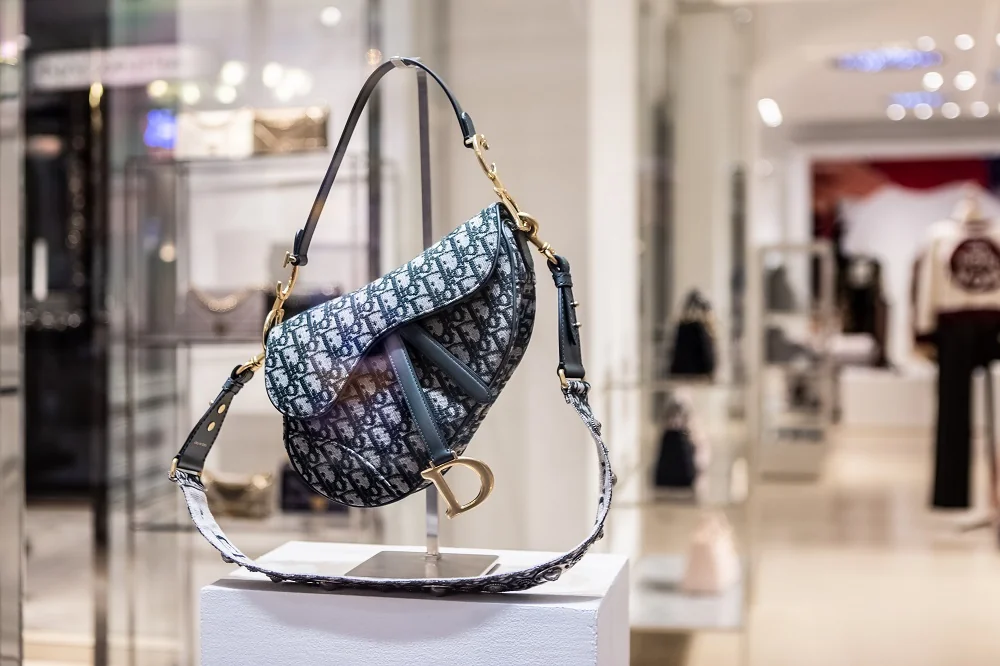
John Galliano introduced the Saddle bag in 1999, and it landed at an odd moment: minimalism was still fashionable, and this was anything but minimal. The curved, asymmetrical flap borrowed directly from equestrian tack, and the silhouette had nothing in common with the structured totes and boxy shoulder bags dominating that era. It shouldn’t have worked commercially. It did, spectacularly — helped along by a cameo on “Sex and the City” that pushed it from runway curiosity to genuine cultural object within a couple of seasons.
The Oblique motif that now defines the bag predates it by more than thirty years. Marc Bohan sketched the tilted, diagonal “CD” print in 1967, long before Galliano’s Saddle gave it a second act. Pairing a heritage textile with a genuinely new shape is part of why the bag read as both fresh and instantly credible — it wasn’t a house inventing a monogram to chase a trend, it was pulling one out of the archive and putting it to work.
The Saddle disappeared from the main line in the mid-2000s, as tastes shifted toward the clean lines of the Lady Dior and the emerging logomania backlash. Maria Grazia Chiuri revived it for Dior’s Autumn/Winter 2018 collection, and her reasoning was straightforward: “the Saddle bag is one of those emblematic pieces that always manages to remain contemporary.” The relaunch wasn’t a reissue in the literal sense — proportions, hardware, and material options were all updated — but the DNA carried over intact, and the Oblique jacquard version became the flagship expression of that revival.
Design and Craftsmanship of the Oblique Jacquard Edition #
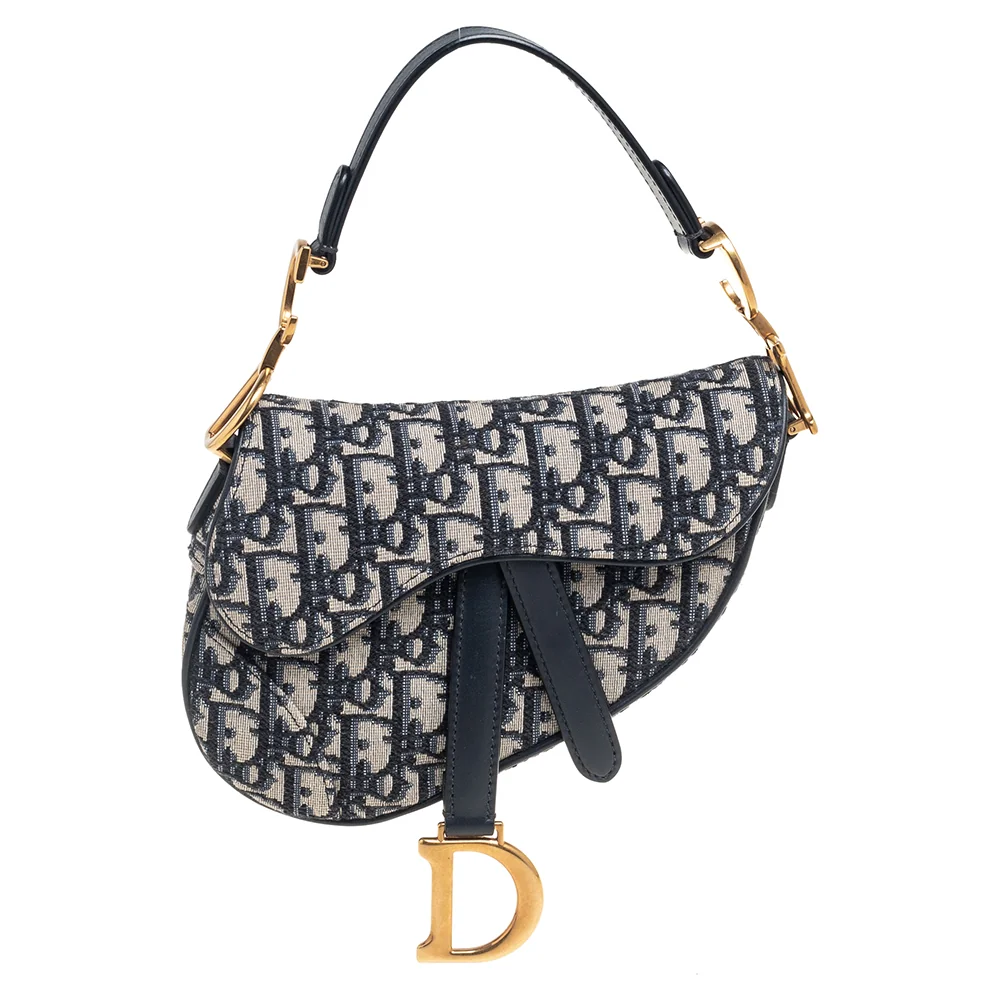
The Oblique jacquard Saddle is built from a woven canvas, not a printed one. That distinction matters more than it sounds: the diagonal “CD” pattern is created through the weave structure itself, using dyed yarns rather than surface ink, which gives the fabric a textured, almost basket-like hand-feel and makes the motif visible on both faces of the material. It’s more labor-intensive to produce than a coated or printed canvas, and it’s also considerably more resistant to surface wear — a printed logo can flake or fade; a woven one degrades far more slowly.
The canvas is paired with smooth calfskin leather at the trim, handle, and strap attachments, along with gold-toned hardware throughout. The signature front flap, shaped like a stirrup and closed with a magnetic “D” clasp, is the bag’s most recognizable feature and the detail counterfeiters get wrong most often — the curve should sit flush against the body of the bag with no gapping, and the clasp mechanism should have real resistance when it snaps shut, not a loose magnetic wobble.
Look also at the handle: genuine pieces carry small “CD” metal accents fixed at each side where the handle meets the body, cleanly stamped with sharp edges rather than shallow or blurred lettering. Interior construction is equally telling — the lining is finished neatly, pockets are evenly stitched, and the leather-to-canvas transitions show no glue bleed or uneven trimming. Dior’s ateliers hand-finish these transitions, and it shows in the evenness of the stitch count per centimeter, which stays consistent across the whole bag rather than tightening or loosening at the seams.
Styling the Saddle Bag #
Part of the reason this bag outlived its own decade is that it was never built to be styled one way. The curved flap and adjustable strap system let it move between a crossbody, a shoulder bag, and — with the strap removed — a clutch, depending on the strap length you choose and how you’re carrying that day.
Worn crossbody, it reads casual: good with denim, an oversized blazer, or a plain tee, where the Oblique print does the visual work without competing with anything else in the outfit. Slung higher on the shoulder, it dresses up more easily and holds its own against tailoring or a slip dress, since the equestrian shape has enough visual weight to anchor a simpler outfit. Carried by hand as a clutch, it’s genuinely one of the few “logo” bags that doesn’t look try-hard at an evening event, mostly because the jacquard texture reads more like a woven textile than a branding exercise from across a room.
The honest downside: the asymmetrical flap and curved base mean it doesn’t sit perfectly flat, and it’s not the most practical option if you need to dig for keys or a phone quickly. It’s a bag you carry for shape and presence, not for grab-and-go efficiency.
Price and Resale Value #
Retail pricing for the current Oblique jacquard Saddle bag runs roughly $3,200 to $3,900 depending on size and hardware finish, with limited or seasonal colorways occasionally priced higher. That’s not entry-level Dior, but it’s also not the brand’s ceiling — the Lady Dior and Book Tote both sit above it at retail.
On the resale market, well-maintained Oblique jacquard Saddle bags typically trade between $1,500 and $2,800, with condition, size, and completeness of accessories (dust bag, box, authenticity card or RFID tag) driving most of the spread within that range. That’s a stronger retention rate than most canvas-based designer bags manage, and there’s a practical reason for it: jacquard wears more gracefully than coated canvas or printed leather, so a five-year-old bag in good condition still looks presentable rather than tired, which keeps buyer demand — and therefore price — steadier over time.
Where value erodes fastest is with hardware tarnish and flap-clasp wear, since both are expensive or impossible to fully restore. A bag with crisp gold-tone hardware and a tight-closing clasp will consistently outprice an otherwise similar piece with dulled or loose hardware, even if the canvas itself is in comparable shape.
Buying Advice: Where and How to Shop Authentic #
The Saddle bag’s profile makes it one of the more heavily counterfeited Dior styles, precisely because the silhouette is so recognizable and the jacquard weave is difficult — though not impossible — to fake convincingly. A few checks worth doing before you buy pre-owned:
- Feel the canvas. Genuine Oblique jacquard has texture you can feel under your fingers. If the pattern feels flat, glossy, or printed rather than woven, walk away.
- Check the clasp mechanism. The “D” stirrup closure should snap shut with real magnetic resistance and sit flush, not gap or wobble.
- Inspect the hardware stamping. “CD” accents and any engraved hardware should have sharp, even lettering. Shallow or uneven stamping is a common tell.
- Look at stitch consistency. Authentic construction holds an even stitch count across seams; irregular spacing or visibly hand-sewn-looking gaps suggest a workshop copy.
- Ask for the authenticity card or RFID chip. Dior has increasingly moved to embedded microchips on newer production, alongside traditional heat-stamped date codes inside the lining. Sellers should be able to show or reference this without hesitation.
For sourcing, buy from platforms that authenticate in-house before listing rather than relying solely on seller photos — reputable resale marketplaces, established consignment houses, or Dior boutiques directly for new pieces. Be wary of prices dramatically below the resale range noted above; on a bag this recognizable, an unusually low price is more often a red flag than a bargain.
Oblique Jacquard vs Other Materials: What Sets This Version Apart #
Dior offers the Saddle in several material treatments — smooth calfskin, grained leather, and the Oblique jacquard canvas being the three most common. The leather versions read quieter and arguably age with less visible pattern-fading, but they lack the textural depth and immediate brand recognition of the jacquard. If you want the Saddle to read as unmistakably Dior at a glance, jacquard is the version that does it; if you’d rather the design itself carry the bag without a monogram doing the talking, calfskin is the better route.
Against competitor saddle-style bags, the comparison is instructive. Gucci’s 1955 Horsebit and Marmont lines lean on hardware and quilting rather than a woven monogram, which makes them feel more classic-leather-goods in character and generally slightly more resistant to the “logo fatigue” that occasionally hits heavily monogrammed pieces. Saint Laurent’s Kate and Niki bags sit in a similar equestrian-adjacent design space but skip textile branding almost entirely, favoring hardware (the YSL clasp) as the identifying feature. Dior’s jacquard Saddle is the more textural, more directly heritage-referencing option of the three — you’re buying into a specific 1967 print with documented lineage, not just a hardware silhouette, which is part of why it holds resale value competitively against both.
Size Guide: Mini, Medium, and Large Saddle Bag Compared #
Dior produces the Saddle across three main size tiers, and the differences matter more for daily usability than the photos usually suggest.
Mini Saddle — roughly 19.5 x 16 x 4 cm. Built more as a statement accessory than a functional bag: a phone, cards, and lip product will fit, but not much beyond that. Best suited to evening wear or as a crossbody accent piece rather than an everyday carry.
Medium (original) Saddle — roughly 25.5 x 20 x 6.5 cm. This is the proportion Galliano’s original design established, and it remains the most balanced option: enough room for a wallet, sunglasses case, small cosmetics pouch, and a compact water bottle, while keeping the curved silhouette intact rather than stretching it out of shape.
Large Saddle — roughly 27 x 21 x 7.5 cm. Marginally roomier than the medium, with slightly more depth, making it a better fit if you carry a tablet or need extra buffer for daily items. The trade-off is that the increased volume softens the sharpness of the equestrian silhouette a little — the design reads best at the tighter, original medium proportions.
For most buyers, the medium is the safer choice: it’s the size the bag was designed around, it’s the easiest to resell given demand patterns, and it avoids the capacity compromises of the mini without diluting the shape the way the large sometimes does.
Frequently Asked Questions #
Is the Dior Oblique Jacquard Saddle Bag a good investment? It holds value better than most canvas-based designer bags thanks to the durability of the woven jacquard, but it’s not immune to depreciation — hardware condition and completeness of original accessories matter more here than with smooth-leather bags.
How can I tell if a pre-owned Saddle bag is authentic before buying online? Request close-up photos of the clasp mechanism, hardware stamping, and interior heat stamp or microchip before purchasing, and favor platforms that authenticate items prior to listing rather than relying on seller claims alone.
Does the Oblique canvas stain easily? It’s more resistant to surface wear than printed canvas, but it isn’t stain-proof — avoid prolonged contact with denim dye and store it away from direct moisture.
Related Articles #
- YSL Tribute Sandals: Why This Iconic Style Still Reigns
- YSL Tribute Sandals: Why This Iconic Style Still Reigns
- Gucci Ophidia Shoulder Bag Review: Bag of the Week
- Gucci Dionysus Bag Review: Is It Worth Buying Resale?
- Gucci Horsebit vs Celine Triomphe: Full Comparison
Related guides
- Online Bag Authentication: What Photos Can and Cannot Prove
- Luxury Handbag Authentication Process Explained
- China TikTok Luxury Factory Claims: Fact vs Fiction
- Chanel 2.55 History, Details & How to Spot a Fake
- How to Buy an Authentic Luxury Bag from China Safely
- New vs Pre-Owned Luxury Bags: Which Route Is Right for You?
- Chanel Bag Guide: What to Know Before You Buy
- Luxury Bag Houses


Keyword index