Introduction: The Case for the Daytime Clutch #
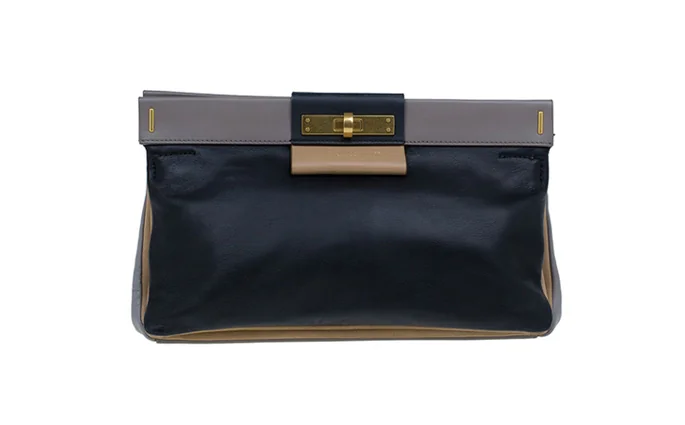
Ask most women what a clutch is for, and you’ll get the same answer: evenings. Weddings, dinners, the odd cocktail hour where a big bag would just get in the way. That’s the reputation clutches have carried for decades, and it’s the reason so many sit untouched in a closet for eleven months of the year.
We think that reputation is outdated. A daytime clutch bag isn’t a compromise or a downgrade from your everyday tote — it’s a different tool for a different job, and once you start using one for the school run, the office, or a weekend of errands, the oversized bag starts to feel like the thing that’s holding you back. This isn’t about abandoning your structured totes or your Kelly. It’s about recognising that not every day calls for a bag that can survive a week in the wilderness, and that carrying less is often the more elegant choice.
What follows is a practical case for rethinking the clutch as a daytime staple, plus the buying knowledge to choose one that actually earns its place in rotation.
Effortless Style: Minimal Hardware, Maximum Versatility #
Structured bags — think top-handle totes with polished clasps, branded turn-locks, or heavy chain straps — tend to compete with whatever you’re wearing. Gold hardware against silver jewellery, a logo plate that clashes with a patterned coat. It’s a small styling headache, but it’s a real one.
Clutches sidestep it almost entirely. Most are built with minimal exterior hardware: a discreet zip, a simple flap, maybe a single clasp. That restraint is exactly why they’re easier to mix and match across a wardrobe than bags with heavier branding or ornamentation. A plain leather clutch doesn’t argue with your other accessories — it just sits quietly under your arm and lets everything else do the talking.
This also means the clutch becomes a lever for changing an outfit’s mood without changing the outfit itself. Swap a structured black clutch for a soft, slouchy suede one and a tailored blazer suddenly reads more relaxed. Bring in a bright colour or a woven texture and the same trousers-and-shirt combination goes from office-neutral to weekend-ready. Few accessories offer that much tonal shift for that little effort.
One Bag, Two Occasions: From Desk to Dinner #
The most underrated feature on a well-made daytime clutch is something you’ll find tucked inside the lining: a detachable strap. It’s a small design detail with an outsized effect on how much use you get from the bag.
In the office, unclip the strap, carry the clutch under your arm or by its top handle, and it looks appropriately polished for a desk. After hours, clip the strap back on, sling it crossbody or over the shoulder, and the same bag reads as evening-appropriate without looking like you’re trying too hard. No trip home to swap bags, no second bag stuffed into your tote for later.
This is where a daytime clutch genuinely outperforms both the oversized workbag and the traditional evening clutch. The workbag doesn’t scale down for dinner. The dinner clutch was never built to carry a laptop charger or a transit card in the first place. A well-designed convertible clutch splits the difference — provided you check for the strap before buying, since not every version includes one, and it’s a detail easy to miss in a product photo.
Travel Smart and Carry Light #
Packing efficiency is where the daytime clutch quietly proves its worth. A structured tote or a boxy top-handle bag eats suitcase space — it typically has to travel packed with tissue or stuffed with clothes to hold its shape, and it takes up a fixed volume no matter how little you’re carrying. A soft clutch folds flat, slides into a side pocket of a carry-on, or tucks into a larger travel bag with room to spare.
That packability translates directly into fewer decisions on the road. One clutch can double as your daytime essentials bag and your evening bag for the trip, which means one fewer bag to pack, track, and worry about at security or on a crowded train platform. For anyone who has ever paid an overweight baggage fee because of “just one more bag,” this is a genuinely practical argument, not just a stylistic one.
The trade-off is real, though: a clutch won’t hold a guidebook, a water bottle, and a change of shoes. Treat it as your out-and-about bag once you’ve reached your destination, not your only bag for the whole trip.
Better for Your Body: Comfort Over Bulk #
This is the benefit people underestimate until they experience it. A loaded tote or a heavy shoulder bag, worn daily, puts sustained one-sided pressure on the neck and shoulder — the kind that shows up as tension headaches or a persistent knot between the shoulder blades after a few years of habit. Physiotherapists routinely flag asymmetric bag-carrying as a contributor to postural strain, and anyone who’s switched sides mid-commute because one shoulder gave out knows the feeling.
A clutch removes most of that load by design. There’s no strap digging into a shoulder, no bag swinging heavily against a hip. Carried under the arm or held by hand, the weight is distributed differently and, more importantly, there’s simply less weight to distribute because the bag physically can’t hold as much. It’s not a medical fix, and if you have back or joint issues you should still talk to a professional about bag ergonomics generally — but as a lighter-touch, lower-strain option for daily carry, the clutch has a real physical advantage over the strappy oversized bag.
How to Choose the Right Daytime Clutch #
Not every clutch on the market is built for daily use — plenty are designed purely for the three hours of a wedding reception. Here’s what actually matters when you’re buying one to use during the day, most days.
Size #
Look for something that comfortably fits a phone, a card case or slim wallet, keys, and a lip product, with a little room to spare. Anything smaller becomes frustrating fast; anything larger starts drifting back into handbag territory and defeats the point.
Compartments #
A single open pocket looks clean but turns into chaos within a week — keys scratching a phone screen, lipstick rolling loose. At minimum, look for one interior slip pocket or a zip divider so small items don’t migrate into one pile at the bottom.
Strap options #
As covered above, a detachable or convertible strap dramatically extends how often you’ll actually reach for the bag. If you’re buying only one clutch to start, prioritise this feature over colour or logo.
Hardware #
Minimal is not the same as fragile. Check that zips are smooth-pulling and clasps close with a firm, positive click — cheap hardware is usually the first thing to fail on an otherwise decent bag, and it’s a detail worth testing in person rather than trusting from photos.
Closure type #
Zip closures are more secure for daily use and travel. Fold-over flaps look elegant but are easier to snag open in a crowded bag or on public transport, so weigh that against how you’ll actually use it.
Best Materials for Everyday Durability #
Material is the single biggest factor in whether a clutch survives daily handling or looks tired within a season. Some honest comparisons:
Full-grain or top-grain leather — the benchmark for daily wear. It develops a patina rather than visible wear, resists scuffing, and holds its shape. The trade-off is weight and price; it’s also more vulnerable to water spotting than people expect, so it’s worth treating with a protectant before heavy use.
Saffiano and textured calfskin — the cross-hatch or pebbled finish (used widely by Prada and similar houses) is specifically engineered to resist scratches, which makes it a strong choice for anyone who’s rough on bags. It’s slightly stiffer to the touch and less likely to soften with age than smooth leather.
Vegan/PU leather — has improved substantially, and mid-range options from brands like Mansur Gavriel or Cuyana hold up reasonably well for a year or two of regular use. It’s not a lifetime material, though — expect cracking or peeling at stress points (corners, fold lines) eventually, which is the honest downside most retailers won’t volunteer.
Suede — beautiful and genuinely elevates a plain outfit, but it’s the least practical daytime choice. It marks easily with water and oil, shows wear at the corners fast, and isn’t the material to reach for if you’re commuting in unpredictable weather.
Canvas and raffia — good for warm-weather daytime use and travel, lightweight and casual, but offer little structure and almost no weather resistance. Best treated as a seasonal option rather than a year-round workhorse.
Recommended picks by budget #
- Entry (under $150): Mansur Gavriel’s leather pouch clutches and Cuyana’s convertible clutch both offer real leather with a detachable strap at an accessible price point.
- Mid-range ($200–$500): Polène’s Numéro Un in the smaller size, or Staud’s Moreau clutch, both hit the size and compartment criteria above while staying practical for daily use.
- Investment ($800+): Hermès’ smaller clutch styles, such as the Bastia or Egee, and [[[[Saint Laurent](/brands/saint-laurent-opyum-pumps-buying-guide/)](/buying-guides/ysl-tribute-sandals-style-guide-review-buying-tips/)](/brands/saint-laurent-kate-bag-spotlight/)](/brands/saint-laurent-kate-bag-review/)’s Sunset or Kate clutches offer the leather quality and resale value that justify the higher entry cost — provided you’re buying from a reputable dealer and, ideally, having it authenticated before purchase given how frequently these specific styles are counterfeited.
FAQ: Daytime Clutch Essentials #
Is a clutch practical enough for everyday use, or is it just a style statement? It’s genuinely practical, with one caveat: it works best as your primary bag on days when you’re not carrying a laptop or bulky items, and as a secondary “essentials” bag inside a larger tote on days when you are. Think of it as reducing what you carry day-to-day, not eliminating the need for a bigger bag entirely.
How much can a daytime clutch actually hold? Realistically: a phone, a slim card case or compact wallet, keys, one lip product, and possibly a folded tissue or small hand sanitizer. That’s it for most sizes. If your daily essentials list is longer than that, look for a slightly larger “clutch-tote” hybrid rather than forcing a traditional clutch to do more than it’s built for.
What’s the difference between an envelope clutch, a wristlet, and a box clutch? An envelope clutch is flat, flap-closed, and the most versatile for daytime — it slips easily under the arm and layers well with structured outfits. A wristlet has a small loop or strap that goes around the wrist, trading a bit of elegance for hands-free convenience, which makes it a strong pick for travel or errands. A box clutch is rigid and structured, holds its shape regardless of contents, but sacrifices packability entirely — it won’t fold flat in a suitcase and is the least travel-friendly of the three.
Can I wear a daytime clutch to the office without it looking too casual or too formal? Yes, provided you choose a structured leather style over a soft or embellished one. A rectangular or top-handle clutch in a neutral colour reads as polished daytime accessory rather than evening wear, especially paired with tailored clothing.
Are cheaper clutches worth buying, or should I save for a designer one? Both have a place. A mid-range leather clutch is often the smarter first purchase because it lets you test whether the format actually fits your routine before committing to an investment piece. If you already know you’ll use it daily, a well-made designer clutch in durable leather will outlast several cheaper replacements — but only if the hardware and stitching hold up, which is worth checking in person or via detailed photos and, for resale-value pieces, third-party authentication before buying secondhand.
Related Articles #
- Party Season Bags: 4 Silhouettes You Actually Need
- YSL Tribute Sandals: Why This Iconic Style Still Reigns
- YSL Tribute Sandals: Why This Iconic Style Still Reigns
- Why the Chanel Crossbody Bag Never Goes Out of Style
- 5 Best YSL Bags Worth the Investment in 2025
Related guides
- Online Bag Authentication: What Photos Can and Cannot Prove
- Blue Crocodile Lady Dior Tote: Buying Guide
- Chanel Vintage Flap Bag Buying Guide: Navy Lambskin
- Louis Vuitton Palm Spring Backpack: Complete Buyer's Guide
- How to Buy an Authentic Luxury Bag from China Safely
- New vs Pre-Owned Luxury Bags: Which Route Is Right for You?
- Chanel Bag Guide: What to Know Before You Buy
- Luxury Bag Houses


Keyword index