Introduction: The Woman Behind the Style#
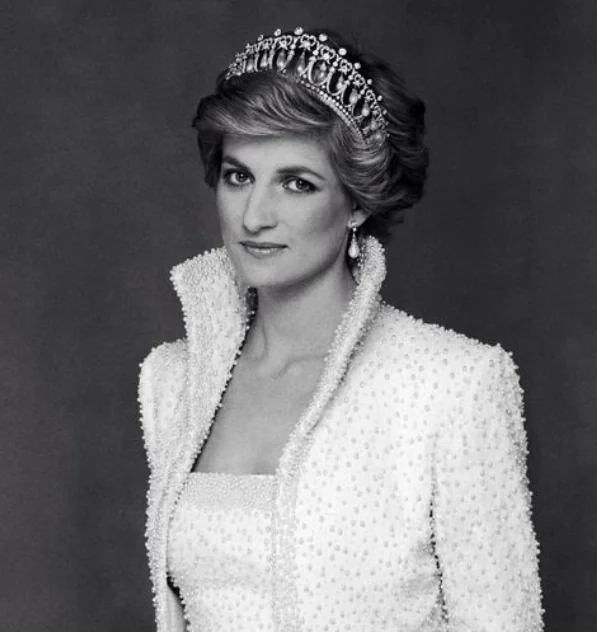
“I don’t go by a rule book… I lead from the heart and not the head.” — Princess Diana, BBC Panorama, 1995
Diana’s clothes get discussed and dissected more than almost any other public figure’s in fashion history, but the reason her wardrobe still moves people nearly three decades after her death has less to do with the clothes themselves and more to do with who was wearing them. She was disarmingly sincere in a way that royals simply weren’t supposed to be. She knelt to talk to children, held the hands of AIDS patients when public fear and stigma made that a genuinely radical gesture, and walked through active minefields to make a point about landmine survivors. None of that was styled. It was her.
That authenticity is exactly why her fashion has this strange staying power. When you know the woman meant what she wore, the clothes stop being costume and start being evidence — a visual record of a life that shifted from shy aristocrat to global humanitarian in full public view. It’s also why the 2025 Julien’s Auction of her personal wardrobe is generating serious attention, not just from fashion editors and royal watchers, but from collectors treating these pieces as blue-chip cultural assets. Understanding Diana’s style evolution is really the only way to understand why bidders are willing to pay six and seven figures for a used cocktail dress.
Couture with a Conscience: The Evolution of Diana’s Wardrobe#
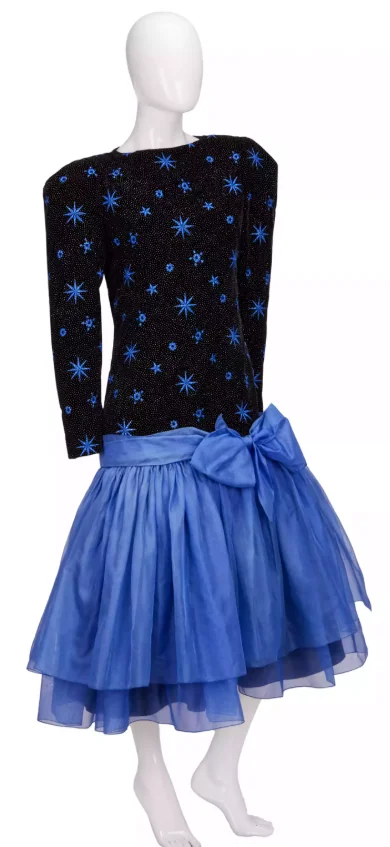
Diana’s fashion arc breaks cleanly into two eras, and if you look at enough archival photography, the turning point is obvious.
The early years — roughly 1981 through the mid-80s — were pure “Sloane Ranger”: puffed sleeves, high necklines, pastel tweeds, the kind of proper English aristocratic dressing that signaled she belonged at Balmoral without saying a word. It was safe, appropriate, and honestly a bit anonymous. She was dressing for the role she’d married into, not for herself.
The shift starts becoming visible by the late 80s and accelerates hard through the 90s, especially after her separation from Prince Charles in 1992. Necklines dropped. Silhouettes got sleeker. Colors got bolder. She started working with designers like Gianni [Versace](/brands/versace-eros-pour-femme-fragrance-launch/) and Christina Stambolian who understood modern, body-conscious tailoring rather than traditional royal formality. The most obvious data point here is the so-called “Revenge Dress” — the black off-the-shoulder Christina Stambolian cocktail dress she wore in 1994, on the same evening Prince Charles publicly admitted to infidelity on television. She hadn’t planned to wear it for that event, reportedly grabbing it as a last-minute alternative, but the timing turned it into one of the most analyzed fashion statements of the 20th century. That’s the whole story of Diana’s later style in one dress: quiet, deliberate, and impossible to ignore.
What’s easy to miss, looking at this purely as a glamour upgrade, is that it was also an act of self-determination. She increasingly championed British designers — Catherine Walker, Bruce Oldfield, Jacques Azagury, Victor Edelstein — at a time when royal wardrobe choices were still treated as quasi-diplomatic statements. And she famously kept wearing outfits more than once, unbothered by the “she’s worn that before” tabloid commentary that would sink most public figures. In hindsight, that repeat-wearing habit reads less like an oversight and more like an early, unspoken argument against fast-fashion disposability, decades before “sustainable style” became a marketing category.
The Diana Style Codes: Approachability, Symbolism, Simplicity#
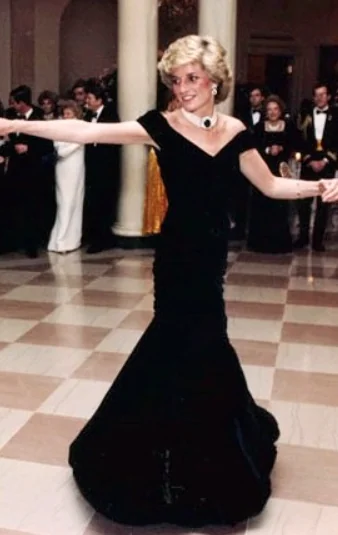
Strip away the specific dresses and Diana’s wardrobe follows a fairly consistent internal logic. Three principles show up again and again.
Approachability. Diana dressed to be looked at, but not to intimidate. Even her most formal gowns tended toward clean lines rather than ostentatious embellishment, and she was just as comfortable being photographed in an oversized sweatshirt and jeans as she was in a Catherine Walker gown. That range is a big part of why her style still feels relevant — it never required royal status to relate to.
Symbolism. She used clothing as message delivery with real intentionality. Outfits were chosen to reflect the cultures and causes she was engaging with, and colors and cuts were sometimes selected specifically to draw attention (or deflect it) around a particular public moment. The Revenge Dress is the most obvious example, but this pattern shows up throughout her wardrobe choices for state visits and charity work alike.
Simplicity with impact. This is the part stylists still study. Diana rarely relied on heavy embellishment to make a piece memorable. Catherine Walker’s tailoring, in particular, favored clean silhouettes and restrained detailing that photographed as elegant rather than busy — a lesson a lot of contemporary red-carpet dressing could stand to relearn.
None of this is retroactive fan mythology. It’s a genuinely coherent design philosophy, and it’s the reason her pieces read as timeless in a way that most 1980s and 90s fashion, frankly, does not.
Inside the 2025 Julien’s Auction: Highlights and Standout Pieces#
Julien’s Auctions has built its reputation on high-profile celebrity and royal memorabilia, and the 2025 sale continues a pattern of Diana pieces reliably outperforming pre-sale estimates. A few lots are worth knowing in detail if you’re following the market rather than just the headlines.
The standout of the 2025 sale was a Gianni Versace blue sleeveless shift dress, which sold for $230,000. It’s a good representative piece of Diana’s later, more modern 90s wardrobe — sleek, unfussy, and a clear departure from the fussier silhouettes of her early royal years. Versace pieces from her wardrobe tend to draw strong interest because there simply aren’t many of them; she wore his designs during a relatively narrow window, which limits supply.
This sale sits alongside recent record-setting results that have reshaped what collectors expect Diana pieces to fetch. In 2023, a Jacques Azagury ballerina-style evening dress — embellished with blue silk and metallic embroidery — sold for $1.14 million, currently the most expensive Diana dress ever auctioned. More recently, the Bellville Sassoon “Caring Dress,” a soft floral day dress she wore repeatedly to hospital visits and charity engagements between 1988 and 1992, sold for $520,000. That price is notable precisely because it’s not a gala gown — it’s a modest day dress, and it still commanded half a million dollars, which tells you provenance and emotional resonance can matter more than formality or embellishment.
For context on how the market has developed, Catherine Walker’s white beaded “Elvis Dress” — worn in Hong Kong in 1989, with its high collar and pearl detailing — sold at Christie’s back in 1997 for $81,000. Compare that to current results and it’s a useful reminder of just how much this category has appreciated over roughly three decades, well beyond general inflation.
Why Diana’s Fashion Commands Serious Money at Auction#
A few overlapping factors explain why Diana pieces consistently outperform comparable celebrity fashion at auction, and it’s worth being honest that not all of it is purely about the clothes.
Provenance is everything. Auction houses and collectors alike treat documented ownership history as the single biggest value driver. A dress with clear photographic evidence of Diana wearing it at a specific, identifiable event — like the Caring Dress’s hospital visits or the Elvis Dress’s Hong Kong appearance — commands a real premium over pieces with murkier documentation.
Scarcity is real, not manufactured. Diana died in 1997. Her working wardrobe was finite, much of it was already dispersed through the 1997 Christie’s charity sale, and what remains in private hands is a shrinking, non-renewable pool. That’s structurally different from, say, a living celebrity’s memorabilia market, where supply can theoretically keep growing.
The market has matured. Royal and celebrity fashion has gone from a niche memorabilia category to something closer to a recognized alternative asset class, with institutional-style attention from serious collectors, museums, and even fashion houses buying back archival pieces. That’s pulled in buyers who wouldn’t have bid on this material fifteen years ago.
Here’s the honest caveat, though: this market is thin and can be emotionally driven. Prices are set by whoever shows up in the room that day, and results can swing hard based on the specific piece’s story, not just its rarity or condition. A dress tied to a famous single moment (the Revenge Dress, the Elvis Dress) will almost always beat a dress with equal craftsmanship but a less quotable backstory. If you’re thinking about this as an “investment” in the traditional sense, understand you’re really buying a story with a garment attached, and that story’s value is set by sentiment as much as scarcity.
Diana’s Influence on Modern Royal Style#
You can trace a fairly direct line from Diana’s wardrobe philosophy to how the current generation of royals dresses, though each has adapted it differently.
Kate Middleton has clearly absorbed the “approachable glamour” playbook — favoring British designers, re-wearing outfits without apology (a habit the press once mocked in Diana and now largely celebrates in Kate), and using fashion diplomatically on international visits, echoing Diana’s use of clothing as soft messaging. Meghan Markle, particularly during her working royal years, leaned into cleaner, more minimalist silhouettes reminiscent of Diana’s later 90s period, and has spoken openly about Diana’s influence on her own approach to public visibility.
Prince William and Prince Harry carry the legacy less through clothing and more through cause — both have built humanitarian work (mental health advocacy, conservation, landmine clearance through Harry’s continued support of the Halo Trust) that directly extends the causes their mother championed. It’s a useful reminder that Diana’s “style legacy” was never just about hemlines. The clothes were the visible layer of a much more deliberate use of public image to draw attention to causes that mattered to her, and that’s the part of her legacy the current royal generation has arguably absorbed most successfully.
Collector’s Guide: What to Know Before Bidding#
If the 2025 Julien’s Auction has you thinking about bidding on a piece of Diana’s wardrobe — or a similar royal fashion lot down the line — a few practical points matter more than enthusiasm.
Verify provenance documentation independently. Don’t rely solely on the auction house’s catalog description, however reputable. Ask for the full provenance chain: original photographic or video evidence of the piece being worn, prior ownership records, and any conservation or restoration history. Reputable houses like Julien’s and Christie’s do this work, but as a buyer you should understand the paper trail yourself.
Factor in the buyer’s premium. Auction hammer prices are not the final cost. Buyer’s premiums typically add 20-25% on top of the winning bid at major houses, which materially changes your real budget. A “$230,000” dress can mean well over $280,000 out of pocket once fees are included.
Condition matters more than people assume. Vintage textiles are fragile. Beading degrades, silk yellows, and any prior alterations (garments were sometimes altered for fit or re-worn events) can affect both authenticity perception and long-term value. Request a full condition report and, for high-value lots, consider an independent textile conservator’s opinion before bidding.
Understand this is an illiquid market. Unlike stocks or even [[fine jewelry](/buying-guides/luxe-capsule-wardrobe-guide-2025/)](/buying-guides/best-valentines-day-jewelry-gifts/), there’s no standing market to sell a Diana dress next week. Resale depends on the next major auction cycle, and prices are highly piece-dependent. Don’t buy expecting quick liquidity.
Insure and store properly, immediately. Textiles need climate-controlled, UV-protected storage. Get the piece appraised and insured before it ever leaves the auction house’s custody if possible, not after.
Buy the story, not just the label. As covered above, the pieces that appreciate most are the ones with a clear, specific, well-documented moment attached. A beautiful but undocumented Diana-era gown will generally underperform a plainer piece with ironclad provenance and a recognizable event behind it.
FAQ#
What is the 2025 Julien’s Auction? It’s a Julien’s Auctions sale featuring items from Princess Diana’s personal wardrobe and belongings, part of an ongoing series of auctions the house has run for royal and celebrity fashion. The 2025 sale’s standout lot was a Gianni Versace blue sleeveless shift dress, which sold for $230,000.
How much have Princess Diana’s dresses sold for at auction? Results vary widely by piece and provenance. Recent notable sales include the Jacques Azagury ballerina dress at $1.14 million (2023, currently the record for a Diana dress), the Bellville Sassoon “Caring Dress” at $520,000, the Versace shift dress at $230,000 (2025), and the Catherine Walker “Elvis Dress” at $81,000 back in 1997.
Why do Diana’s clothes sell for so much more than most celebrity fashion? A combination of finite supply (her wardrobe stopped growing in 1997), strong documented provenance for many pieces, and sustained global interest in her story. Emotional resonance and a well-known backstory tend to drive prices as much as craftsmanship or designer name recognition.
Is buying Princess Diana memorabilia a good investment? It can appreciate meaningfully, as recent auction results show, but it’s a thin, illiquid, sentiment-driven market rather than a predictable asset class. Treat it as a collectible purchase you’d be happy to hold indefinitely, not a short-term investment vehicle.
What should I check before bidding on a royal fashion item? Provenance documentation, condition report, buyer’s premium costs, and the auction house’s reputation and authentication process. Independent verification matters even when buying from an established house.
Which designers are most associated with Princess Diana’s style? Catherine Walker, Bruce Oldfield, Gianni Versace, Jacques Azagury, Bellville Sassoon, Elizabeth Emanuel, Victor Edelstein, and Christina Stambolian all created significant, well-documented pieces in her wardrobe.
Related Articles#
- How Pre-Owned Luxury Fashion Is Reshaping the Industry
- Lab-Grown vs Real Diamonds: Which Should You Buy?
- Queen Elizabeth II Style: A Timeless Royal Wardrobe
- Red Designer Pieces for Holidays: The Style Guide


Keyword index