Introduction: Why Prada and D&G Handbags Command Attention#
Ask ten stylists which Italian house makes the smartest handbag investment and you’ll get ten different answers, but Prada and Dolce & Gabbana will show up in most of those conversations. Both houses built their reputations in Milan, both dress red carpets regularly, and both produce handbags that hold up structurally and stylistically years after purchase. That’s precisely why so many shoppers land on this specific comparison before making a five-figure decision: Prada and Dolce & Gabbana handbag prices sit in a similar bracket, but the bags themselves reward very different tastes.
Prada leans toward quiet, architectural minimalism. D&G leans toward maximalist, unmistakably Sicilian glamour. Neither is “better” in the abstract sense, but they perform very differently once you factor in resale demand, craftsmanship consistency, and how each brand ages in a closet. I’ve bought, sold, and handled both extensively, and the honest take is that your decision should come down to lifestyle fit first, investment potential second. This guide walks through both, with real pricing, model-by-model breakdowns, and a candid resale comparison so you’re not guessing.
Prada: Brand Heritage and Signature Style#
Prada started in 1913 as Fratelli Prada, a Milan leather goods shop founded by Mario Prada. It stayed a respected but modest name for decades until Mario’s granddaughter, Miuccia Prada, took creative control in the late 1970s and turned the brand into something closer to an intellectual exercise in fashion. Miuccia’s design philosophy has never chased trends outright; it borrows utilitarian materials, industrial textures, and slightly awkward proportions, then makes them desirable. Her own words sum up the brand’s restraint well: “I love fashion, but I think it should stay in its place, not rule your life.”
That restraint is exactly what shows up in the bags. Prada doesn’t plaster logos across everything, and the brand’s calling card, Saffiano leather, was actually engineered as a practical solution: a cross-hatch textured, coated leather that resists scratches and water far better than smooth calfskin. It’s not the most luxurious-feeling leather when you first touch it, and I’ll say that plainly because most reviews gloss over it, but it’s genuinely one of the most durable materials in the luxury handbag category, which matters enormously for resale condition years later.
Prada’s understated codes have made it a favorite with a specific kind of famous client, the type who wants recognition from other insiders rather than everyone on the street. Taylor Swift, Nicole Kidman, Rihanna, and Beyoncé have all been photographed with Prada pieces, and the brand’s runway shows consistently draw an editor and buyer crowd rather than pure spectacle seekers. That’s a meaningful signal for anyone thinking about long-term value: Prada’s client base skews toward people who buy fashion seriously, which tends to support steadier resale demand.
Prada’s Most Iconic Handbags and Their Prices#
Prada handbag prices vary widely by line, leather, and hardware, so treat the figures below as realistic current ranges rather than fixed tags. Retail prices shift with new collections, and pre-owned prices depend heavily on condition and demand for that specific style.
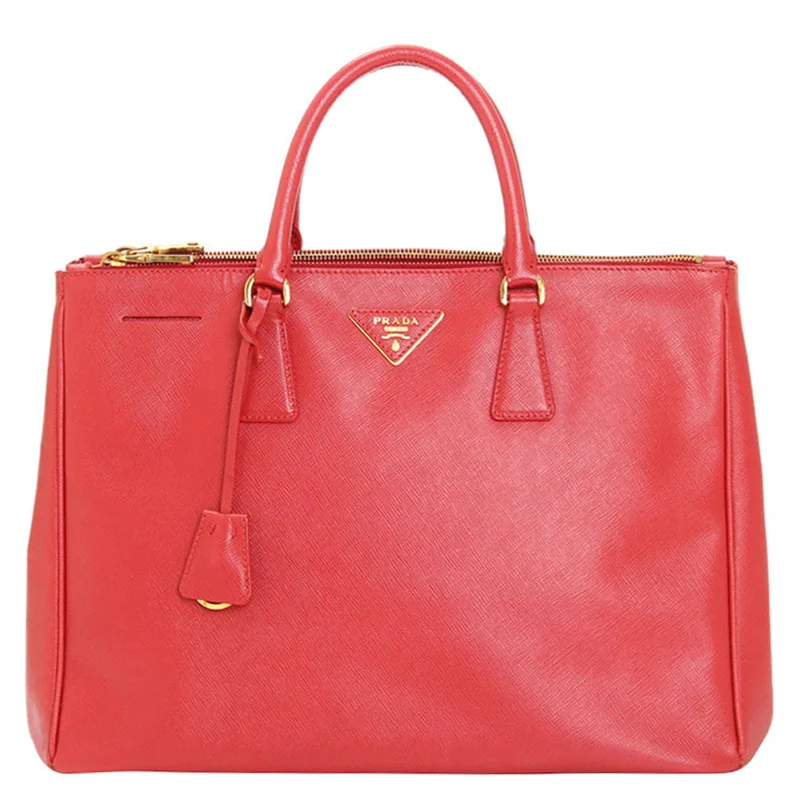
Prada Saffiano Lux Tote — This is the bag most people picture when they think of a “sensible” Prada. Twin rolled top handles, a leather key clochette, protective metal feet on the base, and a top snap closure that’s secure without being fussy. Unsnap the side buttons and the tote expands, which is a small detail that makes it genuinely functional for travel or office days when a structured bag alone won’t cut it. New retail typically starts around $1,000 and climbs with size and [[[[exotic leather](/prices-and-value/hermes-birkin-prices-2025-where-to-buy/)](/brands/versace-jeans-handbags-guide/)](/buying-guides/hermes-leather-types-complete-buying-guide/)](/buying-guides/exotic-skins-luxury-handbags-guide/) options. It’s not the most exciting bag in the lineup, and I’d be lying if I said the Saffiano texture photographs as luxuriously as smooth leather, but it’s the most practical entry point into the brand and one of the easiest Prada bags to resell because buyers know exactly what they’re getting.
Prada Promenade Bag — A smaller, more structured alternative with double rolled handles and a detachable shoulder strap, lined in nylon with two interior compartments. It sits closer to $800 at retail and reads as more of an occasion bag than an everyday workhorse. The proportions are tidy rather than roomy, so if you carry a lot day to day, this isn’t the one.
Prada Galleria — Worth mentioning here because it’s arguably the brand’s most recognized silhouette after the tote, with a boxier top-handle shape, double zip closure, and the same Saffiano leather durability. It typically retails from around $2,800 to $3,600 depending on size and hardware finish, and it holds resale interest better than most Prada styles because it’s instantly identifiable.
Prada Re-Edition 2005 Nylon Bag — The reissued nylon shoulder bag that triggered a genuine resurgence in Prada’s popularity in the early 2020s, priced closer to $1,300 to $1,600. It’s lightweight, casual, and honestly a bit of a departure from the leather-goods craftsmanship story, but its cultural relevance right now gives it stronger resale momentum than its materials alone would suggest.
Across the board, Prada handbag price points reward buyers who prioritize construction quality and subtlety over instant brand recognition. If you want a bag that whispers rather than announces, this is your lane.
Dolce & Gabbana: Brand Heritage and Signature Style#
Dolce & Gabbana was founded in 1985 by Domenico Dolce and Stefano Gabbana, two designers who built the house around a very specific vision of Sicilian romance: lace, corsetry details, baroque prints, and a sense of theatrical femininity that Prada deliberately avoids. Where Prada is cerebral, D&G is sensory. The brand has never shied away from bold prints, ornate hardware, or logo detailing, and that’s by design rather than excess.
This is the core difference shoppers need to understand before comparing prices directly: D&G bags are built to be noticed. The leather goods borrow heavily from the house’s runway codes, so you’ll see baroque gold prints, crystal embellishments, and structured silhouettes that reference historic corsetry and religious iconography. It’s a style that photographs beautifully and draws a different celebrity following than Prada, one that leans toward red-carpet drama over off-duty minimalism. That’s not a knock, it’s a positioning choice, and it means D&G bags tend to be statement pieces in a wardrobe rather than daily neutrals.
Dolce & Gabbana’s Most Iconic Handbags and Their Prices#
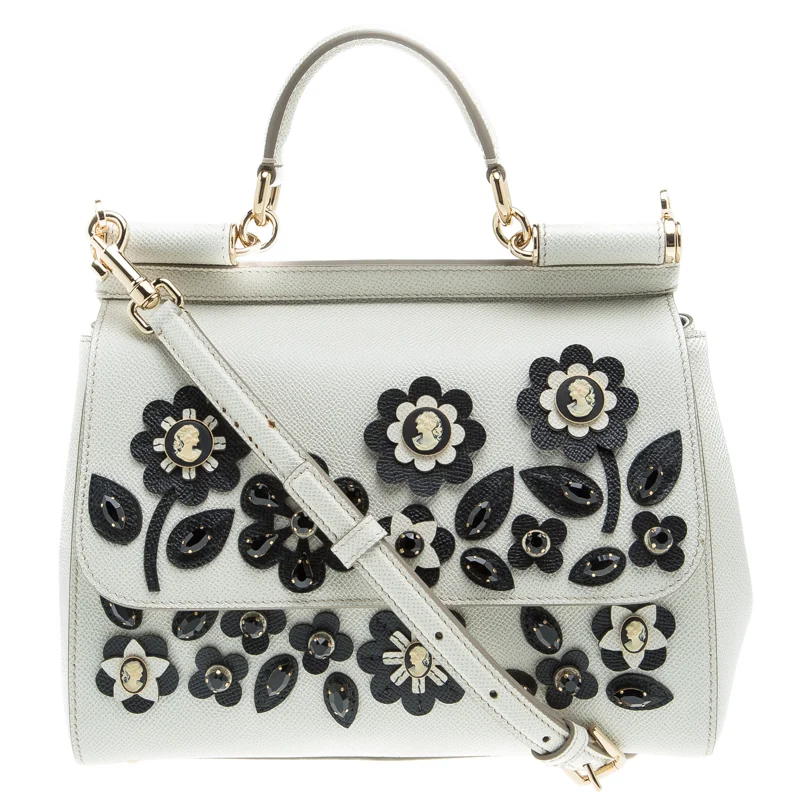
Miss Sicily Bag — Named after the Sicilian town where the house is based, this is D&G’s flagship handbag line and the closest thing the brand has to an “It bag.” It features a structured top handle, a decorative padlock closure, and a signature stamped medallion, with leather options ranging from smooth calf to exotic skins. Retail pricing generally starts around $2,200 for classic leather versions and climbs well past $4,000 for python or crocodile finishes. It’s a genuinely well-made bag with real hardware weight to it, though that same hardware makes it heavier to carry all day than most Prada equivalents.
Sicily Bag — The predecessor and softer sibling to Miss Sicily, with a slightly slouchier silhouette and the same padlock detail, typically retailing between $2,000 and $2,800. It reads a touch more relaxed and works better as a daytime option than Miss Sicily’s structured formality.
Devotion Bag — Recognizable by its oversized baroque logo clasp at the front flap, this one sits closer to $2,300 to $3,200 depending on leather and size. It’s the most polarizing bag in D&G’s lineup in my experience; clients either love the bold hardware or find it too heavy-handed, and that split opinion shows up in resale demand too.
Dolce & Gabbana handbag prices generally track close to or slightly above comparable Prada styles, but you’re paying for embellishment, print work, and hardware complexity rather than the kind of understated leather engineering Prada is known for. If your personal style leans expressive, D&G delivers more visual payoff per dollar. If you prefer pieces that blend into a wardrobe for a decade, Prada is the safer buy.
Prada vs Dolce & Gabbana: Which Holds Value Better?#
This is where I’ll be direct, because most buying guides dodge it: neither brand holds value like Chanel, Hermès, or even Louis Vuitton’s most iconic styles. Both Prada and D&G depreciate faster than the top-tier resale performers, and anyone buying either brand purely as a financial investment should recalibrate expectations before spending.
That said, between the two, Prada generally retains resale value better, for a few concrete reasons. Saffiano leather resists scuffing and water damage, so pre-owned Prada bags tend to arrive on the resale market in better physical condition than embellished D&G pieces, where crystals fall off, prints crack, and gold-tone hardware tarnishes with regular wear. Prada’s minimalist styles also age better visually; a Galleria bag from six years ago still looks current, while heavily printed D&G pieces are more tied to the specific era or runway season they came from, which can work against them if that particular print isn’t currently trending.
D&G isn’t without resale strengths, though. Limited-edition and heavily embellished pieces, especially those tied to a specific runway collection, can actually command strong prices among collectors specifically because they’re distinctive and less frequently reproduced. A rare Miss Sicily in exotic skin with a documented low production run can outperform a common Prada tote in resale percentage, simply because scarcity plays in D&G’s favor there.
The honest summary: buy Prada if you want the safer, more liquid resale asset. Buy D&G if you’re drawn to a specific rare or statement piece and you’re comfortable treating it more as a style investment than a financial one.
Buying Advice: Choosing the Right Investment Piece#
A few things I check personally before recommending any handbag purchase in this price bracket, whether new or pre-owned:
- Condition of the hardware, not just the leather. Hardware on both brands, especially D&G’s ornate clasps, is expensive and slow to repair. Check for tarnishing, loose stitching around clasps, and any missing crystals or stones before buying pre-owned.
- Authentication documentation. Serial numbers, authenticity cards, and original dust bags matter for resale later, but they’re not proof on their own. Buy from resellers who offer in-house authentication and a clear return policy if authenticity is disputed.
- Leather type and how it wears. Saffiano leather ages gracefully with minimal creasing; smooth calfskin on some D&G pieces shows wear faster, especially at corners and handles. If you plan to use the bag daily, factor this into your decision as much as the design itself.
- Buy the classic silhouette over the trend piece if resale matters to you. A Saffiano Lux Tote or a Galleria will be easier to sell in five years than a bag built around one specific season’s print or embellishment trend.
- Shop reputable pre-owned platforms with condition grading. Buying second-hand is a legitimate way to access higher-tier pieces (exotic skins, limited editions) at a lower entry cost, but only through platforms that grade condition honestly and authenticate before listing. Avoid unverified marketplace listings entirely at this price point.
- Factor in current demand, not just brand prestige. Check what’s actually reselling well right now. Prada’s nylon Re-Edition pieces are outperforming some of the brand’s leather bags at the moment simply due to cultural relevance, and that can shift again.
FAQ#
What is the average Prada handbag price? Entry-level Prada totes and shoulder bags in Saffiano leather typically start around $800 to $1,000, with structured styles like the Galleria running $2,800 to $3,600. Exotic leathers and limited editions push well past $5,000.
What is the average Dolce and Gabbana handbag price? D&G’s core handbag lines, Sicily, Miss Sicily, and Devotion, generally retail between $2,000 and $3,200 in classic leather, with exotic skin versions often exceeding $4,000.
Do Prada and Dolce & Gabbana handbags hold their value? Both retain value better than mass-market brands but not as well as Chanel or Hermès. Prada generally holds resale value slightly better due to more durable materials and timeless silhouettes. Rare or limited D&G pieces can be an exception when scarcity drives demand.
Which brand is better for a first luxury handbag purchase? Prada is the safer first purchase if you want a versatile bag that works across more occasions and holds resale value more predictably. D&G suits buyers who already have foundational pieces and want a statement bag that reflects a bolder personal style.
Is buying a pre-owned Prada or D&G bag a good idea? Yes, provided it’s purchased through a platform that authenticates and grades condition honestly. Pre-owned buying is often the smartest way to access higher-tier leathers or discontinued styles without paying full current retail.
Are Prada and Dolce & Gabbana handbags a good investment? They’re a reasonable style investment rather than a strong financial one. Expect them to hold a meaningful portion of retail value, particularly classic or limited pieces in excellent condition, but don’t expect appreciation the way you might with the rarest Hermès or Chanel bags.
Related Articles#
- Designer Handbag Trends 2025: What’s Actually Worth Buying
- How Pre-Owned Luxury Fashion Is Reshaping the Industry
- Sell Designer Handbags in 2025: Maximize Your Payout
- Top 5 Prada Galleria Bags to Shop | Buying Guide


Keyword index