Introduction#
Spot gold is trading around $4,500 to $4,570 an ounce as I write this, up more than 70% from a year ago. That kind of move tends to send two types of buyers into a frenzy: people stacking coins and bars, and people who suddenly remember they have a drawer full of old jewelry. I want to make the case for a third group, one I think is thinking about this correctly: buyers treating pre-owned branded gold jewelry as their primary gold allocation, not bullion.
This isn’t a contrarian take for the sake of it. I’ve spent years watching resale prices on pieces like the Cartier Love Bracelet and Van Cleef & Arpels Alhambra move in ways that plain bullion simply can’t. Bullion tracks the spot price and nothing else. A gold coin bought in 2024 is worth exactly what the metal is worth today, minus a dealer spread. A pre-owned Cartier bracelet bought in 2024 is worth the metal, plus whatever the brand, the design, and collector demand have added on top since then. That gap is the entire thesis of this guide.
[[[Pre-owned luxury](/buying-guides/designer-beachwear-buying-guide/)](/buying-guides/best-pre-owned-luxury-watch-brands/)](/buying-guides/best-luxury-casualwear-brands-effortless-style-2025/) gold jewelry investment isn’t a new idea, but 2026’s price environment has made the math unusually favorable. I’ll walk through why gold still matters as a store of value, how bullion and branded jewelry actually compare on returns using real Cartier pricing data, how the major houses stack up against each other, which specific pieces I’d buy right now, and how to buy pre-owned without getting fleeced on authenticity or condition.
Why Gold Still Anchors Wealth#
Gold’s credibility isn’t sentimental. Every major civilization that had access to it — Egypt, Mesopotamia, Rome, the Inca — used it as currency, tribute, or store of state wealth, and for the same reason central banks still hold it today: it can’t be printed, defaulted on, or manipulated the way fiat currency can. All the gold ever mined would fit inside a cube roughly 22 meters on each side. That scarcity, combined with the fact that gold doesn’t corrode or degrade, is why it has outlasted every currency system built on top of it.
2025 was a reminder of how structural this trust still is. Gold set 53 new all-time highs over the year, climbing from $2,624 to roughly $4,300 by December, then spiking above $5,600 in January 2026 — APMEX recorded the all-time record at $5,602 an ounce on January 28, 2026. The drivers behind that move aren’t speculative noise:
- Central banks bought 863 tonnes of gold in 2025, nearly double the 2010–2021 average of 473 tonnes, as reserve managers diversify away from the dollar.
- De-dollarization accelerated, with China, Turkey, and Gulf states leading the shift into gold as a neutral reserve asset.
- Geopolitical risk stayed elevated — Russia-Ukraine, U.S.-Iran tensions, and trade war rhetoric kept the safe-haven bid firmly in place.
- ETF and investment demand jumped 84% in 2025, with $17.6 billion flowing into gold in a single four-week stretch, per Bank of America.
- Analysts are still bullish: Goldman Sachs targets $5,400/oz by the end of 2026, J.P. Morgan is at $6,000–$6,300, and UBS projects $5,000+ by Q4 2026.
None of that trust disappears when the gold is shaped into a bracelet instead of a bar. What changes is that a house like Cartier, Van Cleef, or Bvlgari adds a second, independent layer of value on top of it — and that’s where things get interesting for anyone comparing gold jewelry vs. bullion as an investment.
Bullion vs. Branded Gold Jewelry: Where the Real Returns Are#
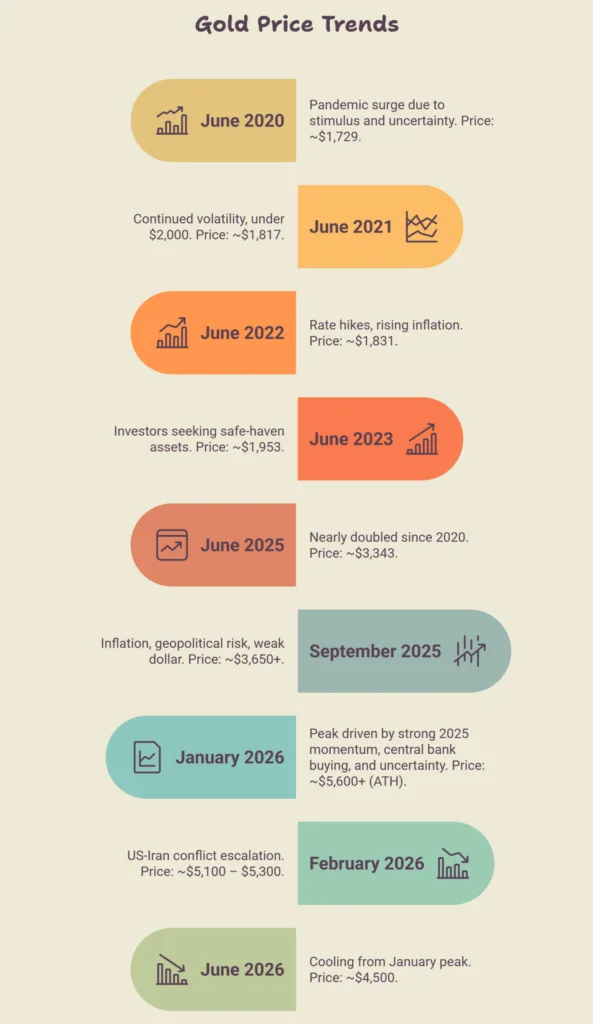
Raw bullion is the cleanest possible gold exposure. You’re paying for metal, full stop, with a small premium over spot and a narrow, transparent spread when you sell. That’s genuinely valuable — there’s no authentication risk, no brand cycle risk, no aesthetic judgment involved. If I invested $10,000 in spot gold in January 2025, that position would be worth roughly $17,000–$17,400 by mid-2026 based on the year’s performance. That’s a strong, honest return, and I’m not going to pretend otherwise.
But bullion has a hard ceiling: it can never be worth more than the metal it contains, plus a modest dealer premium. It also carries real costs that get ignored in most gold pitches — storage, insurance, and in a lot of jurisdictions, sales tax on physical purchases that you don’t recoup on the way out.
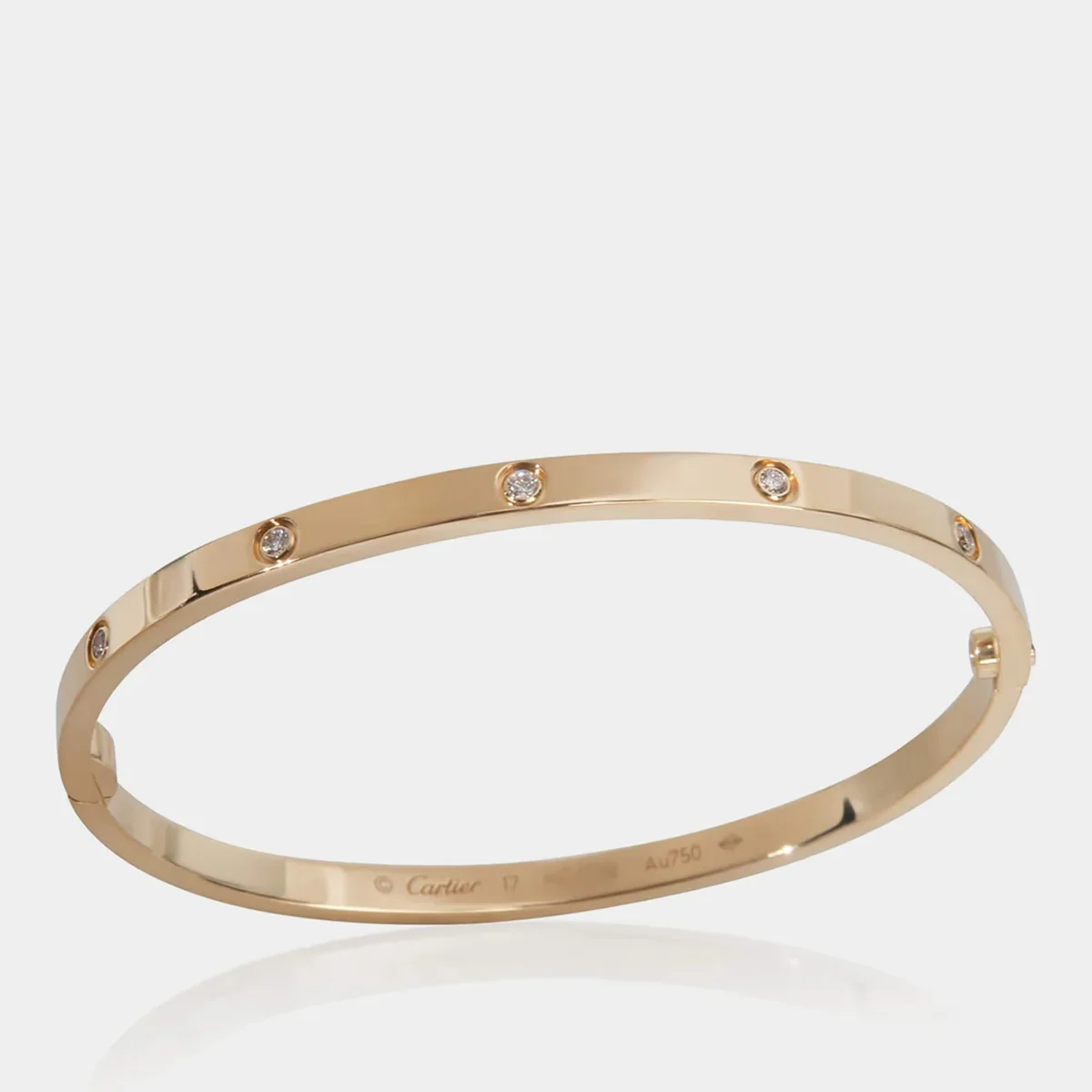
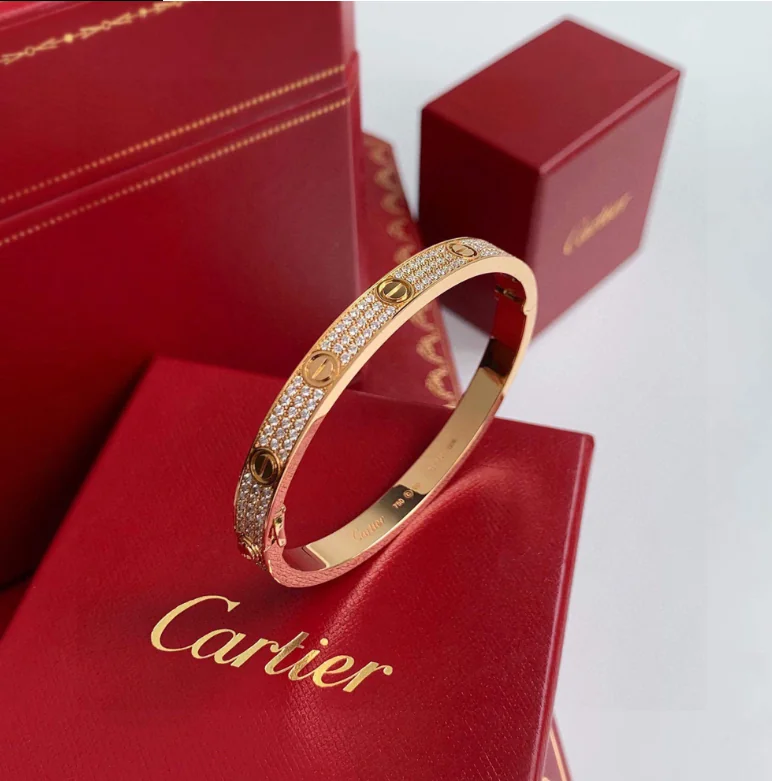
Branded gold jewelry, bought pre-owned, sidesteps the ceiling problem entirely. The clearest proof I can point to is the Cartier Love Bracelet. In late 2024, it retailed around €7,950 (about $8,470). By 2026, retail has climbed above €9,200 (about $10,000) — a jump of more than 15% in eighteen months. That increase isn’t just gold catching up; it reflects Richemont’s deliberate pricing strategy and sustained global demand for the design, stacked on top of the metal’s own appreciation. Van Cleef & Arpels pieces have shown even sharper effects, with some Alhambra pieces reselling at close to 112% of original retail due to boutique allocation limits and waitlists, while Cartier Love Bracelets in strong condition typically retain 85–95% of current retail — still comfortably ahead of what scrap gold alone would return.
Buying pre-owned is what makes this work as an entry point rather than an overpay. You’re not paying the full retail premium a first owner paid; you’re stepping in at a discount, on a piece whose gold content and brand equity have both already been trending upward. That’s the total-return case for pre-owned luxury gold jewelry investment over bullion.
I’ll be straight about the trade-off, though: this isn’t as liquid as bullion. Selling a coin is a same-day transaction at a coin shop. Selling a Cartier bracelet through a reputable resale channel can take days to weeks, and you’re exposed to brand cycle risk in a way bullion never is — if a house falls out of fashion, resale multiples compress. Gold jewelry vs. bullion isn’t a case of one being strictly better; it’s a case of branded jewelry offering a higher return ceiling in exchange for slower, less certain liquidity.
Cartier, Van Cleef & Arpels, Bvlgari, Tiffany & Co.: How They Compare#
Not all gold jewelry houses behave the same way on the resale market, and I think a lot of buyers assume “luxury brand” is interchangeable when it very much isn’t.
Cartier is the most liquid name in this space, full stop. The Love Bracelet and Juste un Clou are recognized on sight worldwide, which means deep buyer demand on every major resale platform. Retention runs 85–95% on Love Bracelets in excellent condition. The trade-off is that Cartier’s volume is high — these pieces are made and sold in large numbers — so you’re less likely to see the scarcity-driven spikes Van Cleef gets, but you’re also never stuck holding an illiquid piece.
Van Cleef & Arpels plays a different game. The house deliberately limits boutique allocation on pieces like the Alhambra collection, creating waitlists that push resale prices above retail on certain configurations — that 112% average retention figure isn’t an outlier, it’s the direct result of Van Cleef’s scarcity strategy. This is the strongest brand for Van Cleef Alhambra investment specifically, but it’s a narrower market than Cartier’s — fewer buyers, though the ones who want it, really want it.
Bvlgari sits a notch below both in resale depth. The Serpenti and B.zero1 lines have real collector followings, particularly strong in Asian markets, and Bvlgari gold jewelry resale has been improving steadily as the brand’s design heritage gets more recognition outside Italy. It’s a smaller, less mature resale market than Cartier or Van Cleef, which means slightly slower turnaround when you sell, but entry prices tend to be more accessible.
Tiffany & Co. is the honest outlier here. Its gold jewelry — the T1, HardWear, Lock collections — is beautifully made and the LVMH acquisition in 2021 has clearly repositioned the brand upmarket, but the resale market hasn’t caught up to Cartier or Van Cleef levels yet. I’d treat Tiffany gold pieces as jewelry you buy to wear, not jewelry you buy expecting Cartier-level resale multiples. That may change as the newer collections mature, but I wouldn’t bet on it happening quickly.
The Best Pre-Owned Pieces to Invest In Right Now#
If I were allocating toward pre-owned gold jewelry today, here’s where I’d put the money, in order of conviction.
Cartier Love Bracelet, plain yellow gold. This is the single most liquid piece in this entire category. Skip the diamond-paved versions if you’re optimizing for resale — the plain gold version has the highest gold-to-price ratio and the broadest buyer pool, which matters more than incremental sparkle when you eventually sell.
Van Cleef & Arpels Vintage Alhambra long necklace, yellow gold. This is my pick for anyone specifically chasing Van Cleef Alhambra investment upside. Boutique scarcity means these routinely trade near or above retail on the resale market, and the design has stayed essentially unchanged for decades, which protects it from style-cycle risk.
Cartier Juste un Clou, gold, no stones. Smaller collector base than the Love Bracelet, but growing fast and still commands strong resale. Worth buying if you can find one below the current retail benchmark.
Bvlgari Serpenti Viper bracelet, gold. The best entry point into Bvlgari gold jewelry resale. It’s iconic enough to hold recognition value but hasn’t reached Cartier-level pricing yet, so there’s room for the resale market to mature upward.
Bvlgari B.zero1 ring, gold. Lower price point, solid gold weight relative to cost, good for buyers wanting exposure to the brand without committing bracelet-level capital.
I’d skip Tiffany gold pieces for pure investment purposes right now — buy them if you love the design, not because you expect strong resale.
How to Buy Pre-Owned Gold Jewelry Without Overpaying#
This is where most first-time buyers lose money, and it’s almost never because the brand was wrong — it’s because the purchase was sloppy.
Authenticate before you pay, not after. Cartier and Van Cleef stamp serial numbers and maker’s marks on their pieces; know where to look for your specific model before you buy, and ask the seller for close-up photos of those marks plus original box and papers if available. A piece without provenance isn’t necessarily fake, but it should sell at a discount to reflect that uncertainty.
Grade the condition honestly. “Excellent” should mean no visible scratches on load-bearing surfaces, a fully functional clasp, and no gemstone loss. Rose and white gold pieces show plating wear faster than yellow gold — check high-contact areas like the inside of a bangle carefully.
Buy from platforms with real authentication processes. Vestiaire Collective, Fashionphile, The RealReal, and TheLuxuryCloset all run in-house authentication on high-value pieces; that’s worth a modest premium over buying from an unverified private seller.
Benchmark price against two numbers, not one. Calculate the piece’s melt value (gold weight in grams x current spot price) as your price floor, and current retail as your price ceiling. A well-priced pre-owned piece should sit meaningfully below retail while still clearing the melt-value floor by a healthy margin — that gap is where your brand-equity upside lives.
Avoid resized Love Bracelets. Cartier’s Love Bracelet is designed to be sized to fit; a resized bracelet is harder to resell later to a different wrist size and typically trades at a discount versus an original, unaltered size. If resale matters to you, buy your correct size the first time.
FAQ#
Is pre-owned gold jewelry as liquid as bullion? No, and I won’t pretend otherwise. Bullion sells same-day at a coin shop. A Cartier or Van Cleef piece through a reputable resale platform typically takes days to a few weeks to sell at a fair price. You’re trading some liquidity for a higher return ceiling.
How do I verify a pre-owned Cartier or Van Cleef piece is authentic before buying? Check serial numbers and hallmarks against known references for that model, request original box and papers, and buy through platforms that run in-house authentication. If a private seller can’t produce provenance and the price seems too good, walk away.
Does resizing a Cartier Love Bracelet hurt resale value? Yes, generally. A resized bracelet narrows your future buyer pool to people who need that exact altered size, and buyers who know this will offer less. Buy your correct size from the start if resale is part of your plan.
Will pre-owned designer gold jewelry always outperform bullion? Not always, and not automatically. The outperformance comes from buying the right pieces — high-demand, scarce, well-maintained — at a real discount to retail. Buy a poorly-conditioned or oversupplied piece at full price, and you can underperform bullion easily.
What gold purity should I look for? 18K (750) is the industry standard for Cartier, Van Cleef, and Bvlgari fine jewelry, and it’s what you should expect on any piece from these houses. Confirm the hallmark matches 18K before buying.
Which brand holds value best over the long term? Cartier for liquidity and consistency, Van Cleef for scarcity-driven upside, Bvlgari for a maturing market with room to grow. Tiffany is the weakest resale performer of the four right now, though that could shift as its newer collections build a longer track record.
Related Articles#
- How Pre-Owned Luxury Fashion Is Reshaping the Industry
- Sell Designer Handbags in 2025: Maximize Your Payout
- Best It Bags to Buy This Year: A Definitive Guide
- 10 Best Designer Handbags Worth the Investment (2026)

Keyword index