Introduction: Farfetch Brings Its Resale Programme to the Middle East#
When Farfetch launched its Second Life programme in Europe and the United States, the response confirmed what many in the industry already suspected: luxury consumers were ready — and increasingly eager — to trade in pieces they no longer reach for, and use that equity toward something new. The question was when the Middle East would get its turn.
That answer arrived in October 2021, when Farfetch formally extended Second Life to the UAE, Kuwait, and Saudi Arabia, in partnership with regional resale specialist The Luxury Closet. For luxury shoppers across the Gulf, the timing was apt. Attitudes toward pre-owned luxury had been shifting for years — accelerated by the pandemic, shaped by a generation of buyers who understand the difference between a [Chanel Classic Flap](/buying-guides/vintage-chanel-finds-top-picks/) as a fashion item and as a financial asset.
Farfetch Second Life Middle East is not merely a new tab on a website. It is an acknowledgment that the region’s luxury consumers are sophisticated enough — and pragmatic enough — to think about ownership differently. Whether you are sitting on a barely-worn Hermès Kelly or a collection of designer pieces that no longer fits your wardrobe, this programme offers a direct, structured route to turning them into purchasing power.
How Farfetch Second Life Works — and What’s New in the Region#
The mechanics are straightforward, though the details matter if you are a seller trying to maximise return. Here is how the process works for consumers in the UAE, Kuwait, and Saudi Arabia.
Step 1: Submit your item online. Visit the Farfetch Second Life page, select your designer handbag, and provide details including brand, model, condition, and photographs. The programme currently accepts designer handbags — not shoes, jewellery, or watches, which is worth noting upfront.
Step 2: Receive a valuation. The Luxury Closet’s authentication and pricing team reviews your submission and provides an estimated credit value. This is based on brand, style, condition, and current resale market demand. The algorithm is weighted toward pieces with strong secondary market performance — think Chanel, Hermès, Louis Vuitton, Dior — rather than fast-fashion-adjacent luxury.
Step 3: Ship your item. If you accept the offer, you send the piece to The Luxury Closet’s processing centre in Dubai, where a team of 20 in-house authentication specialists inspect it before it enters the resale inventory.
Step 4: Receive Farfetch credit. Once verified, the credit is applied to your Farfetch account and can be used toward purchases across the platform. This includes both full-price and sale items — a detail that matters, since some resale credit programmes restrict usage to specific product categories.
What is new for the Middle East specifically is the localised infrastructure: The Luxury Closet operates across five countries in the region and processes thousands of consignment items monthly at its Dubai hub. That on-the-ground presence is what makes the programme viable at scale here, rather than being routed through European logistics networks.
The Luxury Closet: The Local Partner Powering the Programme#
Farfetch chose its regional partner deliberately. The Luxury Closet is not a newcomer to pre-owned luxury — it is the largest authenticated resale platform operating at scale in the Middle East, with a team of over 200 people across five countries and a website attracting close to one million users monthly. That combination of regional credibility and operational infrastructure is exactly what a programme like Second Life requires to function properly.
The partnership is also a statement about the regional market’s maturity. Five years ago, the concept of trading in a designer bag for e-commerce credit would have been a harder sell in a market where luxury was traditionally purchased new, in-boutique, and kept. Consumer behaviour has moved.
Kunal Kapoor, CEO and Founder of The Luxury Closet, frames the shift in terms that go beyond a single platform launch: “Re-sale is the future of shopping. We expect one in six transactions to be pre-owned by the end of the decade. This marks a paradigm shift in consumer choice and the value chain of the fashion and retail industry. What we are excited about most is leading the industry to a more sustainable and environmentally friendly future.”
That is a confident projection — but it is not without foundation. The data from Europe and North America supports the trajectory, and the Middle East, while later to the pre-owned market as a mainstream retail channel, is tracking the same arc.
From a practical standpoint, The Luxury Closet’s authentication capability is the critical component. The luxury resale market’s core vulnerability is counterfeits, and the credibility of any programme depends entirely on the rigour of authentication. Twenty specialists inspecting items on arrival — and the platform’s existing reputation for vetted inventory — gives the Farfetch Second Life Middle East partnership a structural foundation that pop-up resale models cannot replicate.
Why the Pre-Owned Luxury Market Is Having Its Moment#
The luxury resale market’s rise is often described as a trend, but it is more accurately a structural shift in how consumers relate to ownership. Several forces converged to accelerate it.
Ownership redefined. Younger luxury consumers — particularly Millennials and Gen Z entering their peak earning years — are less attached to the concept of owning something indefinitely. They have grown up in a subscription economy, and they apply similar logic to their wardrobes: rotating pieces, trading up, and treating wardrobe investment as a dynamic activity rather than a static accumulation.
Post-pandemic recalibration. After2020, many consumers did a hard audit of what they owned and what they actually used. Wardrobes were reassessed. The luxury closet — often containing pieces worn twice — became a source of untapped capital. At the same time, discretionary spending on quality over quantity gained cultural momentum.
Resale value as a buying justification. One of the most interesting dynamics is how secondary market performance has started to influence primary purchase decisions. Buyers now factor in resale value before making high-ticket purchases. If a handbag retains 80–90% of its value on the secondary market — or appreciates, as some Hermès and Chanel pieces have — it changes the economics of buying it new.
Market scale. The pre-owned luxury market was valued at approximately $33 billion globally at the time of this launch, with projections pointing to continued double-digit growth. Kapoor’s one-in-six figure reflects industry consensus from analysts tracking both the resale platforms and the luxury conglomerates that have been investing in them.
Big Names Are Betting on Resale — and That Changes Everything#
Scepticism about pre-owned luxury — from both consumers and the industry itself — has historically centred on authenticity concerns and brand dilution. That scepticism is becoming harder to sustain when the brands and conglomerates themselves are integrating resale into their business models.
Consider the investments made in the run-up to and around this launch:
Richemont acquired Watchfinder, the UK-based pre-owned watch retailer generating over $150 million in annual revenue. This is one of the clearest signals from a traditional luxury conglomerate that the secondary market is not a threat to be managed but an opportunity to own.
Neiman Marcus acquired a minority stake in Fashionphile, a handbag resale specialist with approximately $200 million in annual revenue. A luxury department store investing in resale is significant — it signals a recognition that pre-owned is part of the luxury retail ecosystem, not outside it.
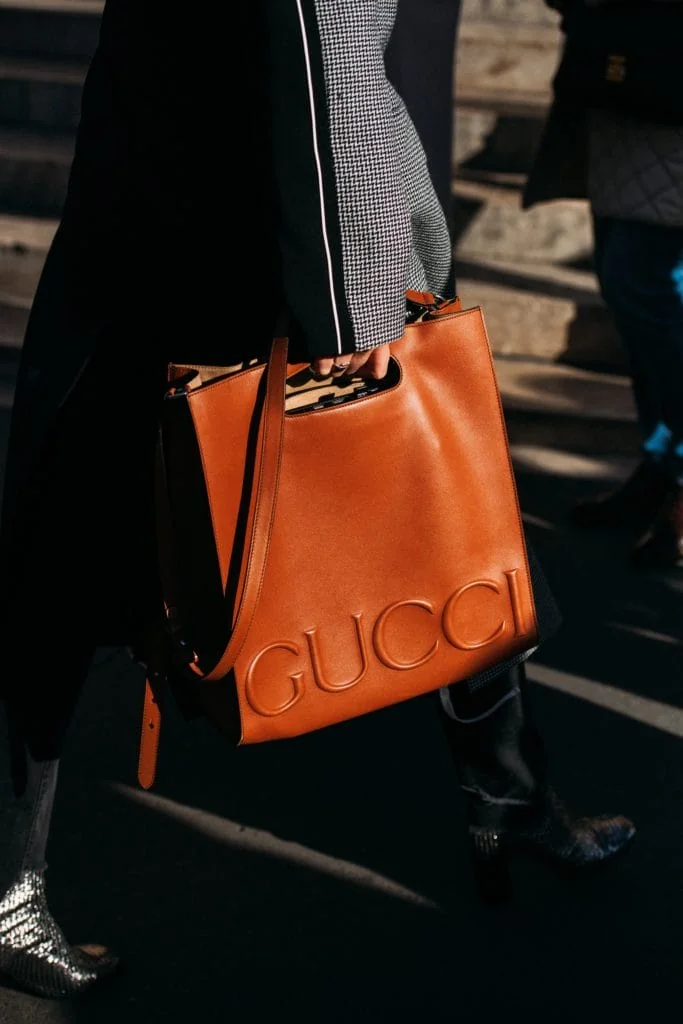
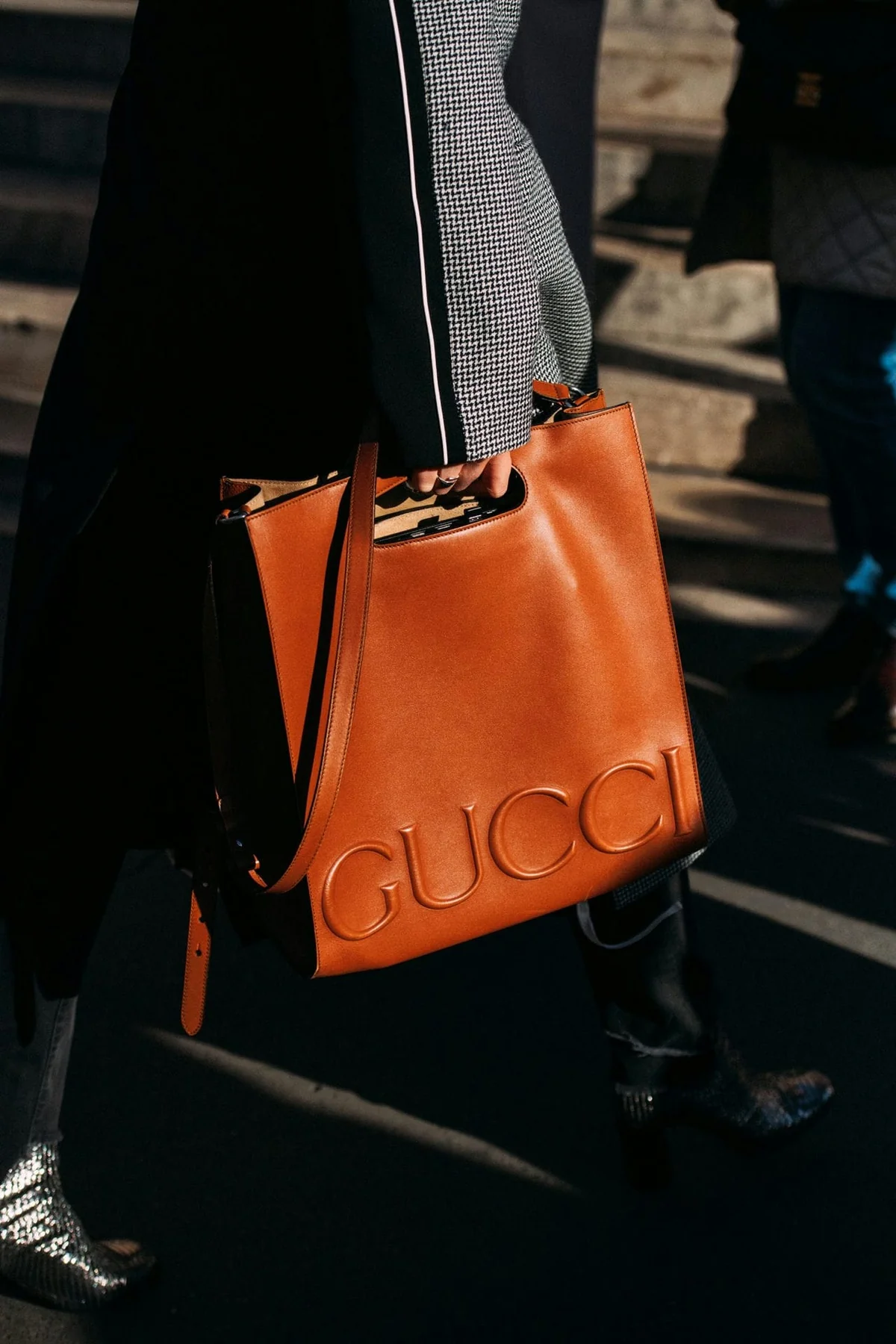
Gucci partnered with The RealReal — perhaps the most symbolically significant move, given Gucci’s positioning as a brand that sells desire and newness. By participating in resale, Gucci implicitly endorsed the secondary life of its products, and gave its customers a credible route to both sell and buy pre-owned Gucci pieces.
Burberry also partnered with The RealReal, adding further conglomerate-level validation to the platform’s positioning.
Ralph Lauren partnered with Depop, targeting a younger resale audience and signalling that the investment in resale spans multiple price points and platforms.
Lululemon began testing a resale programme allowing customers to trade in used athletic wear for store credit — evidence that the resale model is spreading beyond traditional luxury categories.
What this collective activity represents is a legitimacy threshold being crossed. When luxury brands and the groups that own them stop treating resale as a grey market nuisance and start structuring partnerships and acquisitions around it, the consumer perception of pre-owned luxury shifts fundamentally. Buying pre-owned is no longer a compromise. For many categories and pieces, it is the informed choice.
What This Means If You Own (or Want to Own) Investment-Grade Pieces#
Let us be direct about resale performance by category, because the experience varies considerably — and any honest assessment of this programme has to acknowledge that.
Designer handbags: the strongest category. Chanel, Hermès, and Louis Vuitton lead resale performance by a significant margin. Chanel’s consistent price increases — the brand raised retail prices multiple times in recent years — have paradoxically bolstered the secondary market, as pre-owned pieces from even five to ten years ago often trade near or above their original retail price. Hermès Birkins and Kellys in neutral leathers regularly hold and exceed retail value, with popular sizes and rare leathers commanding meaningful premiums. Dior saddle bags and Celine luggage totes have solid secondary market presence. Outside these names, resale value drops off more steeply. This is the category Farfetch Second Life is built around, and it is the right choice — the liquidity is real.
Watches: high value, specialist market. Pre-owned watches — particularly Rolex, Patek Philippe, and Audemars Piguet — can return exceptional value, sometimes exceeding retail during periods of supply scarcity. However, this market has its own specialist infrastructure (Watchfinder, Chrono24, Bob’s Watches) and is better served by category-specific platforms than a general fashion resale programme. Farfetch Second Life does not currently accept watches, so this is a separate conversation.
Shoes: value drops quickly. Designer shoes, including those from Christian Louboutin, Manolo Blahnik, and even Chanel or Dior, depreciate significantly more than handbags on the secondary market. Condition is paramount, wearability marks reduce value sharply, and buyer demand is more volatile. Selling pre-owned shoes is possible but rarely lucrative. Set expectations accordingly.
Jewellery: highly variable. Fine jewellery from Van Cleef & Arpels, Cartier, or Bvlgari can hold value well, particularly iconic pieces. However, valuation is complex — metal value, stone quality, condition, and provenance all factor in — and specialist jewellers or auction houses often yield better returns than general resale platforms.
For Middle East consumers specifically, the Farfetch Second Life programme offers a clean, credible entry point to the handbag resale market without the friction of managing individual buyers. The trade-off is that you will receive credit, not cash, and the valuation will reflect a platform margin. If maximising return is the priority for a particularly valuable piece — a Birkin 25 in Togo leather, for example — it may be worth comparing valuations from multiple channels before committing.
The Bigger Picture: Sustainability as a Driver, Not Just a Marketing Line#
Every luxury brand and platform in this space includes sustainability in its messaging. The question worth asking — particularly in an editorial context — is whether that framing is substantive or a post-rationalisation layered onto a straightforwardly commercial model.
The honest answer is: both things are true, and that is not necessarily a contradiction.
Extending the life of a luxury item does have a genuine environmental benefit. The carbon cost of producing a new leather handbag — from raw material sourcing through tanning, manufacturing, and global logistics — is significant. A pre-owned piece that circulates through one or two more owners instead of sitting unused in a wardrobe, or worse, ending up in landfill, represents a real reduction in that footprint per unit of use.
What resale does not do is resolve the structural issue of overproduction in the broader fashion industry. The luxury segment is less exposed to this than fast fashion — production volumes are lower, quality standards higher, and longevity designed in — but the industry is not immune. Buying pre-owned instead of new reduces demand for new production at the margin, which is meaningful; it does not fundamentally restructure supply chains.
For discerning consumers, the useful test is whether resale changes actual behaviour or simply provides a feel-good narrative for purchases that would have happened anyway. The evidence from post-pandemic consumer data suggests that for a meaningful cohort of buyers, resale has genuinely substituted for new purchases — particularly among younger luxury consumers for whom the sustainability argument carries real weight in purchase decisions.
Farfetch and The Luxury Closet’s partnership in the Middle East is a commercial enterprise, and there is nothing wrong with that. The sustainability dimension is a genuine co-benefit rather than the primary mechanism. Both framings can be true simultaneously, and consumers are better served by understanding that clearly than by either dismissing the environmental angle entirely or treating it as the whole story.
FAQ: Farfetch Second Life Middle East#
Which designer bags qualify for Farfetch Second Life? The programme accepts designer handbags from major luxury houses — Chanel, Hermès, Louis Vuitton, Dior, Gucci, Valentino, Celine, Balenciaga, and comparable brands. The condition of the piece is a qualifying factor: items with significant structural damage, missing hardware, or irreparable wear may be declined or valued at a reduced rate. Shoes, jewellery, and watches are not currently accepted through this programme.
How is valuation determined? The Luxury Closet’s team assesses valuation based on brand, model, style, colourway, hardware, condition, and current secondary market demand. A Chanel Classic Flap in caviar leather with gold hardware will be valued differently from a seasonal style from the same house. Market pricing data from active resale platforms informs the offer — it is not a fixed formula, and particularly sought-after pieces may receive more competitive valuations during periods of high demand.
Can I use the credit on full-price items? Yes. The Farfetch credit received through Second Life can be applied to purchases across the Farfetch platform, including full-price items. This is an important distinction from some credit programmes that restrict usage to sale inventory or specific categories.
Is the process available in all Middle East countries? At launch, the programme is available in the United Arab Emirates, Kuwait, and Saudi Arabia. These three markets represent the highest concentration of luxury purchasing in the region and align with The Luxury Closet’s primary operational footprint.
What happens if I decline the valuation offer? If you receive a valuation and decide not to proceed, your item is returned to you. You are not obligated to accept the offer, and there is no fee for the assessment. This is worth confirming at the point of submission, as terms can evolve — check the current programme details on Farfetch before sending your item.
Related Articles#
- 10 Best Designer Handbags Worth the Investment (2026)
- Designer Handbag Trends 2025: What’s Actually Worth Buying
- Best Investment Handbags to Buy in 2026 (Expert Guide)
- 10 Designer Handbags That Hold Their Value (2026)
- Best It Bags to Buy This Year: A Definitive Guide

Keyword index