Introduction#
If you’ve ever stood in front of a shoe rack wondering whether to reach for stilettos or something a little kinder to your feet, you already understand the real question behind “types of designer heels”: which silhouette actually fits your day, your body, and your budget. Heels have carried status and symbolism since long before Instagram existed — Persian riders wore them for stability in the stirrup, and by the 1600s, European nobility (Catherine de Medici among them) had turned height into a visual shorthand for power. What’s changed in 2025 isn’t the symbolism. It’s the sheer number of options, and the fact that “designer” now means something specific and measurable, not just a price tag.
This guide breaks down the major categories of designer heels, what separates them from mass-market lookalikes, which ones are trending this year, and how celebrities are actually wearing them off the red carpet — not just on it. Whether you’re shopping new, pre-loved, or simply trying to figure out what you already own, you’ll leave with a clearer sense of what to buy next.
Product Overview#
“Designer heels” isn’t a single silhouette — it’s a category built around three things that mass-market heels routinely skip: engineered comfort, longevity, and a design pedigree tied to a specific house’s signature. A $60 pair of heels and a $900 pair of Gianvito Rossi pumps can look similar in a product photo, but the difference shows up after three hours on your feet, and again after three years in your closet.
Within that category, seven silhouettes dominate the current market:
- Pumps — closed-toe, closed-back, the reliable workhorse
- Block heels — wide, stable heel columns built for movement
- Kitten heels — low, slim heels with a retro-modern edge
- Platform heels — a raised sole under the forefoot for dramatic height with less strain
- Wedges — one continuous heel-to-toe base
- Stilettos — tall, narrow, unapologetically glamorous
- Mules — backless, slip-on, and one of the biggest 2025 comfort-meets-polish trends
Each one solves a different problem — stability, height, comfort, or drama — and knowing which problem you’re solving for is the fastest way to shop smarter.
Design#
The design differences between heel types matter more than most shoppers realize, because they dictate not just how a shoe looks, but how it behaves on your foot over the course of a day.
Pumps remain the reference point for a reason. A 2–4 inch heel height, closed silhouette, and clean lines make them the one shoe that reads as appropriate in a boardroom and a dinner setting without any adjustment. Gianvito Rossi’s Plexi pumps, for instance, use a translucent PVC panel to lighten the visual weight of the shoe while keeping the structural leather where support is actually needed — a small design choice that makes a real difference in how the shoe wears.
Block heels trade some of that sleekness for a genuinely wider base of contact with the ground, which is why they show up so often at outdoor weddings and long events. Aquazzura’s suede ankle-strap block heels are a good example of the category doing double duty: the ankle strap adds lockdown so the foot doesn’t slide forward, while the block itself absorbs impact that a stiletto would send straight up through the joints.
Kitten heels, sitting at 1.5–2 inches, are having a real resurgence in 2025 as the antidote to heel fatigue without dropping into flats entirely. Prada’s bow-detailed kitten pumps lean into a vintage silhouette that’s aged extremely well — proof that this isn’t a nostalgia trend so much as a permanent, underrated category.
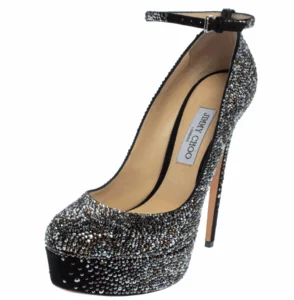
Platform heels solve a mechanical problem: height without the same forward pressure on the ball of the foot, because the platform reduces the incline angle. Alexander McQueen’s crystal-embellished skull platform pumps show how the category can go maximalist without sacrificing that comfort logic.
Wedges, like Burberry’s leather and check-canvas styles, distribute weight along the entire sole rather than concentrating it at a heel tip, which is why they handle grass, gravel, and cobblestones far better than any other heel type.
Stilettos are the one silhouette where design leans fully into drama over ease — a heel at 4 inches or higher, tapering to a point, built to elongate the leg line. Christian Louboutin’s metallic gold stiletto sandals are a clear example of the archetype: minimal coverage, maximum visual impact.
Mules close out the list as the shoe built for effortlessness — no back strap, easy on and off, but still elevated enough to dress up an outfit.
Materials#
Materials are where “designer” earns its price difference, and it’s worth understanding what you’re actually paying for.
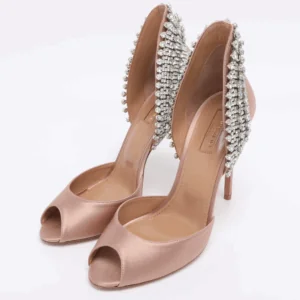
Full-grain leather and suede are the baseline across most luxury houses, chosen because they mold to the foot over time rather than cracking. Exotic materials — embossed leather, satin, and metallic finishes — show up heavily in evening styles like the Aquazzura crystal-embellished Concorde D’Orsay pumps, where hand-applied crystal work adds both cost and fragility (a trade-off worth knowing before you wear satin heels somewhere with a wet bar).
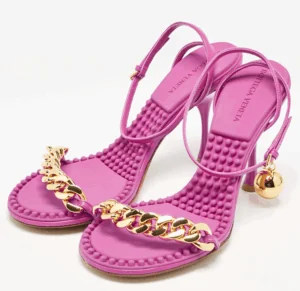
Hardware matters too. Adjustable ankle straps, as seen on the Bottega Veneta dot-embellished sandals, are a small detail that affects fit more than most people expect — a strap that sits too high or too low changes how securely the shoe holds your foot. On the structural side, platform and wedge soles are typically built from layered cork or lightweight EVA foam under the leather wrap, which is the actual source of the comfort gain, not just the added height.
The honest caveat: embellished and satin finishes, however beautiful, are inherently less durable than plain leather. If you’re buying one investment pair, a leather pump or block heel will outlast a crystal-covered sandal by years.
Pros and Cons#
Advantages of designer heels
- Engineered lasts (the internal shoe mold) tend to fit human foot anatomy more accurately than fast-fashion equivalents, which reduces pinching and blistering
- Higher-quality leather and soles mean a well-maintained pair can last 5–10+ years, including reheeling and resoling
- Resale value on sought-after styles (Louboutin, Jimmy Choo, Christian Dior) is meaningfully higher than on mass-market shoes, making them a smarter long-term spend
- Design detailing — hand-set crystals, engineered arch support, tonal stitching — is genuinely hard to replicate at lower price points
Disadvantages to be aware of
- Price remains the obvious barrier; even entry-level designer pumps start well above $500
- Break-in periods on stiff leather styles (particularly structured pumps and stilettos) can mean real discomfort for the first few wears
- Embellished, satin, or exotic-skin styles require careful storage and are not weather-resistant
- Sizing is inconsistent across houses — a 38 in one brand can run differently than a 38 in another, which makes buying pre-owned or online without trying on a genuine risk
Who Should Buy#
Not every heel type suits every lifestyle, so match the silhouette to your actual week rather than the trend cycle.
Office-to-evening dressers get the most mileage out of pumps or kitten heels — both transition cleanly from a desk to dinner without a shoe change.
Anyone on their feet for long stretches — event hosts, brides, people attending all-day outdoor functions — should prioritize block heels or wedges, since the stability difference is not subtle.
Statement-occasion wearers (galas, red carpets, milestone events) are the target audience for stilettos and platform heels, where visual impact matters more than eight hours of comfort.
People building a first designer shoe collection should start with a leather pump or a block heel sandal in a neutral tone — both hold resale value well and work across more outfits than a trend-driven silhouette will.
Heel-averse buyers who still want the dress-up effect are well served by mules or kitten heels, which deliver polish without the balance demands of a 4-inch stiletto.
Alternatives#
If none of the seven core silhouettes quite fit, a few adjacent options are worth considering:
- Slingback heels offer the coverage of a pump with the breathability and easy fit of an open back — a strong middle ground for warmer climates
- Ankle-strap sandals, like several Bottega Veneta and Aquazzura styles, add security for anyone nervous about a shoe slipping during a long event
- Low-heeled loafers or flats from the same design houses (Prada, Gucci) deliver the same craftsmanship and material quality without any heel height at all, worth considering if comfort is non-negotiable
- Pre-owned designer heels through resale platforms are a legitimate way to access higher-end brands like Alexander McQueen or Christian Louboutin at a lower cost, particularly for special-occasion styles you won’t wear often enough to justify full retail price
FAQ#
What’s the actual difference between designer heels and regular heels? It comes down to construction, not just branding. Designer heels use higher-grade leather or suede, more precise lasts (the mold the shoe is built around), and reinforced soles designed for repeated wear — which is why they tend to feel noticeably more stable and comfortable after a few hours, and why they can be resoled and repaired rather than replaced.
Which type of designer heel is best for first-time luxury shoe buyers? A leather pump or a block heel sandal in black, nude, or another neutral tone. Both are versatile enough to wear constantly, which makes the cost per wear far more reasonable than a trend piece you’ll wear twice.
What are the biggest designer heel trends for 2025? Kitten heels and mules are the two standout comfort-driven trends this year, alongside a continued appetite for block heels with sculptural or crystal-embellished detailing. Stilettos haven’t disappeared, but they’re increasingly reserved for evening rather than everyday wear.
Do celebrities actually wear these heel types off the red carpet? Yes, though the styling shifts by setting. Red-carpet moments still lean toward dramatic stilettos and platforms for maximum visual impact, while off-duty street style — much of what’s captured at airports and events — has shifted noticeably toward block heels, mules, and kitten heels, reflecting the same comfort-first shift happening across the broader market.
How many inches should a heel be for all-day wear? Most comfort-focused designers cap all-day styles at 2–3 inches. Anything past that, particularly in a stiletto, is generally built for shorter wear windows — think dinner or an event rather than a full workday.
Are embellished or satin designer heels worth buying? They’re worth buying for occasion wear, but they’re not a practical everyday investment. Treat them as special-event pieces and store them properly rather than expecting the durability of a plain leather pump.
Final Thoughts#
The “right” designer heel isn’t the one trending hardest this season — it’s the one that matches how you actually move through your day. Pumps and block heels earn their reputation as wardrobe staples because they hold up to real use. Stilettos and platforms exist for the moments where comfort takes a back seat to impact, and that’s a perfectly reasonable trade-off for a few hours at a time. Kitten heels and mules are the quiet winners of 2025, proof that the industry itself is recalibrating toward wearability without giving up on polish.
Buy for your actual life first, your aspirational closet second — and if a style genuinely earns a place in rotation, invest in the leather and construction quality that will let it last well beyond one season’s trend cycle.
Related Articles#
- Exotic Leather Handbags: The Complete Buying Guide
- Best White Designer Dresses 2025: Luxury for Less
- YSL Tribute Sandals: Style Guide & Buying Tips
- YSL Tribute Sandals Guide: Fit, Style & Buying Tips
- Why Are Golden Goose Sneakers So Expensive? Real Reasons
Related guides
- Online Bag Authentication: What Photos Can and Cannot Prove
- Fake Goyard Bag Guide: How to Spot Real vs Fake (2026)
- How to Spot a Fake Chanel Flap Bag: Authentication Guide
- How to Spot a Fake Hermès Birkin: Expert Checklist
- How to Buy an Authentic Luxury Bag from China Safely
- New vs Pre-Owned Luxury Bags: Which Route Is Right for You?
- Chanel Bag Guide: What to Know Before You Buy
- Luxury Bag Houses


Keyword index