Introduction: Fendi’s Legacy in the Handbag World#
Fendi has been in the business of turning leather into desire since 1925, when Edoardo and Adele Fendi opened a small workshop in Rome. What started as a fur and leather atelier grew into one of Italy’s defining luxury houses, and by the 1960s and 70s, under the creative direction of the five Fendi sisters and later Karl Lagerfeld, the brand had built a reputation for craftsmanship that didn’t need to shout to be noticed.
That’s really the throughline with Fendi. Where some houses lean on logos and marketing campaigns, Fendi’s best bags earn their status through construction: hand-finished edges, saddle-stitching that holds up after a decade of daily use, and leather selection that’s genuinely a cut above what you’ll find at the same price point elsewhere. The Double F logo, designed by Lagerfeld in 1965, is shorthand for “Fun Fur” but it’s become something bigger than that origin story: a signature that signals old-world Italian leatherwork without needing to cover the entire bag.
I’ve handled a fair number of Fendi bags over the years, both fresh off the shelf and well-loved pre-owned pieces, and what strikes me every time is how differently they age compared to some competitors. A ten-year-old [Fendi Baguette](/brands/fendi-baguette-review-worth-buying-2024/) in good condition still looks intentional. That’s not an accident, it’s a function of material choice and construction, and it’s exactly why certain Fendi styles have held resale value better than most of their peers.
Below are the seven Fendi bags I’d point any serious shopper toward, organized by how you’d actually use them, plus the buying advice you need before spending real money on one, new or pre-owned.
Statement Clutches: Fendi’s Take on Evening Glamour#
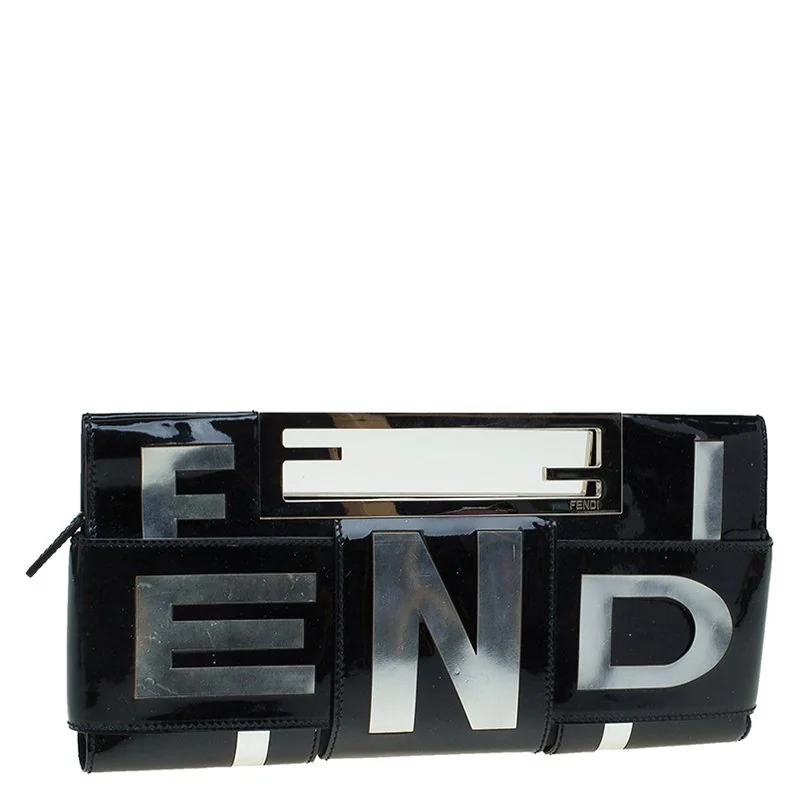
Fendi doesn’t do “safe” evening bags, and that’s the point. Their clutches tend to lead with a graphic idea rather than pure minimalism, which makes them memorable but also means they’re not for someone who wants a bag that disappears into the background.
Fendi Crossword Clutch (Black Patent Leather) This one earns its place through texture rather than color. The patent leather base is standard enough, but the raised crossword-grid embossing across the surface gives it a tactile, almost architectural quality that photographs beautifully under evening light. The silver-toned cutaway handles are a smart detail: they keep the bag easy to grip without adding bulk to what’s meant to be a slim, hand-carried piece. This is the clutch I’d recommend for someone who wants texture and conversation value over logo visibility. Downside worth flagging: patent leather shows fine scratches more readily than smooth calfskin, so it’s not the most forgiving finish if you’re rough on your accessories.
Fendi Box Clutch (Black/Silver Resin, FF Logo) Where the Crossword Clutch is subtle, this one is not. The resin construction gives it a glassy, almost lacquered shine, and the oversized silver FF logo sits front and center rather than tucked into hardware. It’s compact, structured, and genuinely versatile across cocktail and formal dress codes, but resin is a rigid material and there’s less give than leather, so it holds less than it looks like it should. If you’re the type who needs your phone, keys, and a lipstick all in one evening bag, try one in person before buying, the interior is smaller than the silhouette suggests.
Both clutches share a common Fendi trait: they’re designed to be handled, not just displayed. That’s a meaningful difference from houses that build evening bags purely for the photo.
Structured Totes for Everyday Luxury#
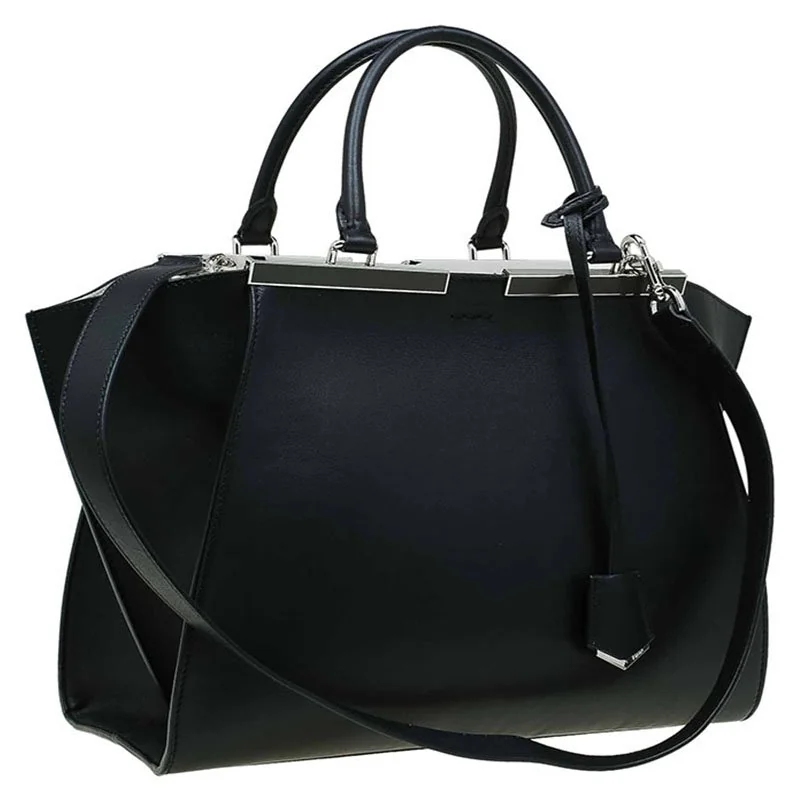
This is where Fendi’s practical side shows up, and honestly, it’s where I think the brand does its most underrated work. The house’s totes aren’t trend pieces. They’re built for people who need a bag to survive a commute, a client meeting, and an airport in the same week.
Fendi 3Jours Tote The 3Jours is the closest thing Fendi has to a signature workhorse bag, and it deserves the reputation. The trapeze silhouette is reinforced with enameled metal bars along the top edge, which keeps the shape crisp even when the bag is loaded down, a detail that matters more than it sounds like it should, since plenty of “structured” totes from other brands go soft and slouchy within a year. In black leather, it’s genuinely roomy enough for a tablet, files, and the everyday clutter of a workday. My honest take: it’s not the lightest bag in this category, the hardware and structure add real weight, so if you’re someone who prioritizes a feather-light daily bag, factor that in before buying.
Fendi 2Jours Tote (Petite, Embellished Calfskin) The 2Jours is the 3Jours’s smaller, more expressive sibling, designed by Silvia Venturini Fendi around the idea of duality, hence the name. The petite red calfskin version with mink fur embellishment trades some of the practicality of the 3Jours for personality. It’s a stunning bag, but it’s also a more occasion-driven purchase than an everyday one; the embellishment isn’t something you want getting caught on car doors or crowded subway poles. If you want the silhouette but need daily durability, the unembellished leather versions are the smarter buy.
Both totes reflect a broader point about Fendi’s design language: functionality and formality aren’t treated as opposites. That’s genuinely rare in this price category.
Fendi’s Cult-Favorite Shoulder and Crossbody Bags#
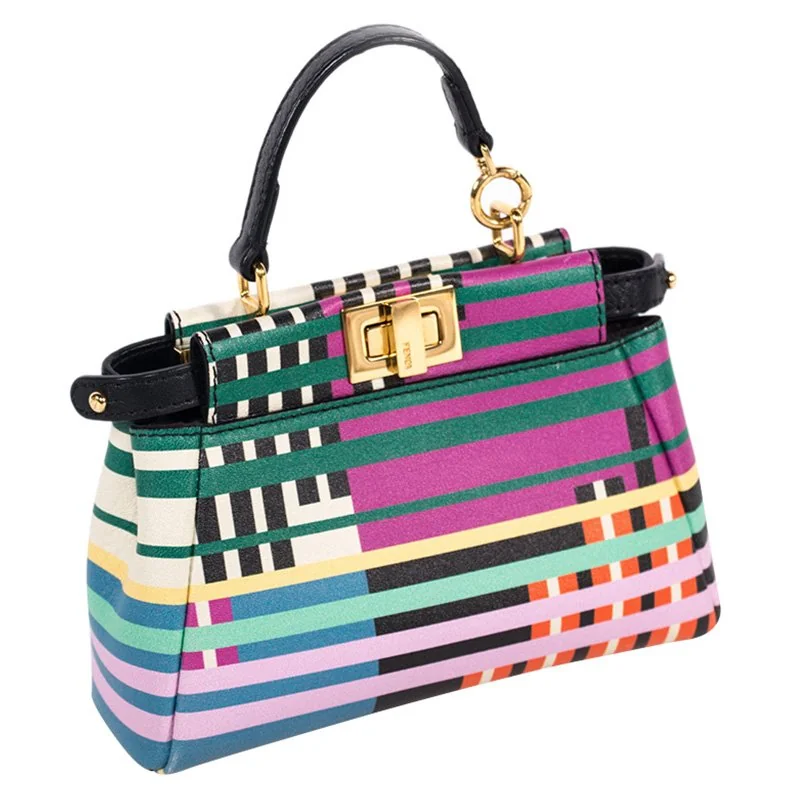
This is the category that made Fendi a household name beyond dedicated fashion circles, largely thanks to two bags that behave nothing alike but both became cultural fixtures.
Fendi Baguette Bag The Baguette, introduced in 1997 by Silvia Venturini Fendi, is arguably the most influential handbag design of the late 90s and early 2000s, credited with helping popularize the entire “It bag” phenomenon well before that term was common. Its small, elongated shape, designed to be tucked under the arm like a loaf of bread, was a deliberate departure from the structured, formal bags dominant at the time. What keeps the Baguette relevant decades later is how endlessly it’s been reinterpreted across leathers, embroidery, and embellishment while the silhouette stays instantly recognizable. As a daily bag, it’s genuinely small; if you carry more than a phone, cards, and lip product, you’ll find it limiting. That constraint is also its charm.
Fendi Peekaboo Bag Introduced in 2008 under Lagerfeld’s direction, the Peekaboo is the more grown-up, structured counterpart to the Baguette. Its defining feature is the twist-lock closure that opens to reveal a two-compartment interior, hence the name, and a rigid frame that holds its shape whether it’s half-empty or fully packed. The Multicolor Stripe Print Micro Peekaboo is a good example of how the house uses this silhouette as a canvas: the same disciplined frame carries a much louder, graphic colorway without losing structure. In hand, the Peekaboo feels noticeably more substantial and “important” than the Baguette, which also means it’s priced and positioned as more of an investment piece. The trade-off is weight and a shorter drop on the handles in some sizes, worth trying on before committing if you plan to wear it hands-free often.
Between the two, I’d say the Baguette wins on cultural cachet and versatility across outfits, while the Peekaboo wins on craftsmanship visibility and everyday structure. They’re not really competing for the same buyer.
What Makes These Bags Stand the Test of Time#
Looking at these seven bags side by side, a few shared traits explain why Fendi’s classics keep circulating on resale platforms years, sometimes decades, after release rather than fading into “trend piece” territory.
Structural integrity is the biggest one. Whether it’s the enameled bars on the 3Jours or the rigid frame of the Peekaboo, Fendi tends to build hardware into the bag’s skeleton rather than treating it purely as decoration. That’s why well-maintained examples of these bags still hold their shape long after cheaper “structured” totes have gone soft.
Material quality is the second. Fendi’s leather sourcing, particularly for calfskin and nappa, is consistently strong, and it’s noticeable the moment you compare a Fendi piece to a similarly priced bag from a less leather-focused house. The patina these bags develop with age tends to look intentional rather than worn out, which matters enormously for resale.
Third, and easy to overlook, is restraint in branding. Even the boldest pieces on this list, the Box Clutch with its oversized FF, or the striped Peekaboo, use logo and pattern as one design element among several rather than the entire concept. That’s part of why these bags don’t date the way heavily logoed pieces from the 2000s sometimes do.
None of this means every Fendi bag ages well. Some of the more heavily embellished or fur-trimmed pieces, like the mink-embellished 2Jours, need more careful storage and are more sensitive to wear, which is worth knowing before you buy one expecting Baguette-level durability.
Buying Advice: New vs Pre-Owned Fendi Bags#
Buying new gets you a warranty, a receipt trail, and access to current colorways and limited releases, but you’re also paying full retail, and Fendi, like most houses in this tier, doesn’t hold pricing steady, expect gradual increases year over year. Buy new through Fendi boutiques or the official Fendi website, or through authorized department stores (Neiman Marcus, Saks, Bergdorf Goodman, Harrods) if you want a backup paper trail beyond the brand itself.
Buying pre-owned is where the real value conversation happens, especially for styles like the Baguette and 3Jours that were produced across many seasons and materials. A well-kept pre-owned Baguette can cost a fraction of a new one while looking nearly identical if the leather and hardware were cared for. The trade-off is authentication risk and inconsistent condition, so this is not a category where you should shop on price alone.
A few things I always check, or tell people to check, before buying a pre-owned Fendi bag:
- Stitching consistency. Fendi’s stitching is even and tight. Wavy, uneven, or loose stitching, especially around handle attachment points, is a red flag.
- Hardware weight and engraving. Fendi hardware has heft and clean, precise engraving on the FF logo and zipper pulls. Light, tinny hardware or blurry logo stamping is a strong counterfeit signal.
- Interior lining and serial details. Check the lining material and any interior tags against reference photos from the specific era the bag claims to be from, Fendi’s interior details have changed over the decades.
- Buy from platforms with in-house authentication. Reputable resale platforms that physically inspect items before listing (rather than peer-to-peer marketplaces with no vetting) meaningfully reduce risk. Ask specifically what their authentication process involves, not just whether one exists.
- Get everything in writing. Condition notes, authenticity guarantee terms, and return policy should all be documented before you pay, especially for higher-ticket pieces like the Peekaboo or embellished totes.
On investment value: the Baguette and Peekaboo have the strongest resale track records among these seven, largely due to sustained demand and instant recognizability. Heavily embellished or fur-trimmed limited pieces can be harder to resell simply because the buyer pool for a very specific colorway or material is smaller, beautiful, but a narrower market if resale matters to you.
FAQs About Fendi Handbags#
Are Fendi bags a good investment? Some are, most aren’t guaranteed to be. Classic, widely produced styles like the Baguette and Peekaboo tend to hold value well because demand stays consistent and they’re easy to authenticate and resell. Limited or heavily embellished pieces can actually be harder to resell despite higher original price tags, since the buyer pool is smaller. Treat “investment” as a possibility with the right style, not a given with any Fendi bag.
What is the most iconic Fendi bag? The Baguette is generally considered Fendi’s most culturally significant design, credited with helping kick off the late-90s “It bag” era. The Peekaboo is the more recent icon and arguably the more design-forward of the two, prized for its structured frame and twist-lock closure.
How much do Fendi handbags typically cost? New retail prices generally range from around $2,000 for smaller clutches and Baguette variations up to $5,000 or more for Peekaboo styles and heavily embellished pieces, and pricing shifts periodically, so check current listings rather than relying on older figures. Pre-owned prices vary widely based on condition, rarity, and material, sometimes 30-60% below retail for well-maintained pieces.
How can I tell if a Fendi bag is authentic? Focus on stitching quality, hardware weight and engraving precision, and interior lining details, and cross-reference against the era the bag is claimed to be from. When in doubt, buy from a platform or dealer that offers professional authentication rather than relying on your own assessment alone.
Is the Fendi Baguette practical for everyday use? It depends on how you pack. The Baguette is genuinely small, built for essentials rather than full daily-carry needs. If you regularly need to carry a tablet, larger wallet, or work items, a 3Jours or Peekaboo will serve you better day to day, with the Baguette reserved for lighter outings.
Related Articles#
- Designer Handbag Trends 2025: What’s Actually Worth Buying
- Why the Chanel Crossbody Bag Never Goes Out of Style
- YSL Tribute Sandals: Why This Iconic Style Still Reigns
- Best It Bags to Buy This Year: A Definitive Guide
Related guides
- Online Bag Authentication: What Photos Can and Cannot Prove
- Fake Goyard Bag Guide: How to Spot Real vs Fake (2026)
- How to Spot a Fake Chanel Flap Bag: Authentication Guide
- How to Spot a Fake Hermès Birkin: Expert Checklist
- How to Buy an Authentic Luxury Bag from China Safely
- New vs Pre-Owned Luxury Bags: Which Route Is Right for You?
- Chanel Bag Guide: What to Know Before You Buy
- Luxury Bag Houses


Keyword index