Introduction#
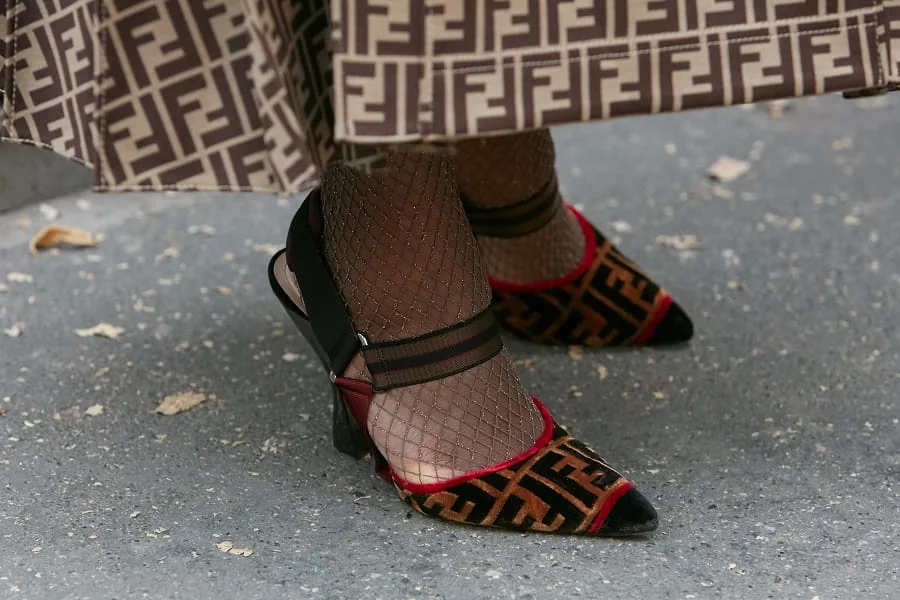
Ask any shoe editor to name the Fendi silhouette that actually changed how a slingback could look, and the Colibri comes up almost immediately. Fendi has spent nearly a century under the direction of names like Karl Lagerfeld, Silvia Venturini Fendi, and now Kim Jones, and the house has never been shy about experimenting with construction techniques that don’t “belong” in traditional shoemaking. The Colibri is one of the clearest examples of that instinct.
The sandal debuted on the Spring/Summer 2018 runway, and it read immediately as something different from the era’s minimalist heel trend. Named after the hummingbird for its lightness and its riot of color, the Colibri leaned into a maximalist, almost architectural femininity at a time when most luxury houses were still playing it safe. It didn’t take long for the style to move from runway to red carpet — Vanessa Hudgens and Emmy Rossum both wore pairs publicly, which helped cement the Colibri as one of those “I recognize that shoe” designs, even for people who don’t follow shoe releases closely.
Fendi also leaned into the personalization trend early with #MyFendiColibri, a made-to-order program available in select stores that let customers choose their own toe shape, ribbon strap, and heel height. That kind of customization is rare for a mainline luxury shoe, and it’s part of why the Colibri still feels culturally relevant rather than like a one-season runway moment. If you’re researching the Fendi Colibri sandals before buying — new or pre-loved — it helps to understand exactly what you’re paying for, so let’s break down the construction.
Shoe Anatomy: Fendi Colibri Sandals#
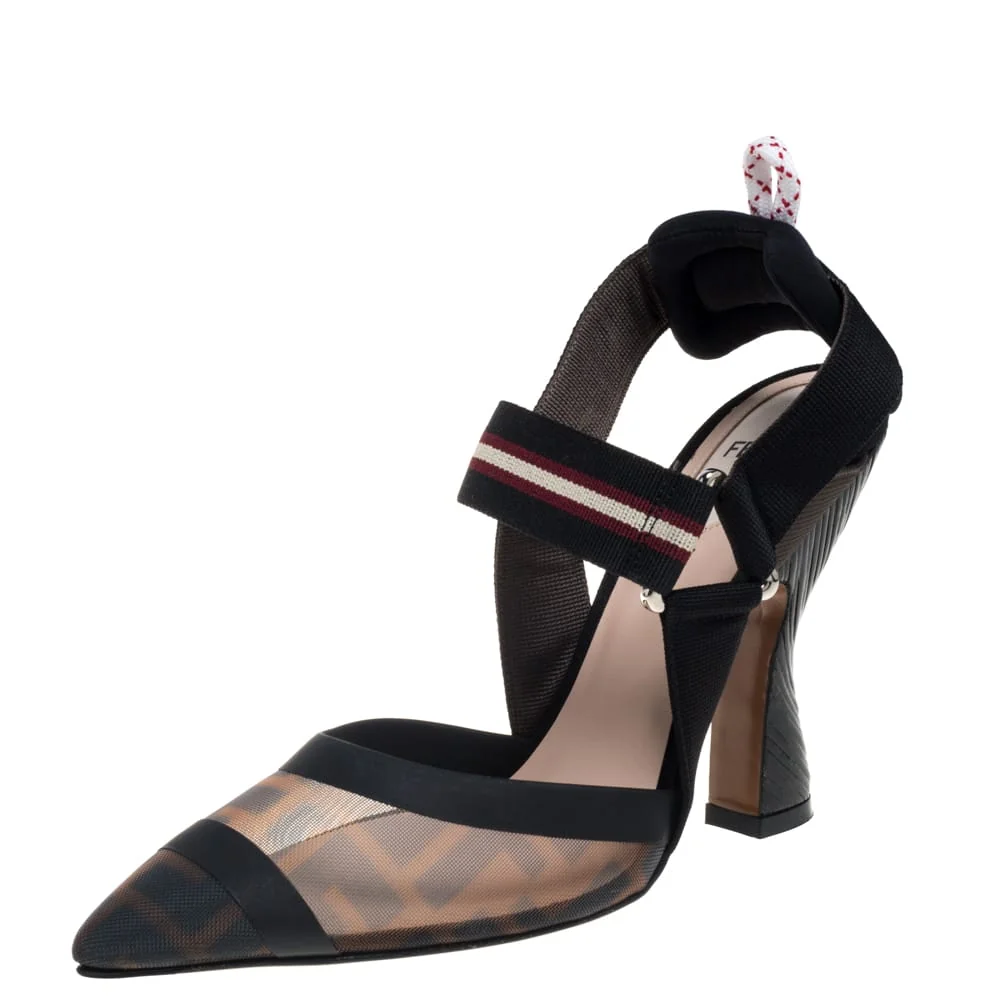
The first thing you notice in person, not in photos, is how sporty the construction actually feels underfoot compared to how delicate it looks on the shelf. Fendi borrowed techniques typically used in sneaker manufacturing and applied them to a pointed-toe slingback, which is an unusual pairing and, honestly, the whole reason this shoe works.
A few details define the silhouette:
- Thermo-heated ribbon straps. The vamp ribbons are heat-bonded rather than stitched, which gives them a clean, seamless finish. It’s a nice technical touch, but it also means damaged straps are harder to repair conventionally — something to keep in mind if you’re buying pre-owned.
- Cushioned heel counters. The padding at the back of the shoe is genuinely more comfortable than most pointed-toe slingbacks in this price bracket. It’s one of the few design choices that prioritizes wearability over pure aesthetics.
- Hand-twisted pull-tabs. These small sporty details at the heel are a signature touch and a quick way to spot an authentic pair — the twist should look deliberate and even, not loose or glued.
- Pointed toe with a curved, sculptural heel. This is the part that photographs well but is also where fit issues tend to show up, since the pointed toe box runs narrower than Fendi’s rounder styles.
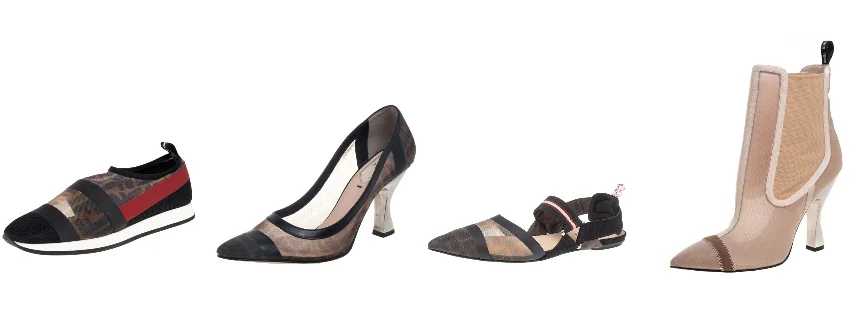
Every pair comes out of Fendi’s Roman atelier, and the Colibri name has since been applied to several variations — the original slingback, closed-heel pumps, and even a sneaker version — across a wide range of colorways, from tonal neutrals to the more collectible multicolor mesh pairs. The multicolor versions tend to be the ones people specifically search for, and they’re also the hardest to find in excellent condition secondhand, simply because the mesh shows wear more visibly than smooth leather.
Styling the Fendi Colibri Sandals#
The Colibri is a shoe that rewards a bit of restraint elsewhere in the outfit — the sandal itself is doing enough visual work.
For daytime or brunch: Pair the Fendi Colibri slingback with a simple midi dress or tailored linen trousers in a solid, neutral tone. The multicolor mesh versions especially don’t need competing prints nearby.
For office or client-facing events: A structured blazer with straight-leg trousers works well, and the curved heel is low enough (depending on the height you choose) to be genuinely walkable for a full day, unlike a lot of statement heels.
For evening: This is where the Colibri earns its keep. A slip dress or a monochrome look lets the sandal read as the statement piece. I’d avoid layering it with other heavily embellished accessories — let the ribbon detailing and color do the talking.
A few honest notes from wearing them: the pointed toe runs narrower than it looks, so if you have a wider forefoot, sizing up half a size is common advice among owners, though that can make the heel counter feel loose. The slingback strap also sits a bit high on some ankle shapes, which isn’t a flaw exactly, but it’s worth trying on before committing, especially if buying resale where returns are limited.
Investment Value & Resale Potential#
This is the part collectors actually care about, so let’s be direct about it. Retail pricing for the Fendi Colibri sandals has typically landed in the $900–$1,200 range depending on the colorway and materials, with the multicolor mesh and more elaborate ribbon versions sitting at the higher end. The made-to-order #MyFendiColibri pairs, when they turn up on the resale market, often carry a premium simply because customization made each pair unique.
Resale demand has stayed relatively strong for a shoe that’s now several years past its original runway season, which says something about its staying power compared to a lot of “trend” heels that lose value quickly. A few things drive resale price on this specific style:
- Colorway rarity. Neutral, single-tone pairs are common and resell modestly. Multicolor mesh versions and limited runway colorways command noticeably higher resale prices.
- Condition of the ribbon and mesh. Because of the heat-bonded construction, damaged or fraying ribbon straps significantly reduce [resale value](/buying-guides/sneaker-trends-2025-styles-worth-the-hype/) — more so than scuffed leather would on a traditional pump.
- Original box and dust bags. As with most Fendi shoes, complete packaging adds real dollars to resale listings, particularly for the made-to-order pairs where documentation of customization helps establish provenance.
My honest take: the Colibri holds value better than most seasonal statement heels, but it’s not going to appreciate like a Baguette bag or a rare Peekaboo. Think of it as a shoe that depreciates slowly and predictably rather than one that’s a true investment piece. If resale value is your primary motive for buying, the rarer multicolor and made-to-order pairs are the safer bet.
Where to Buy Fendi Colibri Sandals#
Buying new: Since the Colibri has cycled through several seasons, new-in-box pairs are increasingly limited to specific colorways still in Fendi’s rotation or occasional restocks. Fendi boutiques and the brand’s official site are the only guaranteed-authentic new sources, but selection is inconsistent — don’t expect every colorway to be available at once.
Buying pre-loved: This is realistically where most shoppers will find the wider range of colorways, including the multicolor mesh and discontinued heel heights. A platform like The Luxury Closet is a solid option specifically because listings are authenticated before sale, which matters a lot with a shoe like this where the ribbon and mesh detailing can be tricky to evaluate from photos alone.
A few authentication and condition checkpoints worth checking yourself, even on a pre-vetted platform:
- Inspect the hand-twisted pull-tabs for even, deliberate twisting — sloppy or glued tabs are a red flag.
- Check the ribbon edges for the clean, seamless bond that thermo-heating produces; visible stitching or fraying suggests either heavy wear or a non-authentic construction.
- Ask for close-up photos of the insole branding and size stamp, and compare font and spacing against verified authentic references.
- Request the full sole and heel tip condition, since resoling isn’t common practice for this sneaker-influenced heel construction and heavy wear here is harder to restore cleanly.
FAQ#
Do Fendi Colibri sandals run true to size? Not exactly. The pointed toe box tends to run narrow, and many owners size up half a size for comfort, particularly with wider feet. If you’re buying pre-loved and can’t try them on first, check the seller’s fit notes or reviews for that specific colorway.
How do you clean and care for the mesh and ribbon straps? Avoid submerging or heavily wetting the mesh sections, since the thermo-bonded ribbons aren’t designed for repeated moisture exposure. Spot clean gently and store with the original shape supported (shoe trees or stuffed toe boxes) to prevent the pointed toe from creasing.
Are the Fendi Colibri heels comfortable for all-day wear? More than most pointed-toe slingbacks in this category, thanks to the cushioned heel counters, but comfort still depends heavily on heel height chosen and your personal fit. Lower heel versions from the #MyFendiColibri program are noticeably easier to wear for a full day.
How can I tell if a pair is authentic before buying secondhand? Focus on the hand-twisted pull-tabs, the seamless ribbon bonding, and the insole stamping. Buying through an authenticated resale platform removes most of the guesswork, but it’s still worth knowing these details yourself.
Do Fendi Colibri sandals hold resale value? Reasonably well compared to seasonal statement shoes, especially rarer multicolor and made-to-order pairs in strong condition. They’re not a guaranteed appreciating asset the way certain Fendi bags are, but they depreciate slowly if kept in good shape with original packaging.
Related Articles#
- YSL Tribute Sandals: Why This Iconic Style Still Reigns
- Fendi Baguette: History, Value & Buying Guide
- Designer Handbag Trends 2025: What’s Actually Worth Buying
- Valentino Alcove Bag: Style, Sizes & Is It Worth It?
- 4 Reasons Bally Bags Are Worth Buying: A Buying Guide
Related guides
- Online Bag Authentication: What Photos Can and Cannot Prove
- Fake Goyard Bag Guide: How to Spot Real vs Fake (2026)
- How to Spot a Fake Chanel Flap Bag: Authentication Guide
- How to Spot a Fake Hermès Birkin: Expert Checklist
- How to Buy an Authentic Luxury Bag from China Safely
- New vs Pre-Owned Luxury Bags: Which Route Is Right for You?
- Chanel Bag Guide: What to Know Before You Buy
- Luxury Bag Houses


Keyword index