Introduction#

Some bags announce themselves. The Dior Bobby doesn’t — and that’s precisely why it works. It has this quiet, crescent-shaped confidence that draws you in slowly: you notice the curve of the flap, then the antique-gold CD hardware, then the “30 Montaigne” stamped across the back, and by that point you’re already calculating how it would look with everything in your closet. I’ve handled a fair number of Dior bags over the years, and the Bobby is one of the rare ones that manages to feel both vintage and current at the same time, which is a harder trick to pull off than it sounds.
This review breaks down where the Dior Bobby bag came from, what it’s actually made of, how it wears day to day, and — the question most readers landing on this page actually want answered — whether it holds its value well enough to justify the price. Short answer: mostly yes, with a few caveats worth knowing before you buy.
The Story Behind the Name#
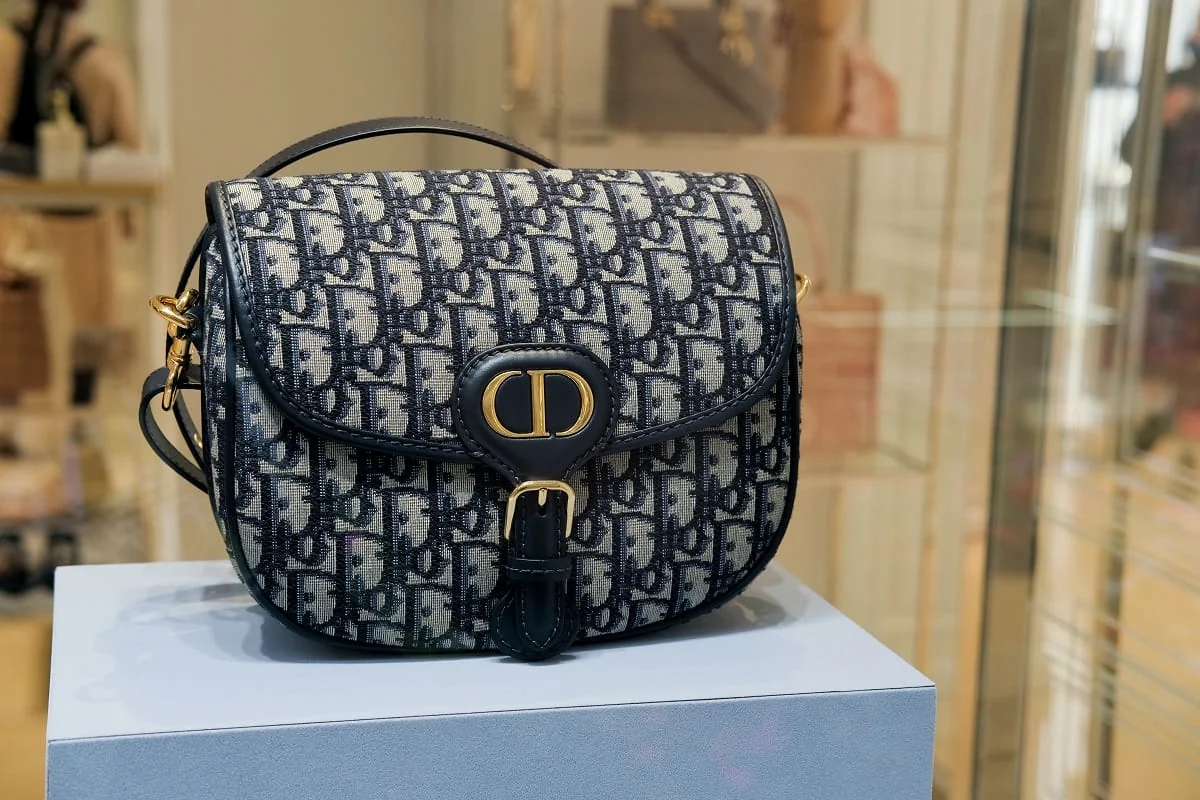
The name isn’t a marketing invention — it’s personal. Christian Dior was famously superstitious and deeply attached to his dogs, particularly a hound named Bobby. Throughout the 1950s, Dior named a piece from nearly every skirt-suit collection after him, and the “Bobby Suit” became one of the house’s quiet recurring traditions. It’s a small, humanizing detail in an archive otherwise full of grand couture moments.
Decades later, Maria Grazia Chiuri picked up that thread. She’s spoken about designing bags as extensions of the everyday, almost like a companion you carry rather than a status object you display — and that idea led her straight back to Christian Dior’s bond with his dog. The Bobby bag is the result of those two inspirations meeting: the founder’s affection for a loyal companion, and a contemporary designer’s belief that a bag should feel just as loyal and lived-in. It’s a nice story, and unlike a lot of “heritage” marketing in this industry, it’s actually rooted in something real.
From Launch to Must-Have Status#
The Dior Bobby debuted with the Fall 2020 collection, and it didn’t take the slow, gradual climb that most new bag shapes go through. Between the timing (right as consumers were rethinking “quiet luxury” pieces during a period of minimal socializing) and the design itself, it moved quickly from runway novelty to genuine It-bag status — the kind you started seeing on editors, resellers, and street-style regulars within a season, not a year.
Part of that speed came from Dior positioning it as a everyday, wear-with-anything piece rather than a formal statement bag, which broadened its appeal beyond die-hard Dior collectors into a wider luxury-shopper audience. It’s now firmly part of the house’s core lineup alongside the Lady Dior and Saddle bag, which in resale terms matters: a bag the brand keeps producing season after season tends to hold value better than a one-off capsule piece.
Design and Craftsmanship#
Structurally, the Bobby is a hobo bag that’s had its slouch disciplined out of it. Traditional hobos are soft and shapeless; the Bobby keeps the relaxed, curved silhouette but builds it around a firmer, more architectural base, with a crescent shape that nods to saddle-bag styling without copying it outright. That structure is what makes it sit well on the shoulder instead of collapsing into itself, which is a real ergonomic advantage over other hobo styles on the market.
The signature cues are all here and all deliberate:
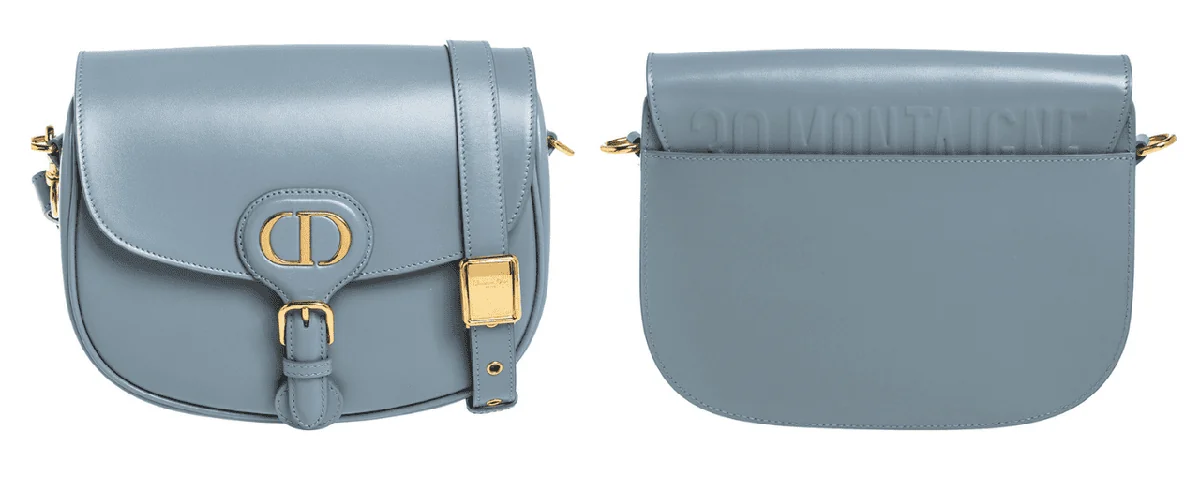
- The CD logo hardware on the front flap, finished in an antique-gold tone rather than a shiny modern gold, which is a small detail that gives the bag its “vintage-but-not-actually-old” character
- “Christian Dior Paris 30 Montaigne” embossed in bold type on the back — the brand’s original Paris address, used as a design element rather than a discreet tag
- A magnetic closure hidden behind a military-inspired buckle strap, which looks decorative but does the actual work of keeping the bag closed
- Small D-rings on either side connecting to an adjustable, removable strap, letting the bag switch between shoulder, crossbody, and clutch styling
Materials are where the bag earns its price tag. The primary options are box calfskin, which has a subtle sheen and a structured hand-feel, and Oblique canvas/jacquard versions, which lean more casual and slightly more resistant to scuffing. Both use suede lining inside with a logo slip pocket, and there’s a practical exterior slip pocket at the back for a phone or transit card. In hand, the calfskin version feels noticeably more “special occasion,” while the canvas version is the one I’d actually recommend for daily rotation — it shows wear less obviously and is more forgiving if you’re rougher on your bags than you’d like to admit.
Sizes, Prices and Colorways#
Dior has released the Bobby in a few different sizes and materials over its seasons, and the size you choose changes both the use case and the resale math:
- Mini/Small Bobby — best for evening or minimal-essentials use; highest per-inch price but strong resale demand because small bags consistently outsell larger ones in the secondary market
- Medium Bobby — the most popular size and the one most people mean when they say “the Dior Bobby bag.” Fits daily essentials without bulk, and is the easiest size to resell
- Large/East-West Bobby — more of an everyday workhorse bag; comfortable but less iconic in silhouette, and slower to move on resale platforms
Pricing has crept up with Dior’s broader price increases across its handbag categories, as it has with most houses since 2020. Box calfskin versions sit at the higher end, Oblique canvas versions are typically a step below, and limited or exotic-material releases (there have been python and box calfskin with unusual finishes) command a premium new but don’t always retain that premium on resale — exotic materials are a smaller buyer pool.
Colorways have expanded well beyond the neutral tones of the original launch. Black and the Oblique canvas remain the most liquid choices if resale value matters to you, since they’re the easiest to authenticate confidently and appeal to the broadest buyer base. Seasonal colors and prints look wonderful but depreciate faster, the same pattern you see across most [designer handbags](/brands/top-tory-burch-handbags/).
Styling the Dior Bobby Bag#
The Bobby’s biggest practical strength is that it doesn’t ask you to dress around it. I’ve worn mine with raw-hem jeans and a plain T-shirt on a Tuesday and with a slip dress on a dinner date, and it looked intentional both times, which is not something I can say for most structured designer bags.
A few ways it earns its keep:
- Crossbody, casual — the adjustable strap makes it genuinely comfortable for all-day wear, not just a styling option that looks fine in photos and cuts into your shoulder in real life
- Shoulder, tailored — worn on the shoulder with blazers or coats, it reads more polished and picks up on that saddle-bag structure nicely
- Clutch, dressed up — removing the strap turns it into an evening piece; the medium size is a touch large for a true clutch, so the small size works better here
- Neutral colorways for wardrobe versatility; canvas Oblique for anything you’d call “lifestyle” wear and tear; calfskin for when you want the bag itself to be the outfit’s focal point
Where it’s less convincing: the opening, while wide, narrows toward the sides for that saddle-like security, which makes digging around for smaller items (keys, lip balm) slightly more fiddly than a bag with a fully open top. If you’re someone who needs to grab things quickly without unzipping or unclasping anything, that’s worth test-handling in store before you commit.
Is It Worth the Investment?#
Here’s my honest read, having watched this bag both in person and across resale platforms since launch.
What works in its favor: Dior has kept the Bobby in continuous production since 2020, which is the single strongest predictor of resale stability in this category — discontinued capsule bags crater in value, while core-line bags hold. The design is distinctive enough to be recognizable without logos doing all the work, which tends to age better stylistically than heavily branded bags. And it sits in Dior’s handbag hierarchy just below the Lady Dior and Saddle in cultural cachet, which keeps demand consistent rather than spiking and dropping with trend cycles.
What doesn’t: it’s not, and probably never will be, a Birkin-tier appreciating asset — very few bags are. Expect it to depreciate like most well-regarded designer bags: retain a reasonable percentage of retail value in popular colorways and sizes (black, Oblique canvas, medium), and lose more in seasonal colors, exotic skins, or the larger size. The interior slip pocket placement and narrower opening are minor but real usability trade-offs. And because it launched fairly recently, it doesn’t yet carry the multi-decade collector premium of something like the Lady Dior, so if long-term appreciation over 10+ years is your primary goal, this isn’t the strongest candidate in Dior’s own lineup for that specific purpose.
My verdict: buy it because you want to wear it and love it, not purely as a speculative asset. As a wearable investment — something you’ll use constantly and can resell reasonably well when you’re ready to move on — it’s a genuinely solid choice, particularly in black or Oblique canvas, medium size. As a pure appreciating collectible, look toward the Lady Dior or Saddle instead.
FAQs#
Is the Dior Bobby bag being discontinued? No. It remains part of Dior’s core handbag collection and continues to appear in new colorways and materials each season, which supports its resale stability compared to limited releases.
How can I tell if a Dior Bobby bag is authentic? Check the embossed “Christian Dior Paris 30 Montaigne” text for even spacing and correct font weight, examine the CD hardware for the antique-gold finish (not bright gold), and verify the interior authenticity card and serial details against Dior’s current format. If you’re buying secondhand, a platform that offers professional authentication is worth the peace of mind, especially at this price point.
What size Dior Bobby bag should I buy? The medium is the most practical for daily use and the easiest to resell later. Go small if you want an evening-leaning bag or carry minimal essentials; go large only if you genuinely need the extra capacity, since it’s the slowest-moving size on the secondary market.
Which material holds up best — calfskin or Oblique canvas? Oblique canvas is more forgiving for everyday wear and shows scuffs less visibly. Box calfskin looks more refined but requires more care and is more prone to visible scratches over time.
How do I care for a Dior Bobby bag? Store it stuffed with tissue paper in its dust bag to hold the shape, avoid prolonged direct sunlight which can affect the leather tone, and keep it away from moisture. For calfskin, a leather protectant applied by a professional before first heavy use is a reasonable precaution. Avoid overstuffing, which stresses the crescent silhouette over time.
Does the Dior Bobby bag hold its value? Reasonably well in black or Oblique canvas, medium size — these are the most liquid on resale platforms. Seasonal colors, exotic skins, and the large size depreciate faster, in line with general trends across designer handbags.
Related Articles#
- Why the Chanel Crossbody Bag Never Goes Out of Style
- Best Tory Burch Handbags Every Closet Needs (2024)
- 10 Designer Must Have Bags Every Closet Needs
- Best Time to Buy a Luxury Handbag: Save More in 2025
- Designer Handbag Trends 2025: What’s Actually Worth Buying
Related guides
- Online Bag Authentication: What Photos Can and Cannot Prove
- Fake Goyard Bag Guide: How to Spot Real vs Fake (2026)
- How to Spot a Fake Chanel Flap Bag: Authentication Guide
- How to Spot a Fake Hermès Birkin: Expert Checklist
- How to Buy an Authentic Luxury Bag from China Safely
- New vs Pre-Owned Luxury Bags: Which Route Is Right for You?
- Chanel Bag Guide: What to Know Before You Buy
- Luxury Bag Houses


Keyword index