Introduction: Straw Bags Are Having Their Fashion Moment#
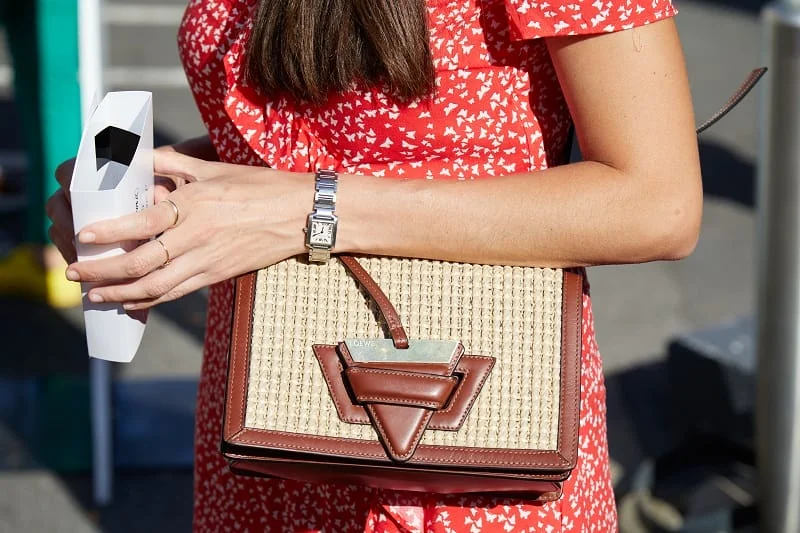
Scroll through Instagram or TikTok for more than five minutes this time of year and you’ll see it: straw bags everywhere, slung over shoulders at beach clubs, dangling from bike handlebars in the South of France, propped against pool loungers next to a spritz. What used to read as a holiday souvenir has been reworked by the maisons into something genuinely covetable — part heritage craft, part status object.
Houses like Loewe, Fendi, Jacquemus, and J.W. Anderson have led the charge, pairing woven raffia, wicker, and straw with leather trims, hardware, and unmistakable silhouettes. The result is a category that photographs beautifully and, more importantly, holds its own next to a leather tote in terms of desirability and resale demand.
I’ve tried on, carried, and evaluated a fair number of these bags over several seasons, from oversized market totes to tiny Jacquemus crossbodies that hold little more than a phone and lip balm. This guide breaks down the best straw bag styles by category — roomy totes, structured baskets, and mini crossbodies — along with honest notes on durability, pricing, and whether buying pre-loved makes sense here (spoiler: it often does).
Why Straw Bags Belong in Your Summer Wardrobe#
Straw bags earn their spot in a luxury wardrobe for a reason that has nothing to do with trends: they’re genuinely versatile in a way leather often isn’t during hot months. Leather totes get sticky-warm in humidity and show sweat marks against bare arms. Straw doesn’t have that problem, which is part of why it’s become the go-to for beach-to-city dressing.
The range is also wider than people expect. A structured raffia basket with a leather top handle can look polished enough for a resort lunch or a summer wedding, while a slouchy woven hobo reads as pure off-duty ease with denim shorts and sandals. Designers lean into this by mixing materials — leather piping, brass hardware, logo charms, colored trims — so the “vacation bag” no longer looks like an afterthought next to the rest of a considered outfit.
The honest caveat: straw is not a year-round material in most climates, and it’s not indestructible. It’s a seasonal investment, not a workhorse bag you’ll reach for in November. Keep that in mind before you spend four figures on one.
Spacious Totes and Hobos for Effortless Everyday Wear#
This is the category that gets the most actual use. If you only buy one straw bag, it’s probably from here.
Loewe makes arguably the benchmark straw tote right now. The woven raffia body paired with the brand’s signature leather handles and its small Anagram or Elephant charm gives it just enough personality without tipping into costume territory. It’s spacious enough for a beach day (towel, sunscreen, a paperback) but structured enough that it doesn’t collapse into a shapeless sack the way cheaper straw totes do. The tradeoff is price — Loewe’s woven pieces sit well into four figures, and the raffia does show wear at the base handles faster than the leather portions.
Fendi’s woven totes and hobos lean more directly into brand signaling, often featuring the FF logo woven directly into the straw or paired with the Baguette or Sunshine silhouette in raffia. They’re a good pick if you want the bag to be instantly recognizable rather than quietly luxurious. Structurally, Fendi’s totes tend to hold their shape a touch better than fully unstructured woven bags, thanks to leather reinforcement at the base and sides.
Both brands’ totes and hobos are genuinely practical — this is where I’d point a first-time straw bag buyer. They’re roomy enough to replace your everyday tote for the season, and because they’re less delicate than the mini crossbody styles, they tolerate actual daily use, including the inevitable sand and spilled rosé.
Structured Baskets and Top Handle Bags for Elevated Looks#
If the tote category is about ease, this one is about polish. Structured straw baskets and top handle bags are built with a rigid frame — often a wood or reinforced base — so they hold their shape regardless of what’s inside, which makes them look considerably more “dressed” than a soft woven tote.
Think Dior’s basket-weave top handles or Valentino’s raffia pieces finished with grosgrain ribbon and rockstud hardware — these read as resort-formal, the kind of bag that works with a linen shift dress at a beach club dinner or a tailored set for a summer garden party. The structured shape also does a favor for anyone worried about straw looking too casual for dressier daytime events; the rigidity and leather detailing push it firmly into “elevated” territory.
The downside is capacity and flexibility. Structured baskets don’t flex to fit more than they’re built for, and the rigid frame means they’re less forgiving to pack awkwardly (an evening clutch and sunglasses case tends to be the ceiling). They’re also, in my experience, more prone to visible scuffing at the corners since there’s no give to absorb bumps. I’d treat these as occasion bags rather than daily carry-alls.
Statement Crossbody and Mini Straw Bags for Weekend Casuals#
This is the category built almost entirely around personality over practicality. Jacquemus’s Le Panier Soleil — the round, wide-brimmed woven crossbody that essentially defined this micro-trend — is the clearest example. It’s small, it’s whimsical, and it photographs like nothing else on the shelf. It’s also, functionally, quite limited: think phone, cards, keys, and not much else.
J.W. Anderson’s woven crossbodies and pouches take a similar approach but with the brand’s more playful, sculptural hardware and pop-color leather accents. These bags are conversation pieces first and storage solutions a distant second.
Here’s my honest take: these mini straw bags are the hardest to justify on a cost-per-wear basis if you’re being purely rational, since capacity is minimal and the woven structure on the smallest silhouettes can feel genuinely fragile under regular use. But they’re also the most fun, the easiest to style for a single weekend outing or a vacation dinner, and often the most requested on the resale market because production runs feel more limited and design-driven. If your wardrobe already has a workhorse tote, this is where a straw bag budget for “delight” rather than utility makes sense.
How to Style Designer Straw Bags#
Styling straw well comes down to matching the bag’s formality to the bag’s shape, then letting texture do the work of dressing it up or down.
- Beach and pool: oversized Loewe or Fendi totes with a linen kaftan, minimal jewelry, and slide sandals. Let the bag be the statement; keep everything else simple so it doesn’t compete with the texture.
- Resort daytime: structured baskets or top handles with a midi dress and flat espadrilles. The rigid silhouette pairs naturally with tailored resortwear — think a wrap dress or a linen set — rather than anything too fluid.
- Evening or garden party: a Dior or Valentino structured basket with a slip dress or wide-leg trousers, gold jewelry, and a heeled sandal. The leather and hardware detailing on these pieces is enough to carry it through a dressier setting.
- Weekend casual: Jacquemus or J.W. Anderson mini crossbodies with denim shorts, a simple tee, and low sandals. These bags do best when the rest of the outfit is deliberately unfussy — they’re the accent piece.
- Cross-seasonal transition: pair a woven bag with leather trim against darker neutrals (navy, chocolate, black) in early autumn to stretch its wear beyond peak summer, rather than exclusively with whites and pastels.
The one styling rule I’d actually push back on: don’t reach for a delicate mini straw bag as your only bag for a full day of errands or travel. Save it for the outing it’s actually built for.
Buying Guide: What to Consider Before Investing in a Straw Bag#
Durability. Straw and raffia are natural fibers, and they behave like it — they fray, they can crack if bent sharply, and they don’t love getting soaked. Leather-trimmed handles and reinforced bases (as seen on most Loewe, Fendi, and Dior pieces) age noticeably better than fully woven handles with no reinforcement. Before buying, check where the stress points are — handles, corners, base — and how well they’re finished.
Price range. Designer straw bags generally start around the mid-hundreds for smaller crossbody styles and run well into the low-to-mid four figures for structured totes and baskets from houses like Loewe, Dior, and Fendi. Limited or heavily embellished pieces (think jeweled hardware or exotic leather trim) can go higher. As a rule, you’re paying for the leather hardware and construction as much as the straw itself — a bag that’s mostly unadorned raffia should cost less than one with substantial leather and metal detailing.
New vs. pre-loved. This is a category where buying pre-owned genuinely makes sense, for two reasons. First, straw bags are seasonal and often worn only a handful of times a year, so pre-loved pieces are frequently in excellent condition relative to their original price. Second, because many of these styles (Jacquemus’s Le Panier especially) are released in limited colorways or collaborations, the resale market often has pieces you can no longer find retail. That said, inspect straw condition closely in person or via detailed photos before buying secondhand — unlike leather, straw damage (breakage, discoloration, mildew) generally can’t be repaired or restored the way leather can be reconditioned.
Investment value. Be realistic here. Straw bags are not the reliable value-holders that certain leather icons (a [Chanel Classic Flap](/buying-guides/vintage-chanel-finds-top-picks/), a Hermès Birkin) are known to be. They’re more trend-and-condition-dependent — a beloved, discontinued Jacquemus colorway in mint condition will hold demand, but a mainstream Fendi tote won’t appreciate the way hard luxury pieces do. Buy for enjoyment and styling value first; treat any resale upside as a bonus, not the primary reason to purchase.
Care tips. Keep straw bags away from direct water exposure and store them in a breathable dust bag, not sealed plastic, to prevent mildew. Avoid overstuffing, which stresses the weave. A soft brush can lift dust from raffia; leave any conditioning of leather trim to a proper leather cleaner rather than household products.
FAQ: Designer Straw Bags#
Are designer straw bags worth the price? If you’ll genuinely wear one through a full summer season or several vacations, yes — the construction and leather detailing on brands like Loewe, Fendi, and Dior noticeably outlast fast-fashion straw bags. If you’re buying purely for one event, consider renting or buying pre-loved instead.
Can straw bags get wet? Light rain or splashes are generally fine and dry out without lasting damage, but you should avoid soaking them or leaving them in direct sun for extended periods, which can dry out and crack the fibers over time.
How do I check authenticity when buying a pre-loved straw bag? Check stitching consistency, the quality and weight of hardware, and how cleanly the leather trim is attached to the woven body — authentic pieces from Loewe, Fendi, and Dior have notably tighter, more even weaving than counterfeits. Buying from a reputable [pre-owned luxury](/buying-guides/best-luxury-casualwear-brands-effortless-style-2025/) platform that authenticates inventory is the safest route if you’re not confident evaluating it yourself.
Do straw bags hold their resale value? Generally less reliably than iconic leather bags. Limited-edition or discontinued colorways (particularly from Jacquemus) tend to hold demand best; mainstream seasonal totes see more typical depreciation.
What’s the most practical designer straw bag for everyday use? A structured tote from Loewe or Fendi, thanks to reinforced bases and leather handles that tolerate daily wear better than fully soft woven styles or the smaller decorative crossbodies.
Can straw bags be worn outside of summer? Yes, if you style them intentionally — pairing a woven bag with leather trim against darker, cooler-toned outfits can carry it into early autumn, though it will always read as a warmer-weather piece.
Related Articles#
- Classic and Chic Handbags: Timeless Style Icons
- Why the Chanel Crossbody Bag Never Goes Out of Style
- Best It Bags to Buy This Year: A Definitive Guide
- How Pre-Owned Luxury Fashion Is Reshaping the Industry
- Best Time to Buy a Luxury Handbag: Save More in 2025
Quick Comparison#
| Option | Best For | Key Note |
|---|---|---|
| designer straw bags | Everyday use | Balanced value |
| Alternative | Collectors | Higher rarity |
Related guides
- Online Bag Authentication: What Photos Can and Cannot Prove
- Fake Goyard Bag Guide: How to Spot Real vs Fake (2026)
- How to Spot a Fake Chanel Flap Bag: Authentication Guide
- How to Spot a Fake Hermès Birkin: Expert Checklist
- How to Buy an Authentic Luxury Bag from China Safely
- New vs Pre-Owned Luxury Bags: Which Route Is Right for You?
- Chanel Bag Guide: What to Know Before You Buy
- Luxury Bag Houses


Keyword index