Introduction: When Your Bag Works Harder Than Your Portfolio#
There is a particular satisfaction in a purchase that justifies itself twice over — once every morning when you reach for it, and again when a resale platform confirms it is worth considerably more than you paid. That is the promise of the best designer everyday bags to invest in, and while it sounds like marketing shorthand, the underlying economics are real enough to take seriously.
The data has been cited widely enough that it bears stating clearly rather than breathlessly: a Hermès Birkin delivered an average annual return of roughly 14.2% between 1980 and 2015, outpacing both gold and the S&P 500 over the same period. Chanel’s Classic Flap has seen retail price increases of over 70% in some markets since 2019alone, with secondary market premiums tracking closely behind. These are not flukes of collector enthusiasm — they reflect deliberate scarcity management, unwavering brand equity, and the kind of material quality that survives decades of daily use.
That said, this article is not going to tell you that buying a Bottega Veneta tote is a retirement strategy. What it will do is help you think clearly about which designer bags for everyday use have a credible track record of holding or building value — and which are beautifully made but unlikely to appreciate meaningfully. The difference matters when you are committing four or five figures to a single purchase.
What follows are honest picks, brand assessments grounded in secondary market data, and practical guidance on navigating the pre-owned market. No wishlist. Just editorial.
What Actually Makes a Designer Bag a Smart Investment#
Before naming names, it is worth understanding the criteria that separate a luxury bag that holds its value from one that simply costs a lot. They are not the same thing.
Brand heritage and cultural continuity are the foundation. A house with decades of unbroken identity — Hermès, Chanel, Louis Vuitton — carries institutional weight that protects core lines even during broader market downturns. Newer houses, however talented, lack the same floor.
Scarcity, real or manufactured, drives secondary market premiums. The Birkin’s notoriously opaque allocation system is not an accident; it is the mechanism that keeps waitlists and resale prices elevated simultaneously. Limited editions and discontinued colourways operate similarly on a smaller scale.
Hardware quality and consistency matter more than most buyers realise. Palladium and gold-plated hardware on Hermès bags, for instance, tarnishes predictably and can be restored, which preserves value in a way that cheaper plating cannot. Bags with proprietary hardware — the interlocking CC, LV’s padlock, Bottega’s understated turnlocks — carry an authenticity signal that the resale market rewards.
Colourway is arguably underestimated. Neutrals — black, caramel, navy, natural — consistently outperform seasonal or trend-driven colours on the secondary market. A bright coral bag from a prestigious house is still a beautiful object; it is simply a harder sell at premium pricing five years from now.
Leather and material type affect both durability and desirability. Hermès’ Togo and Clemence leathers are workhorses that handle scratches and rain better than exotic skins, which require specialist care and attract legal complications in certain markets. Monogram canvas from Louis Vuitton is remarkably hardwearing and immediately recognisable, which keeps demand stable.
Edition status — whether a bag is a permanent core line or a seasonal capsule — determines whether buyers can reliably find comparable sold prices on resale platforms. Investment-grade bags are almost always permanent lines with decades of pricing history.
One honest caveat worth stating clearly: the majority of luxury bags do not appreciate. Even from prestige houses, most ready-to-wear leather goods sell on the secondary market for 40–70% of retail, condition depending. The bags that beat the market are the exceptions — and they are exceptions for specific, trackable reasons. Knowing those reasons is the whole point.
The Brands With the Strongest Track Records#
Hermès occupies a category essentially alone. The combination of genuine scarcity (Birkins and Kellys are not available to browse and purchase freely), consistent craftsmanship acrossateliers, and decades of secondary market data makes Hermès the closest thing the handbag world has to a reliable store of value. Deloitte and Credit Suisse have both identified Birkin bags as among the top-performing collectible asset classes, with some auction results delivering returns that rival contemporary art. Sotheby’s recorded a pink Himalayan crocodile Birkin selling for over $450,000 in 2022— an outlier, but instructive. The entry point for investment-grade Hermès is the Evelyne or a Constance, both of which trade actively on secondary markets at or above retail for clean examples.
The downside: genuine Hermès allocation requires a client relationship with a boutique, and that system creates an opaque and occasionally frustrating buying experience. Pre-owned Hermès commands significant premiums and requires rigorous authentication — more on that shortly.
Chanel is the most accessible tier-one investment brand. The Classic Flap and the2.55 have price histories that are easy to track, and Chanel’s aggressive retail price increases — reportedly driven partly by a deliberate strategy to maintain secondary market premiums — have meant that buyers from several years ago are sitting on meaningful paper gains. The caveat is that Chanel has raised prices so sharply and so publicly that some secondary market analysts have flagged signs of resistance at current levels. Vintage Chanel, particularly pieces from the 1980s and 1990s, has tended to outperform recent retail on resale, partly because older hardware and leather can be authenticated by distinct characteristics that give buyers confidence.
Louis Vuitton is the most globally liquid luxury brand. The Monogram canvas bags — Alma, Speedy, Neverfull — move in volume on resale platforms because they are universally recognised and robustly made. They rarely appreciate dramatically, but they hold value with unusual consistency, which makes them a different kind of investment proposition: lower upside, lower risk of significant loss. The Capucines and Twist lines have attracted more collector attention in recent years, though their track records are shorter.
Second-tier contenders require more nuance. Bottega Veneta’s Intrecciato pieces became genuinely collectible during Daniel Lee’s tenure as creative director, and well-documented styles from that era — the Pouch, the Cassette — have demonstrated real secondary market demand. The risk is creative director dependency: Bottega’s value proposition is closely tied to design identity, which can shift. Prada’s Re-Edition bags and nylon pieces hold value reasonably well and attract a strong secondary market, but rarely appreciate. Celine produces exceptional quality — the Luggage and Box bags from the Phoebe Philo era are legitimately sought-after — but the brand lacks the global recognition depth of the tier-one houses, which limits liquidity. A Celine Luggage in excellent condition is a wonderful bag that you may wait longer to sell at your target price.
The Best Designer Everyday Bags to Buy This Season#
Structured Top-Handles: The Boardroom and Beyond#
Structured top-handles are the most versatile investment category — polished enough for professional settings, compact enough for evening, and legible as a quality piece from across a room.
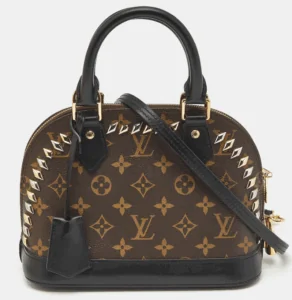
The Louis Vuitton Alma BB in Monogram canvas is an easy recommendation for buyers entering the investment category for the first time. Its compact proportions make it an actual everyday carry rather than an aspirational shelf piece, and the Monogram canvas is among the most resilient luxury materials available. The BB size specifically has strong resale demand because it flatters a range of body types and suits both casual and formal contexts. The honest downside: the Alma’s ubiquity means it carries social visibility without exclusivity, and it will not deliver dramatic appreciation. It is a hold-its-value-reliably play, not a capital-gains play.
The Givenchy Antigona is structurally impressive — the geometric silhouette holds its shape without stuffing, and the calf leather wears well over time. The Antigona has a real collector base, particularly in the mini size. The risk here is that Givenchy’s creative direction has been less consistent than the houses above, which creates uncertainty about long-term brand equity. Buy it for its wearability and quality; approach it cautiously as a pure investment.
Crossbodies: The Everyday Workhorse Category#
Crossbodies occupy the most competitive segment of the luxury market — every house has one, and resale value varies sharply based on brand recognition and design longevity.
The Hermès Evelyne is the most financially rational everyday crossbody available. Its perforated H panel is unmistakably Hermès, it carries with ease across a full day, and the Clemence leather in the TPM size is practically indestructible. Pre-owned Evelynes in good condition sell consistently close to or above original retail, making them a realistic entry point into investment-grade Hermès without the allocation headaches of the Birkin. The caveat: the Evelyne has no closure, which makes it impractical for crowded environments and a minor anxiety point for some buyers.
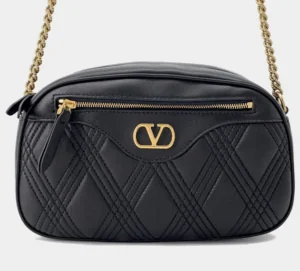
The Valentino Garavani Rockstud crossbody — the Quilty 67 in particular — is a genuinely strong everyday bag with a recognisable design signature. The Rockstud motif carries Valentino’s brand equity in a way that reads legibly on secondary markets. It is not a top-tier investment vehicle, but it holds value better than most bags at its price point, and it delivers exceptional wearability. The honest downside: Valentino’s resale market is narrower than LV or Chanel, so liquidity can be slower if you are looking to sell.
The Bottega Veneta Intrecciato crossbody (the Helmet bucket in particular) represents the more speculative end of the investment spectrum in this category. The Intrecciato weave is proprietary, immediately identifiable, and genuinely durable — the woven leather develops character rather than damage over time. Resale demand for clean Bottega pieces is real, particularly in black. The risk is that Bottega’s collector appeal is more concentrated among a specific fashion-literate audience than the mass luxury market, which can limit demand at higher price points.
Slouchy Totes: Practical Daily Carry With Selective Upside#
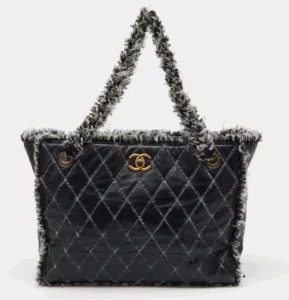
The Chanel Quilted Shopper Tote is not the Classic Flap, but that is partly the point. The shopper silhouette offers genuine capacity for daily use, the quilted lambskin and CC hardware mark it unmistakably as Chanel, and vintage examples with single-digit date codes regularly attract strong resale interest. As an everyday investment bag, it delivers functionality that the Flap cannot — you can actually fit a laptop sleeve and a water bottle. The downside: lambskin marks and scratches more readily than caviar leather, and condition is a significant factor in resale. If you are buying it as daily carry, budget for occasional professional conditioning. For care and maintenance guidance, see our [leather bag care guide].
New vs. Pre-Owned: Where the Real Value Lies#
The pre-owned luxury market crossed $50 billion globally, and for investment-minded buyers, it represents both the best entry points and the greatest risks in the category.
The case for pre-owned is straightforward: you avoid the immediate depreciation that occurs the moment a non-investment-grade bag leaves the boutique. For top-tier pieces — Hermès, vintage Chanel, early Bottega Lee-era bags — pre-owned is often the only realistic route to ownership, since retail allocation is controlled. A pre-owned Hermès Evelyne in Condition B (used, some wear, hardware intact) will often outperform a new mid-tier bag over five years.
The case for buying new is also real: factory-fresh condition provides the cleanest possible resale baseline, and for Chanel specifically, retail receipts and original packaging add measurable value on secondary markets. There are also styles — newer LV canvas pieces, Valentino’s current leather lines — where retail pricing is reasonable relative to secondary market values.
Where the decision gets complicated is condition grading. Pre-owned platforms use grading scales that are not standardised, and the gap between a “very good” and an “excellent” grade can represent hundreds of pounds in resale value. Before purchasing pre-owned, understand the specific platform’s grading criteria, ask for detailed hardware photographs, and — for Hermès and Chanel particularly — request a full photo set of the interior lining and stamp area.
Platforms with strong authentication guarantees and transparent condition reporting have become the credible middle ground: The Luxury Closet, Vestiaire Collective (now with Chanel boutique authentication), and Fashionphile in the US market have established themselves as reasonably reliable. Smaller resellers can offer better prices but require more buyer due diligence. Avoid private sales without independent authentication for any bag above £1,500.
Authentication and Due Diligence Before You Buy#
Authentication is not optional when purchasing investment-grade bags. It is the point at which the financial logic of the purchase either holds or collapses entirely.
For Hermès, the key authentication markers are the blind stamp (indicating the year of production and atelier), the hardware engraving, the quality of the saddle stitching, and the interior stamp format. Hermès stitching is done entirely by hand — the consistency and tension of the thread are difficult to replicate at scale. Date codes in Hermès bags moved from letters to letters-with-symbols over the decades; understanding the format for the specific bag you are considering is basic due diligence.
For Chanel, the hologram sticker system (used from 1984 onward) provides a serial number that should correspond to the authenticity card. Caviar and lambskin textures are frequently replicated, but the weave pattern, quilting uniformity, and CC lock alignment are harder to fake convincingly at close inspection. The weight of the gold-tone hardware is a useful secondary check.
For Louis Vuitton, the date code (two letters indicating country and month/year of manufacture) is well-documented and easy to verify. The Monogram canvas colour — a warm brown with precise alignment of the LV logo at seams — is the primary visual authentication point. LV does not use serial number cards; any listing claiming to include one is a red flag.
Independent authentication services — Authenticate First, Real Authentication, and Entrupy (which uses AI-assisted hardware analysis) — charge between $15and $75 for a digital assessment and are worth the cost for any pre-owned purchase above £500. For pieces at the four-figure level and above, in-person boutique authentication is available from some houses for existing clients.
For a detailed walkthrough of authentication processes by brand, see our [complete authentication guide].
Buying Advice: How to Choose the Right Investment Bag for You#
The honest framework for buying a designer everyday bag with investment potential starts with this: the bag that will serve you best financially is usually the one you will actually use and maintain. A Hermès Evelyne stored in a dust bag for five years because the owner was nervous about scratching it is a worse investment than a Chanel tote carried thoughtfully and conditioned twice a year.
By budget tier:
- £500–£1,500: Pre-owned LV Monogram canvas (Alma, Speedy), pre-owned Bottega Intrecciato crossbodies. Excellent quality-to-value ratio; modest but real value retention.
- £1,500–£3,500: Pre-owned Hermès Evelyne, new [[Valentino Rockstud](/valentino-garavani-milestones-legacy/)](/valentino-roman-stud-shoulder-bag/) crossbody, vintage Chanel shopper totes in good condition. This is the most active investment tier in terms of secondary market liquidity.
- £3,500–£8,000: New [Chanel Classic Flap](/vintage-chanel-finds-top-picks/) (caviar preferred over lambskin for wearability), pre-owned Hermès Constance or Kelly in entry sizes. These are genuine investment-grade purchases with trackable resale data.
- £8,000+: Hermès Birkin (pre-owned only, with full authentication). Statistically the strongest investment performance, but the highest authentication and condition risk.
Lifestyle fit matters: A structured top-handle is an investment only if you will actually carry it. If your daily life involves cycling, children, or frequent travel, a crossbody in a resilient leather will serve you and maintain its value more effectively than a statement tote you leave at home.
Storage and care are value-preservation tools. Stuffing bags with acid-free tissue when stored, keeping them in their original dust bags, avoiding direct sunlight, and conditioning leather once or twice annually can meaningfully affect the resale grade you achieve. For detailed care protocols by leather type, see our [bag care and maintenance guide].
The honest caveat, stated plainly: fashion investment is not guaranteed. Market conditions change, brand relevance shifts, and the next generation of buyers may not value the same aesthetics as the current one. The bags in this guide have the strongest historical case for value retention — not a promise of it. Buy what you genuinely love to carry, choose the brand and style with the most defensible secondary market, and treat condition as a financial priority. That combination gives you the best available odds.
For our curated shortlist of current top picks across all categories, visit our [editor’s picks: best bags this season].
FAQ#
Do designer bags really hold their value?
Some do, most don’t. The bags with documented value retention are concentrated in a small number of brand-and-style combinations: Hermès Birkin and Kelly, Chanel Classic Flap and 2.55, and core Louis Vuitton Monogram canvas lines. Outside those categories, the secondary market typically returns40–70 cents on the retail dollar. The data from Deloitte and Credit Suisse on Birkin performance is real, but it applies to a narrow slice of the market. Treat any other purchase as a quality goods expense first and a potential investment second.
Which brands have the best ROI on resale?
Hermès is the clear answer by historical data, with Birkin bags demonstrating consistent appreciation over decades. Chanel is the most accessible tier-one option, with strong secondary market demand and documented price appreciation on Classic styles. Louis Vuitton offers the best liquidity — bags sell reliably, even if they rarely appreciate significantly. Beyond those three, ROI becomes more speculative and condition-dependent.
Is pre-owned worth it for investment bags?
For most buyers, yes — particularly for Hermès and vintage Chanel, where retail access is restricted or secondary market premiums are lower than buying new. The critical factor is authentication and condition. A pre-owned Hermès Evelyne in excellent condition from a reputable authenticated platform is a better financial decision than a new bag from a lower-tier house. Know the grading scale, request detailed photographs, and use an independent authentication service for any significant purchase.
What everyday bags offer the best balance of daily use and investment potential?
The Hermès Evelyne crossbody, the Chanel Quilted Shopper Tote in caviar leather, and the Louis Vuitton Alma BB are the picks that best combine genuine daily functionality with credible resale track records. The Evelyne in particular is underrated as an everyday investment bag — it is practical, instantly recognisable, and holds value well in secondary markets without requiring the allocation relationship that Birkins demand.
Does condition really affect resale value that much?
More than most buyers expect. The difference between a Condition A and Condition C rating on a resale platform can represent20–40% of the sale price, depending on the style. Hardware tarnish, corner wear, interior staining, and missing original accessories (dust bag, box, receipt) all affect both price and time-to-sale. If you are buying with resale in mind, carry thoughtfully, condition regularly, and keep all original packaging.
Related Articles#
- Best Investment Handbags to Buy in 2026 (Expert Guide)
- Sell Your Hermès Bag Fast | The Luxury Closet Guide
Related guides
- Online Bag Authentication: What Photos Can and Cannot Prove
- Fake Goyard Bag Guide: How to Spot Real vs Fake (2026)
- How to Spot a Fake Chanel Flap Bag: Authentication Guide
- How to Spot a Fake Hermès Birkin: Expert Checklist
- How to Buy an Authentic Luxury Bag from China Safely
- New vs Pre-Owned Luxury Bags: Which Route Is Right for You?
- Chanel Bag Guide: What to Know Before You Buy
- Luxury Bag Houses


Keyword index