Introduction#
Every January, someone declares sneakers “over” as a status symbol, and every year the resale market proves them wrong. A pair of the right trainers still moves faster on the secondary market than most mid-tier handbags, and the wrong pair depreciates just as fast as a fast-fashion trench. That’s the real stakes of sneaker shopping in 2025: it’s not about keeping up with hype, it’s about knowing which silhouettes have staying power before you drop four figures on them.
I’ve spent the past few seasons trying on, returning, and occasionally regretting sneakers from Balenciaga, Dior, Louis Vuitton, and the usual sportswear giants they keep collaborating with. Some held up. Others sat in a box after two wears because they looked incredible in a street-style photo and felt like punishment on a sidewalk.
This guide breaks down the three sneaker movements actually worth your attention in 2025: the metallic, chrome-finished statement pieces; the retro runners getting a heritage-meets-modern refresh; and the broader “runway meets street” category covering chunky soles, sculptural shapes, and designer collaborations. I’ll tell you how to style each one, where the celebrity influence is real versus manufactured, and — most importantly — which of these trends I’d actually put money behind versus which ones I think will look dated by next winter.
Bold & Futuristic: Metallic and Chrome Sneakers#
Metallic sneakers are the most photogenic trend on this list, and also the one I have the most mixed feelings about. The Y2K revival never fully left, and 2025 has pushed it into full chrome mode: silver, gunmetal, holographic, and liquid-gold finishes are showing up across both sportswear and luxury lines.
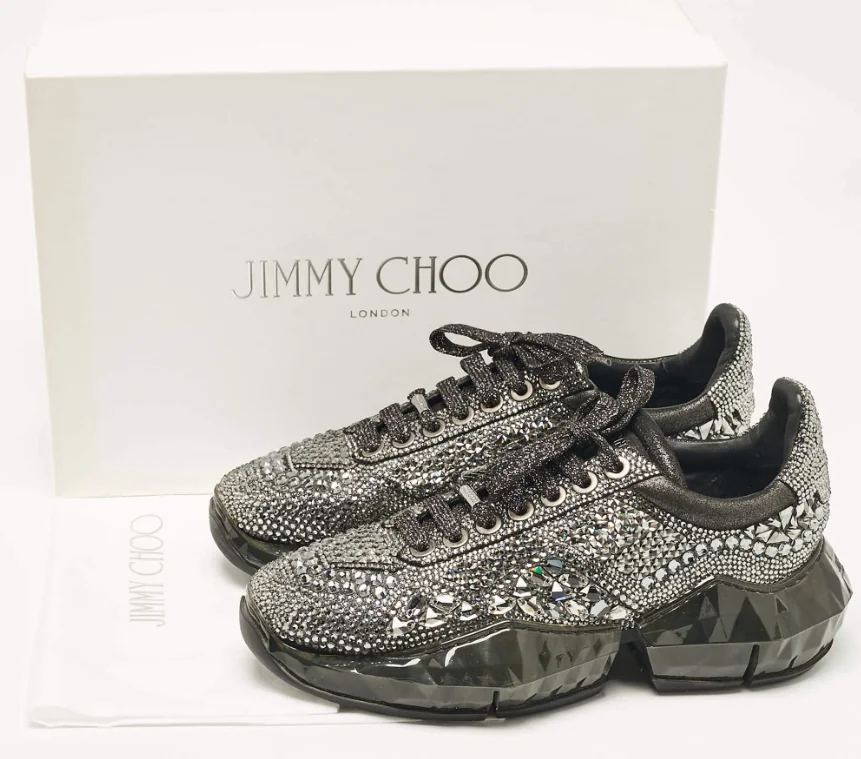
Balenciaga’s Phantom Metallic and Adidas’s Forum Bold Chrome lean hard into the futuristic, almost sci-fi end of the trend, while Puma’s RS-X Lux softens it slightly with a more wearable silver-on-white palette. On the luxury side, Jimmy Choo’s Metallic Black Suede Embellished Diamond sneaker (available in size 39) is the better argument for the trend done well — the suede base keeps it grounded, and the diamond embellishment reads as evening-ready rather than costume-y.
Here’s my honest take: metallic sneakers photograph beautifully and read as flat under certain lighting. I’ve noticed the difference is almost entirely in the finish quality — a well-executed chrome or pearlized leather looks expensive, while a cheap metallic coating can look like foil within a few wears. If you’re buying into this trend, touch and feel matter more than the photo.
Styling notes:
- Keep the rest of the outfit monochrome — all-black or all-white — so the shoe does the talking instead of competing with prints or other metallics.
- An oversized blazer with bike shorts is the go-to street-style pairing for a reason: it balances the shine with something structured.
- Resist the urge to double up on metallics with a bag or jewelry. One shining element per outfit is elegant; two starts to look like a costume party.
Celebrity watch: Hailey Bieber’s silver Adidas Gazelles, worn with a tailored mini and a leather trench, is the reference image everyone’s saving right now — and it’s a good one, because it proves the trend works best when everything else is deliberately understated.
Retro Revival: Old-School Runners Reimagined#
If metallics are the flashy sibling, retro runners are the reliable one. This is the trend I’d recommend to almost anyone, because it’s less about chasing a moment and more about heritage silhouettes that never really went away — they’re just being cut slimmer, finished in better materials, and restyled for a 2025 wardrobe.
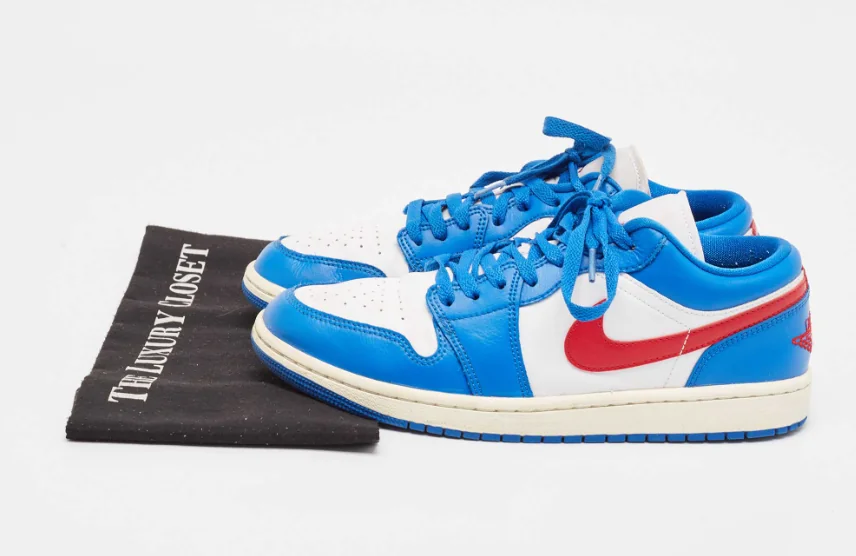
Think ’70s and ’80s track-inspired shapes with suede panels and muted, tonal colorways: the New Balance 327, the Asics Gel-1130, and the Adidas Samba OG are the three I see repeated most in both street style and on resale platforms. On the more elevated end, an Air Jordan 1 Low in blue leather (size 42 is a common ask on resale sites right now) shows how far “retro” has stretched — it’s basketball heritage dressed for everyday rotation rather than the court.
What makes this trend different from a pure hype cycle is that these shapes have decades of design equity behind them. A Samba or a Gel-1130 isn’t relying on novelty — it’s relying on a silhouette people already trust, which is exactly why it tends to hold resale value better than something purely of-the-moment.
Styling notes:
- Straight-leg jeans and a cropped sweater is the easiest, most foolproof pairing — it lets the suede texture and slim profile of the shoe stand out without effort.
- A pleated mini skirt with tube socks leans into the ’90s prep-school reference these silhouettes were originally built for.
- For colder months, a trench coat over joggers keeps things relaxed without looking sloppy — the retro runner adds just enough polish.
Celebrity style: Kendall Jenner has become the unofficial ambassador for this look, regularly photographed in vintage-leaning Asics and New Balance pairs. It’s a smart association for the trend, because her styling tends toward “I just grabbed these” rather than “I’m making a statement,” which is exactly the energy retro runners are supposed to have.
Runway Meets Street: Statement Silhouettes and Designer Collabs#
This is the catch-all category for everything that isn’t subtle: chunky soles, sculptural shapes, high-tops, and the growing wave of designer-on-sportswear collaborations. It’s also the most expensive corner of the sneaker world right now, and the one where hype and genuine design merit get blurred most easily.
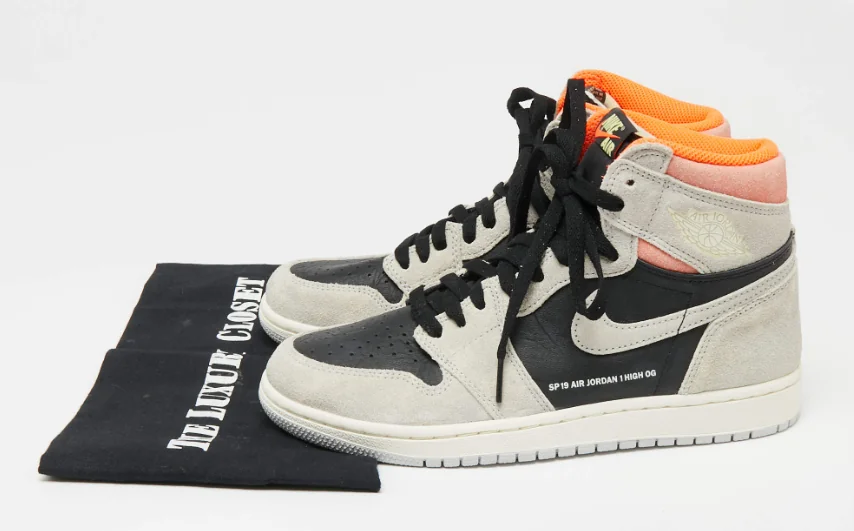
High-tops have fully graduated from basketball courts to fashion editorials. Classic Air Jordan 1 Retro models remain the benchmark — a Jordan 1 Retro High in the Neutral Hyper Crimson colorway (size 40.5) is a good example of how a decades-old silhouette keeps finding new relevance through colorway drops. Converse Chuck 70 High covers the more affordable, everyday end of the trend, while Dior’s B23 High-Top and Philipp Plein’s Multicolor Suede Crystal Notorious High-Top (size 41) sit at the other extreme, where the “sneaker” is really a piece of fashion jewelry for your feet.
Then there’s the chunky-sole and sculptural end of the spectrum, which owes almost everything to Balenciaga’s Triple S — the shoe widely credited with kicking off the exaggerated-sole movement back in 2017 — and to the wave of designer collaborations that followed. Louis Vuitton’s Nike Air Force 1 collaboration, Virgil Abloh’s final project before his passing, released posthumously in 2022 and remains one of the clearest examples of what happens when a heritage sportswear shape gets full luxury-house treatment: the resale numbers on that release still outperform almost everything else in this category. Dior’s B27, introduced under Kim Jones, and Valentino’s Open sneaker are quieter, more wearable takes on the same idea — sculptural enough to feel current, restrained enough to actually wear on a Tuesday.
Suede has also crept into this category as a texture play rather than a standalone trend — [Saint Laurent](/brands/saint-laurent-kate-bag-review/)’s white leather Court Classic (size 37) shows how a clean, minimal silhouette can still feel current when the material and proportions are right, without needing chunky soles or embellishment to make a statement.
Honest pros and cons of this category:
- Pros: These are the pieces most likely to be recognized as designer at a glance, and true collaboration pieces (especially posthumous or limited Virgil Abloh work) have shown genuine long-term resale strength.
- Cons: Chunky, sculptural shapes are the most trend-dependent silhouette on this list. What reads as cool now can look exaggerated and dated faster than a clean retro runner. Comfort is also inconsistent — I’ve worn chunky-sole pairs that felt like walking on a mattress, and others that were genuinely punishing after two hours.
Celebrity style: Hailey Bieber and Bella Hadid have both been photographed in high-tops paired with oversized blazers and bike shorts, essentially cross-pollinating the high-top and metallic trends into one look. Travis Scott keeps Jordans in heavy rotation, almost always with utility cargos and layered tees — a good reference if you want the high-top look without pushing into full high-fashion territory.
How to Style Every Trend, From Errands to Events#
The real skill with 2025’s sneaker trends isn’t picking one — it’s knowing which one to reach for depending on where you’re actually going.
For errands and daytime: Retro runners win, every time. A Samba, a 327, or a Gel-1130 with straight-leg jeans and a simple top does more work with less effort than anything metallic or sculptural. This is the category I reach for most days, and it’s the one that photographs well without trying.
For work or smart-casual settings: A clean high-top like the Dior B23 or a suede-forward pair like the Saint Laurent Court Classic pairs surprisingly well with tailored trousers and a structured coat. Skip anything chunky-soled here — the proportions fight with tailoring instead of complementing it.
For evening and events: This is where metallics and embellished pieces, like the Jimmy Choo diamond sneaker, actually earn their place. Paired with a slip dress or tailored separates, a metallic sneaker reads as a deliberate style choice rather than an afterthought — the trick is treating it the way you’d treat a statement heel, not a backup shoe for when your feet hurt.
For streetwear-leaning or off-duty looks: Chunky soles and designer collabs make the most sense here, worn with cargos, bike shorts, or an oversized blazer. This is genuinely the hardest category to get right — too much volume elsewhere and the whole outfit tips into costume territory.
The one rule that applies across every trend: pick one statement element per outfit. A metallic sneaker with a metallic bag, or a chunky sole with an already oversized silhouette, tends to cancel out the impact rather than doubling it.
Which Trends Are Worth the Investment#
If you’re buying with resale or long-term value in mind, and not just chasing the current cycle, here’s where I’d actually put my money.
Worth the investment: retro runners. These silhouettes have decades of design history behind them, which makes their resale value far less dependent on a single season’s hype. The Adidas Samba OG in particular has weathered multiple “is it over” cycles and kept demand. If I were buying one pair this year with resale in mind, it’s this category.
Worth it, selectively: true designer collaborations. Not every collab holds value, but the significant ones do — the Louis Vuitton x Nike Air Force 1 is the clearest example, both for its cultural weight and its scarcity. The lesson here is to buy collaborations for their significance, not just because a house slapped a logo on a sneaker. A limited, well-documented collaboration ages into a collector’s item; a generic branded sneaker just ages.
Fun but hype-driven: chrome and metallic finishes. I’d treat these as a seasonal purchase, not an investment. The finish itself is more prone to visible wear, and the trend cycle for high-shine anything tends to be shorter than for texture-based trends like suede or leather. Buy it because you’ll wear it and enjoy it now, not because you expect it to hold value in three years.
Buy carefully: exaggerated chunky-sole and sculptural shapes. These are the trend I’m most cautious about recommending as an investment. The Triple S proved the concept, but the market has since been flooded with similar silhouettes, which dilutes scarcity and, with it, resale strength. If you love the look, buy the version you’ll actually wear rather than the most expensive version available.
FAQ#
What are the biggest sneaker trends for 2025? The three major movements are metallic and chrome finishes, retro-inspired runners with heritage silhouettes, and statement designer pieces covering chunky soles, high-tops, and luxury-house collaborations.
Do designer sneaker collaborations actually hold their resale value? Some do, but not all. Significant, limited, or culturally notable collaborations — like Virgil Abloh’s Louis Vuitton x Nike Air Force 1 — have shown genuine long-term demand. Generic branded releases without that scarcity or story tend to depreciate like any other trend item.
How should I size luxury and [designer sneakers](/buying-guides/sneaker-trends-2025-styles-worth-the-hype/) compared to sportswear brands? Luxury sneakers often run narrower or slightly smaller than mainstream sportswear equivalents, particularly Italian and French houses. I’d recommend checking the specific brand’s size guide and, if buying resale, looking closely at listed sizing (for example, a Jimmy Choo listed as a size 39 or a Jordan 1 listed as size 40.5) rather than assuming it matches your usual sneaker size.
How can I tell if a designer sneaker is authentic when buying resale? Check stitching consistency, the quality of the logo embossing or hardware, box labels, and the weight of the shoe compared to known authentic pairs. Buying through reputable resale platforms with authentication processes is the safest route if you’re not buying directly from the brand.
Are chunky-sole sneakers comfortable enough for all-day wear? It varies more than people expect. I’ve worn pairs that were genuinely cushioned and all-day comfortable, and others that looked similar but felt stiff after a couple of hours. Try them on and walk around the store rather than judging comfort from the look of the sole alone.
How do I keep suede or metallic-finish sneakers looking new? Suede needs a dedicated brush and a protective spray applied before the first wear, plus avoiding rain when possible. Metallic and chrome finishes are more prone to scuffing than standard leather, so store them in their box or a dust bag rather than tossed in a closet, and avoid rotating them too frequently if you want the finish to last.
Related Articles#
- Louis Vuitton Archlight Sneakers: Full Review & Buying Guide
- Louis Vuitton Alma Bag: The Ultimate Buying Guide
- Designer Handbag Trends 2025: What’s Actually Worth Buying
- Grey Outfit Ideas for Winter: Styling Tips That Work
Related guides
- Online Bag Authentication: What Photos Can and Cannot Prove
- Fake Goyard Bag Guide: How to Spot Real vs Fake (2026)
- How to Spot a Fake Chanel Flap Bag: Authentication Guide
- How to Spot a Fake Hermès Birkin: Expert Checklist
- How to Buy an Authentic Luxury Bag from China Safely
- New vs Pre-Owned Luxury Bags: Which Route Is Right for You?
- Chanel Bag Guide: What to Know Before You Buy
- Luxury Bag Houses


Keyword index