Introduction#
There are shoe designs that flatter, and then there are shoe designs that make a statement the moment you step out. The Saint Laurent Opyum pump belongs firmly in the second category. It’s one of those rare styles that manages to be both a wardrobe workhorse and a genuine collector’s item, which is exactly why it keeps coming up in conversations about the smartest heel investments in [[[luxury footwear](/buying-guides/why-golden-goose-sneakers-so-expensive/)](/buying-guides/types-of-designer-heels-2025-style-guide/)](/buying-guides/best-luxury-sneakers-2026-buying-guide/) right now.
If you’re weighing whether to add a pair to your closet, or trying to figure out what a well-loved pair is actually worth on the resale market, this guide covers what matters: the design story, the construction, how the Opyum actually feels on the foot after a full day of wear, and what you should know before you buy, new or pre-owned.
The Story Behind the Saint Laurent Opyum Pumps#
The Opyum pump debuted on the runway in September 2017, during Paris Fashion Week, as part of Anthony Vaccarello’s first womenswear collection as creative director of Saint Laurent. That timing matters. This wasn’t a minor accessory update; it was one of the pieces meant to signal how Vaccarello intended to reinterpret the house’s codes for a new era.
Vaccarello leaned into a sharper, more overtly sensual silhouette than the label had shown in years, and the Opyum’s heel, a reworked YSL monogram cast in metal, became one of the most recognizable symbols of that shift. The design sold out quickly after release, which is unusual for a shoe at this price point, and it spread across editorial pages and social feeds in a way that felt organic rather than manufactured. That combination, runway credibility plus real commercial demand, is a big part of why the Opyum still holds its value better than most contemporary heels from the same era.
Design Details: Silhouette, Heel and Construction#
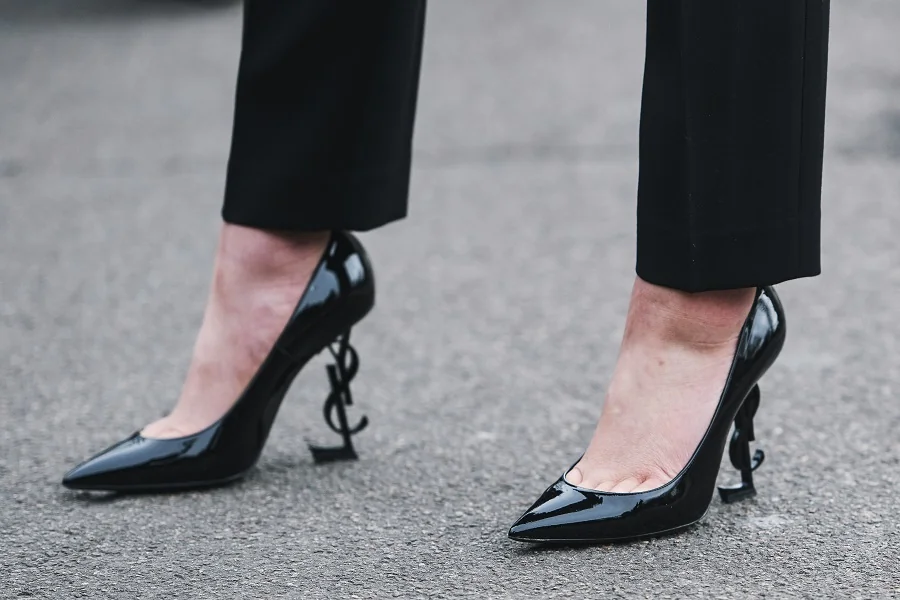
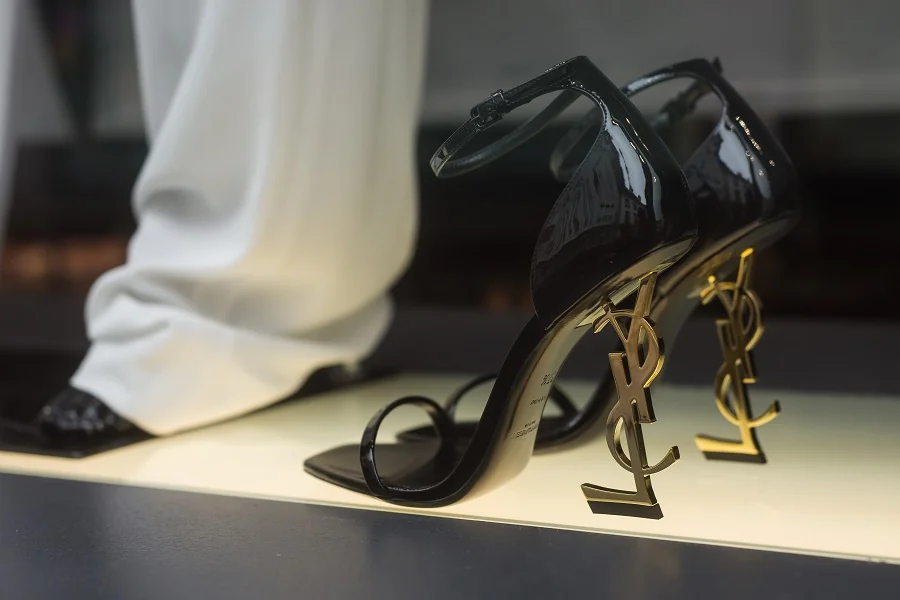
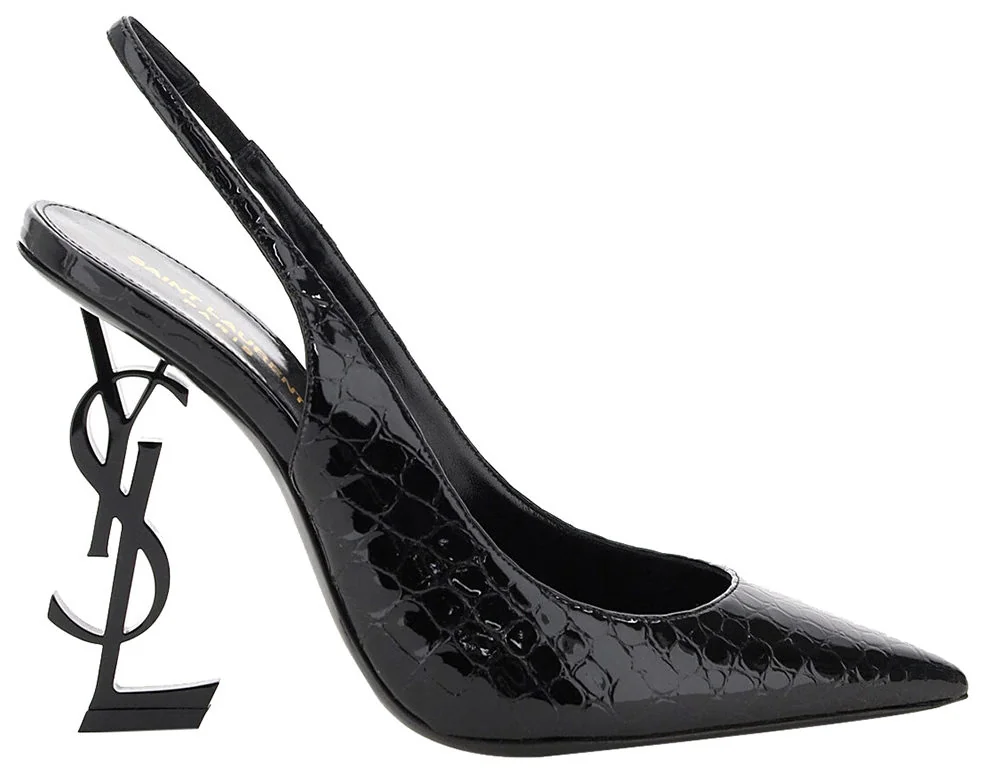
The Opyum’s defining feature is its heel: a sculpted, gold-tone or silver-tone metal form shaped from the letters Y and L, set slightly forward of the heel seat and finished with a rubber base for grip and durability. It’s not a subtle detail. It catches light, it’s instantly identifiable at a glance, and it’s the reason resale listings for these shoes almost always lead with a close-up of the heel rather than the toe.
The rest of the shoe is built to keep that heel as the focal point. The toe box is narrow and pointed, the vamp is cut low to show toe cleavage, and the arch is set high, which elongates the foot and gives the leg a longer line. Saint Laurent has produced the silhouette in several formats over the years, including a closed pointed-toe pump, an ankle-strap sandal, slingbacks, and an ankle boot, but the pump remains the version most associated with the design and the one that tends to hold resale value best.
Materials vary by season and colorway, spanning patent leather, smooth calfskin, suede, and metallic leathers, with the standard heel height sitting around 11.5 cm (roughly 4.5 inches). Construction quality is consistent with what you’d expect from Saint Laurent’s Italian manufacturing: leather-lined interiors, a solid insole, and a heel that’s genuinely reinforced rather than decorative-only, which matters given how much visual weight it carries.
How to Style the Opyum Pumps#
The Opyum was designed to do a lot of the styling work on its own, which is part of its appeal. In practice, that means it rewards simpler outfits.
For daytime or office wear, a straight-leg trouser or a knee-length pencil skirt lets the pointed toe and heel do the talking without competing for attention. It’s a genuinely effective way to elevate tailoring that might otherwise read as safe.
For evening, this is where the shoe earns its reputation. Paired with a slip dress, a tailored suit worn without a shirt underneath, or a simple black dress, the Opyum reads as the finishing statement rather than an accessory. Because the heel is so recognizable, I’d avoid overloading the rest of the look with other heavily logoed pieces. Let the shoe be the loud detail.
For more casual pairings, cropped denim or a midi skirt in a neutral tone works well with the black patent or suede colorways, though I’d stop short of calling this a genuinely casual shoe. It’s built for occasions where you want to be noticed, not for errands.
Comfort and Everyday Wearability#
Here’s where I’ll be direct, because most coverage of this shoe skips straight past comfort to talk about the heel design, and that does readers a disservice.
The Opyum is not an all-day, every-day shoe for most people, and it’s worth going in with that expectation. The narrow toe box, while flattering, does compress the toes more than a rounder style would, and if you have wider feet or bunions, this is not a forgiving last. The high arch also means the recovery position is aggressive, so if you’re not used to a heel in this range, expect some adjustment time.
That said, the weight distribution is better than the silhouette suggests. Because the heel is set slightly forward and reinforced, the shoe doesn’t feel as unstable as its sculptural shape implies, and I’ve found the balance noticeably better than some competing statement heels from the same period. A few hours of standing or walking on even ground is manageable. A full workday, or an evening that involves a lot of walking on uneven surfaces (cobblestones, gravel, stairs without a railing), is where it starts to wear on you.
My honest take: buy this shoe for what it’s genuinely good at, which is making an entrance and holding up through a dinner, an event, or a shorter workday, not for stretches where comfort is the priority. If all-day wearability is non-negotiable for you, the slingback or ankle-strap version tends to feel slightly more secure over long periods than the closed pump.
Investment Value and Resale Potential#
The Opyum has aged well as a resale asset, which isn’t true of every logo-driven heel from the past decade. A few things drive that.
First, it’s tied to a specific, well-documented moment in Saint Laurent’s design history, Vaccarello’s debut collection, which gives it a story beyond “this season’s shoe.” Pieces with that kind of narrative tend to hold interest longer than trend-driven releases.
Second, the design has stayed in rotation, with new colorways and material updates released across multiple seasons rather than disappearing after one cycle. That ongoing availability has kept demand steady without flooding the resale market with an oversupply of one specific version.
Third, condition-dependent resale pricing tends to favor classic colorways, black patent, black suede, and nude tones, over seasonal prints or bold color updates. If you’re buying with resale in mind, a well-kept black patent pump in a common size (37-39) will generally be easier to move and hold a stronger percentage of retail than a more novelty colorway or an unusual size.
The caveat: heel plating on the metal YSL logo can show wear over time, scuffing or dulling, especially on gold-tone finishes. That wear is one of the first things resale buyers and authenticators check, and it noticeably affects resale price. If you’re buying to hold value, protecting that heel finish from day one (avoiding rough pavement, storing with the original box and dust bag) matters more than it does with most shoes.
Buying Guide: Sizing, Where to Shop and Authentication#
Sizing. The Opyum tends to run slightly narrow through the toe box due to its pointed silhouette, and the high arch means half-size-down sizing sometimes fits better than true-to-size, particularly for those with narrower feet. If you’re between sizes or buying pre-owned without the option to try them on, it’s worth checking seller measurements against your own foot length and width rather than relying on the marked size alone.
Where to shop new. Saint Laurent boutiques, the brand’s own e-commerce site, and authorized multi-brand retailers such as Net-a-Porter, Neiman Marcus, and Saks Fifth Avenue are the most reliable sources for new pairs and will have the most current colorway availability.
Where to shop pre-owned. Established resale platforms like Vestiaire Collective, The RealReal, and Fashionphile are generally safer starting points than open marketplaces, since they run their own authentication processes before listing. That said, no third-party authentication process is infallible, so it’s worth doing your own checks as well.
Authentication basics for pre-owned pairs:
- Check the heel casting closely. Genuine YSL heel hardware has crisp, even lettering with no visible mold seams or soft edges.
- Look at the insole stamping. Authentic pairs carry consistent font spacing and depth for the “Saint Laurent” and made-in stamping.
- Inspect stitching on the leather upper. Saint Laurent’s construction is clean and even; wavy or inconsistent stitching is a red flag.
- Ask for the original box, dust bag, and any authenticity card if buying second-hand. Their absence isn’t automatically disqualifying, but it’s worth a price adjustment and extra scrutiny.
- If in doubt, a paid third-party authentication service is a reasonable expense relative to the price of the shoe.
FAQ#
Are Saint Laurent Opyum pumps comfortable for all-day wear? Not really. The narrow toe box and high arch make them better suited to shorter wear, events, dinners, or half-day office wear, rather than full days on your feet.
What heel height is the Opyum pump? The standard pump sits at approximately 11.5 cm (about 4.5 inches).
Do Opyum pumps run true to size? They tend to run slightly narrow in the toe box. Many buyers find a half size down fits more securely, though this varies by foot shape.
Are Opyum pumps a good resale investment? Classic colorways in common sizes, particularly black patent or suede, tend to hold value well due to steady demand and the shoe’s design history. Condition of the metal heel hardware significantly affects resale price.
How can I tell if a pre-owned pair is authentic? Check the heel casting quality, insole stamping, and stitching consistency, and buy from platforms with an established authentication process. When possible, pay for independent authentication before a high-value purchase.
What’s the difference between the pump, slingback, and ankle-strap versions? They share the same signature heel and general silhouette, but the slingback and ankle-strap versions offer slightly more security around the foot, which can translate to marginally better comfort over longer wear compared to the closed pump.
Related Articles#
- YSL Tribute Sandals: Why This Iconic Style Still Reigns
- YSL Tribute Sandals: Style Guide & Buying Tips
- Golden Goose Sneakers: Are They Worth the Price?


Keyword index