Introduction#
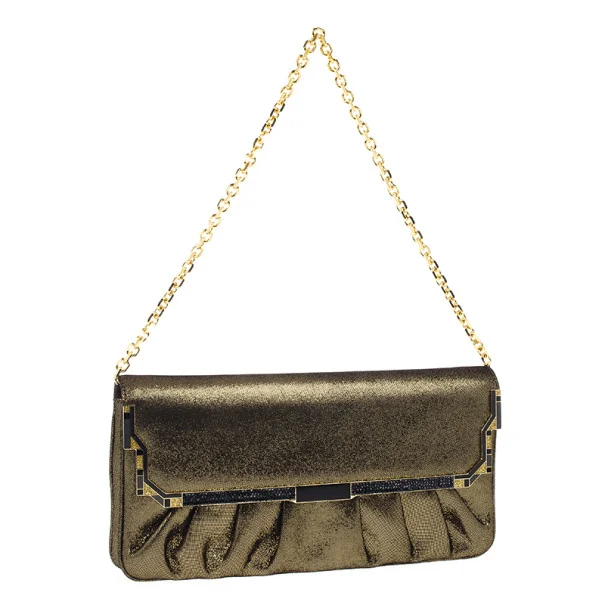
Few names carry the same weight in the world of evening bags as Judith Leiber. Say it to any serious handbag collector and you’ll get a specific reaction: crystals catching light under a chandelier, a hard-shell minaudière shaped like a watermelon slice or a strutting peacock, a clasp that clicks shut with satisfying precision. Judith Leiber built one of the most distinctive luxury accessories brands of the 20th century, and she did it starting from almost nothing, in a country torn apart by war.
This is the story of how a Hungarian chemistry student became one of America’s most celebrated handbag designers, and why, decades after her retirement, her original pieces still command serious money on the resale market. If you’re researching Judith Leiber’s history because you’re thinking about buying or selling one of her bags, understanding where the brand came from will tell you a lot about what makes a genuine piece worth owning.
From Budapest to Wartime Hungary: Judith Leiber’s Early Life#
Judith Leiber was born Judith Peto in Budapest in 1921. She wasn’t raised to be a handbag designer. Her early ambitions were scientific: she planned to study chemistry in London with an eye toward a career in cosmetics, and her father, sensing the political storm gathering over Europe, encouraged her to go abroad for her education.
That decision likely saved her life, but it also nearly separated her from her family permanently. When Judith returned to Budapest for a summer visit, the outbreak of World War II made travel back to London impossible. She was stuck in Hungary as the war escalated around her.
What followed were years most of us can barely imagine. As Jewish families in Budapest lost their homes and freedoms, Judith and her relatives were eventually forced into a single-bedroom apartment shared with 25 other people, and later into a ghetto cellar with 60 others. It’s a detail worth sitting with: the woman who would later define American luxury with sparkling, whimsical evening bags spent the final years of the war in conditions defined by scarcity and fear. By the time Soviet forces liberated Budapest in 1945, survival itself had been the achievement.
Learning the Craft: Apprenticeship at Pessl#
Here’s where the story takes its formative turn. Unable to return to her studies abroad, Judith took a job at Pessl, a Hungarian handbag manufacturer, largely as a practical way to get through the war years. What started as necessity became a genuine trade education.
At Pessl, she learned the full mechanics of handbag construction: cutting and molding leather, drafting patterns, building frames, and stitching finished pieces together. She didn’t just pick up a few skills, she went through a proper apprenticeship system and became the first woman to advance from journeyman to master craftswoman in her guild.
This matters more than it might seem at first glance. Judith Leiber wasn’t a designer who sketched pretty ideas and handed them to factory workers to execute. She understood construction from the frame up, which is exactly why her later designs at her own label had such structural integrity. The hinges, the clasps, the way a minaudière sits in your hand and closes with a solid click, that engineering came directly from her years learning the craft by hand in Budapest.
A New Life in New York and the Start of a Career#
In 1946, Judith met Gerson Leiber, an American soldier stationed in Hungary. They married and, in 1947, she left for New York to start over completely, this time on her own terms.
She found work at Nettie Rosenstein, a respected American fashion house, where she designed handbags and steadily earned more responsibility. Her breakthrough moment came when Mamie Eisenhower carried a bag Judith had designed to coordinate with a Rosenstein gown at the 1953 presidential inauguration. That kind of visibility doesn’t happen by accident, and it opened doors. Multiple First Ladies would go on to carry Leiber-made or Leiber-designed pieces at inaugural events in the years that followed.
Judith spent twelve years at Nettie Rosenstein, and that stretch shouldn’t be glossed over. It’s where she learned how the American fashion and retail system actually worked, not just how to make a beautiful object, but how to build a name around it. By the time she left to start her own company in 1963, she had both the technical mastery from Pessl and the commercial instincts from Rosenstein. Few designers launch with that combination.
The Birth of the Iconic Crystal Minaudière#
Judith Leiber’s own label began modestly, with leather and suede bags and accessories aimed at an upscale clientele. But the design that would come to define the entire brand arrived in 1967, and it happened by accident.
She was working on a metal minaudière and noticed the metal samples had come out with an unwanted greenish tinge. Rather than scrap them, she covered the flaw with hand-applied rhinestones. The result was the Chatelaine, her first fully crystal-covered bag and, by her own account, her personal favorite of everything she ever made. It set the template for what came next: sculptural metal frames entirely encrusted in hand-set Austrian crystals, finished with her signature kisslock clasp.
What’s genuinely interesting about her process is that Judith never sketched her designs. She worked directly from inspiration and instinct, moving straight from an idea to a physical prototype. A friend’s trip to the Arctic became a penguin-shaped minaudière. Everyday objects became slices of watermelon, hot air balloons, peppermint candies, elephants. Over her career she’s credited with designing more than 3,500 bags, an output that’s hard to overstate given how labor-intensive each crystal-covered piece actually is.
The industry recognized her: in 1993 she became the first handbag designer to receive the CFDA’s Lifetime Achievement Award. Her final design, in 2004, was a blue-green peacock minaudière, after which she sold the company to London’s Time Products. The brand is now owned by Authentic Brands Group and continues to sell Leiber-branded bags through retailers like Neiman Marcus and Bergdorf Goodman. The Leiber Collection Museum, which opened in 2005, preserves her original work and remains the clearest record of what the brand looked like under her direct hand.
Why Judith Leiber Bags Remain Coveted by Collectors#
There are a few honest reasons Leiber pieces from her active design years still hold serious value, and none of them are hype.
First, the craftsmanship is genuinely labor-intensive. Crystals are set by hand, one at a time, onto a sculpted metal frame, and a single minaudière can take days of skilled work to finish. That’s not marketing language, it’s simply what the construction requires, and it’s part of why originals feel substantial in a way that’s hard to fake.
Second, many of the whimsical novelty shapes, animals, fruits, food items, were produced in limited numbers relative to standard evening clutches. A watermelon or penguin minaudière from her design years isn’t something you’ll find easily, and scarcity plus strong collector demand is a straightforward recipe for rising resale prices.
Third, the brand has decades of red carpet and political history behind it, from First Ladies to Hollywood, which reinforces its status as a legitimate collectible rather than a passing trend piece.
Here’s the honest caveat collectors should know: bags produced after Judith Leiber sold the company in 2004 are made under different ownership and, in many cases, different manufacturing standards. They can still be attractive accessories, but they generally don’t carry the same collector premium as pieces designed and produced during her tenure. If investment value is your goal, that distinction matters more than almost anything else in this category.
What to Know Before Buying a Judith Leiber Bag#
If you’re buying with resale or collecting in mind, a few practical checks go a long way.
Authentication first. Look for consistent, evenly hand-set crystals with no visible glue seepage, a solidly built kisslock clasp that closes with a firm, precise action, and the correct interior markings and signature hardware. Weight is a good tell too, genuine pieces from her era feel dense and substantial because of the metal frame and crystal density; lighter reproductions often feel hollow by comparison.
Condition matters enormously with these bags because of the materials involved. Check for missing or replaced crystals (mismatched replacements are common and noticeably duller than the originals), clasp function, and interior lining wear. Missing stones aren’t just cosmetic, sourcing matching Austrian crystals for a proper repair can be difficult and expensive, so factor that into your offer if a piece needs restoration.
On sought-after styles, the novelty shapes, animals, fruit, and other figural designs, tend to command the strongest premiums, followed by rarer colorways of the Chatelaine and other signature minaudière silhouettes. Standard rectangular crystal clutches are more available and typically more affordable entry points.
Price expectations vary widely. Common vintage minaudières in good condition often sell in the low-to-mid four figures on the resale market, while rare figural designs or pieces with documented celebrity provenance can climb well into five figures at auction. Buy from a reputable dealer or platform that offers authentication, and don’t be afraid to ask for close-up photos of the clasp and crystal setting before committing.
One honest downside worth naming: these are not everyday bags. They’re heavy, delicate, and meant for occasion wear, not daily use. If you’re buying as a wearable accessory rather than purely as a collectible, that’s worth factoring in before you spend.
FAQ#
Is Judith Leiber still designing bags today? No. Her final design was in 2004, a peacock minaudière, after which she sold her company. The brand continues under Authentic Brands Group, but current collections are not designed by Judith Leiber herself.
What makes a Judith Leiber bag valuable to collectors? Hand-set crystal work, sculptural novelty shapes, limited production numbers, and a documented history of celebrity and political use all contribute to sustained collector demand, particularly for pieces made during her active design years.
How can I tell if a Judith Leiber bag is authentic? Check the quality and evenness of the hand-set crystals, the weight and construction of the kisslock clasp, and the interior signature markings. If possible, have it verified by a reputable luxury authentication service before purchasing.
Are new Judith Leiber bags the same quality as vintage ones? Not necessarily. Bags produced after the 2004 sale of the company are made under different ownership and manufacturing standards, and they generally don’t carry the same collector premium as originals from Judith Leiber’s own tenure.
What’s the most valuable type of Judith Leiber bag? Rare figural and novelty designs, animals, food shapes, and similar sculptural pieces, along with early Chatelaine variations, tend to fetch the highest prices, especially with strong provenance or original packaging.
Do Judith Leiber bags hold their value? Vintage pieces from her design years have generally held or appreciated in value, particularly rare and well-preserved examples. As with any collectible, condition and authenticity are the biggest factors in resale price.
Related Articles#
- JW Anderson Pierce Bag: Why the Dark Green Suede Sold Out
- 4 Reasons Bally Bags Are Worth Buying: A Buying Guide
- How Pre-Owned Luxury Fashion Is Reshaping the Industry
- 6 Trending Coach Bags That Prove the Brand Is Back
- 5 Rare, Unique Chanel Bags Worth Collecting Now
Related guides
- Online Bag Authentication: What Photos Can and Cannot Prove
- Fake Goyard Bag Guide: How to Spot Real vs Fake (2026)
- How to Spot a Fake Chanel Flap Bag: Authentication Guide
- How to Spot a Fake Hermès Birkin: Expert Checklist
- How to Buy an Authentic Luxury Bag from China Safely
- New vs Pre-Owned Luxury Bags: Which Route Is Right for You?
- Chanel Bag Guide: What to Know Before You Buy
- Luxury Bag Houses


Keyword index