Introduction#
Few names carry as much weight in the resale market as Louis Vuitton. Walk into any consignment shop or scroll through a luxury resale app, and you’ll see LV pieces holding prices that most other brands can only envy. That’s not an accident of marketing. It’s the result of 170 years of decisions, some brilliant, some purely defensive, that shaped how the brand designs, protects, and sells its products.
Understanding the history of Louis Vuitton isn’t just a nice-to-know for collectors. It actually changes how you shop the brand. Knowing why the Monogram exists, why certain canvases were introduced, and how the house evolved from a trunk workshop into part of the world’s largest luxury group helps explain which pieces tend to hold value and which are more sentimental than sound investments. This is the Louis Vuitton brand story worth knowing before you spend real money on either a vintage trunk or a current-season bag.
The Beginning: From Trunk Maker to Icon#
Louis Vuitton didn’t start as a handbag house. In 1854, Louis Vuitton opened his own workshop in Paris after years spent apprenticing as a “layetier,” a trunk packer and maker, for wealthy French families, including time spent packing for Empress Eugénie. That background matters, because it explains the brand’s original obsession: not decoration, but function.
At the time, most trunks had rounded tops, a leftover design meant to shed rainwater during travel. Vuitton had a different idea. He designed flat-topped trunks that could be stacked in train cars and ship holds, made from a lightweight canvas called Trianon that also happened to be waterproof. It sounds like a small tweak, but it was a genuine shift in how people packed and traveled, and it made Vuitton’s trunks the practical choice for anyone doing serious travel.
That practicality is the foundation of everything that came after. Louis Vuitton’s early reputation wasn’t built on logos or status. It was built on trunks that worked better than the competition’s, which is precisely why competitors started copying them almost immediately.
Fighting Counterfeits: The Damier and [[[Monogram Canvas](/authentication/how-to-spot-a-fake-neverfull-authentication-guide/)](/authentication/how-to-spot-a-fake-louis-vuitton-bag/)](/buying-guides/most-popular-louis-vuitton-bags-2026/)#
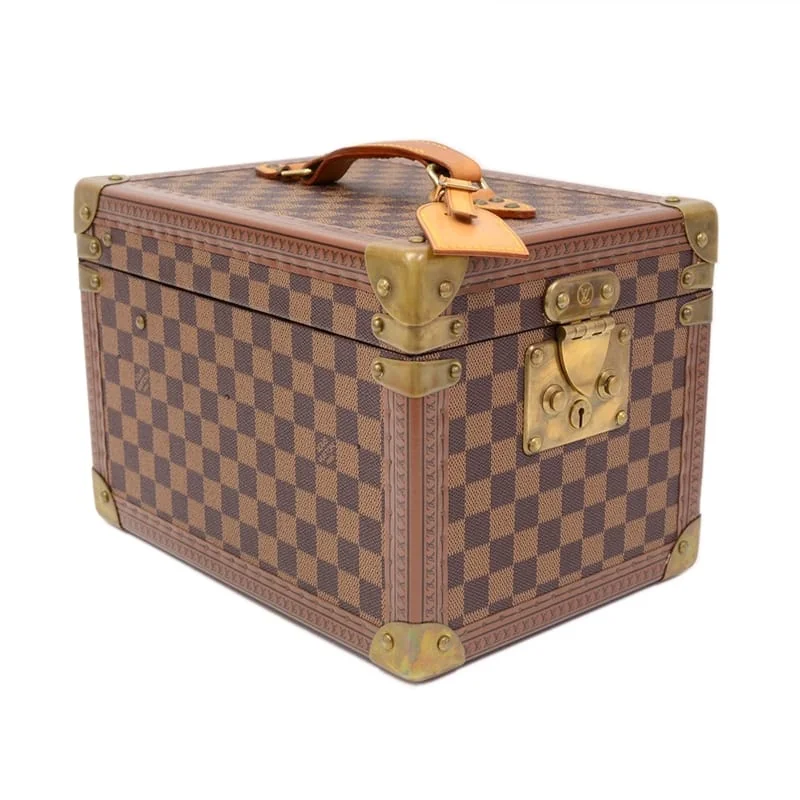
Success invited imitation fast. By the 1880s, other luggage makers were producing near-identical trunks, and Louis Vuitton needed a way to distinguish his work at a glance. In 1888, the house introduced the Damier Canvas, a checkerboard pattern that carried the words “marque L. Vuitton déposée,” French for “L. Vuitton registered trademark.” This was one of the earliest examples of a fashion house using a visual pattern specifically as an anti-counterfeiting tool, not just a design choice.
The Monogram Canvas followed in 1896, created by Louis Vuitton’s son Georges after his father’s death in 1892. The interlocking LV initials, quatrefoils, and flowers were deliberately designed to be difficult to reproduce accurately at the time, and the pattern was patented internationally, an unusually aggressive move for the era.
This is the part collectors often skip over: the Monogram wasn’t conceived as a status symbol. It was a legal and practical response to theft of design. The fact that it later became one of the most recognized patterns in fashion is almost a side effect of its original purpose. Knowing the actual Louis Vuitton monogram history is useful context when you’re evaluating vintage pieces, because the pattern’s consistency and precision over generations is one of the more reliable things to check when authenticating older Monogram canvas.
Global Expansion Under Georges Vuitton#
Georges Vuitton didn’t just protect the brand, he globalized it. After taking over the company, he pursued international growth aggressively, including touring the United States to promote the brand directly, which was not common practice for European luxury houses at that time.
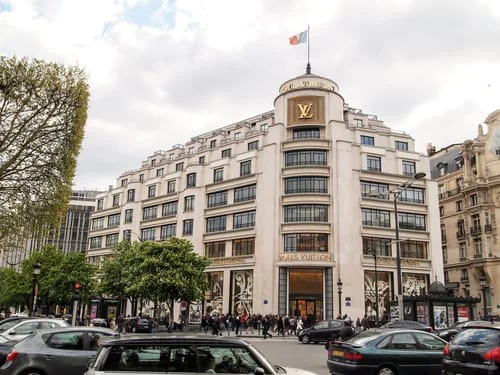
By 1913, the flagship Louis Vuitton building had opened on the Champs-Élysées, and the brand had already expanded into New York, Washington, Bombay, London, Buenos Aires, and Alexandria. That geographic spread, more than a decade before most competitors attempted anything similar, is part of why Louis Vuitton became a genuinely international name rather than a regional French luxury brand.
This period matters for collectors because it’s when Louis Vuitton pieces stopped being purely French artifacts and became global objects. Trunks from this era, when they surface, are collected as much for their historical significance as for their craftsmanship.
Evolving Style: Iconic Bags and Design Milestones#
Louis Vuitton’s shift from trunks to bags happened gradually, and it’s where the brand’s most enduring silhouettes were born. The Keepall arrived in 1930, designed as a soft, flexible travel bag, a genuine departure from rigid trunks. In 1932, the house introduced both the Noé, originally created to transport champagne bottles for a client, and the Speedy, a scaled-down version of the Keepall meant for shorter trips.
What’s notable is how little these silhouettes have changed. The Speedy sold today is recognizably the same bag from 1932, just refined in materials and detailing. That’s rare in fashion, and it’s a big part of why these particular styles resell consistently well: the design itself has never gone out of production or fallen out of relevance.
Between 1945 and 2000, the brand broadened into wallets, small purses, and accessories, adapting the Monogram Canvas to be more supple for smaller goods. This is also when Louis Vuitton became a household name in the accessories market rather than a specialist travel brand, setting up the commercial scale that would follow.
Louis Vuitton in the Modern Era#
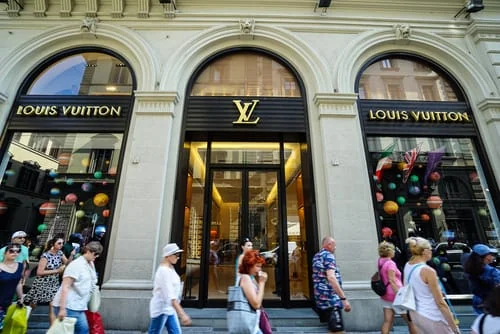
1987 marked a structural turning point rather than a design one. Louis Vuitton merged with Moët et Chandon and Hennessy to form LVMH, Moët Hennessy Louis Vuitton, the conglomerate that now owns dozens of luxury houses. Within a few years, Louis Vuitton had roughly 130 stores worldwide, a scale of retail expansion most heritage brands never reach.
The next major shift came in 1997, when Marc Jacobs was appointed Artistic Director. A year later, Louis Vuitton launched its first ready-to-wear collections for men and women, moving the house well beyond leather goods for the first time in its history. This is also the era of high-profile artist collaborations, including the Murakami-designed Multicolore Monogram pieces, which introduced Louis Vuitton to a new, younger customer base and, frankly, divided longtime purists who preferred the classic canvas.
The brand also opened its first African store in Marrakech, Morocco, and introduced the Mini Monogram line, continuing the pattern of geographic and product expansion that Georges Vuitton had started a century earlier.
I’ll say this plainly: not every modern-era decision aged well. Some collaboration pieces and logo-heavy collections from the late 90s and 2000s now read as very dated, and they haven’t held resale value the way the core Monogram and Damier lines have. Heritage doesn’t automatically transfer to every product a heritage brand makes.
Why Louis Vuitton’s Legacy Still Holds Value#
Here’s the honest answer, based on watching resale prices for years: Louis Vuitton holds value because of consistency, not hype. The Monogram and Damier patterns have looked essentially the same for over a century. The Speedy, Keepall, and Noé are still recognizably their original 1930s selves. That continuity means a well-kept vintage piece isn’t competing against a completely redesigned current version, it’s still relevant.
The brand’s early obsession with trademark protection also matters more than people realize. Because Louis Vuitton fought counterfeiting aggressively from the 1880s onward, there’s a long paper trail of design consistency that makes authentication genuinely learnable, which supports buyer confidence and, in turn, resale demand.
That said, I wouldn’t tell anyone to buy Louis Vuitton purely as an investment. Canvas pieces, especially older Monogram bags, are prone to vachetta leather trim darkening, cracking, or staining if they weren’t stored well, and that condition issue can tank resale value regardless of how iconic the style is. Certain limited editions and collaborations have also underperformed expectations because they were produced in higher volumes than the “limited” label suggested. Buy pieces you’ll actually use or genuinely love; the value retention is a reasonable bonus, not a guarantee.
If you are buying with resale in mind, prioritize the core silhouettes with the longest production history, ask for full provenance on anything vintage, and inspect vachetta leather and stitching in person or via detailed photos before paying vintage prices.
FAQ: Louis Vuitton History and Authenticity#
When was Louis Vuitton founded, and where? Louis Vuitton was founded in 1854 in Paris, France, originally as a trunk-making workshop rather than a handbag or fashion house.
What was the original purpose of the Monogram Canvas? The Monogram, introduced in 1896 by Georges Vuitton, was created primarily to combat counterfeiting after competitors had already been copying the brand’s earlier Damier pattern and trunk designs.
What’s the difference between the Damier and Monogram canvases historically? Damier came first, in 1888, as a checkerboard pattern with an explicit trademark statement woven in. Monogram followed in 1896 as a more elaborate, harder-to-replicate design, and it’s the pattern most associated with the brand today.
Does understanding Louis Vuitton’s heritage actually help with authentication? Yes, to a point. Because the brand’s core patterns and silhouettes have changed very little over decades, inconsistencies in monogram alignment, canvas texture, or hardware stamping on a “vintage” piece are often red flags. That said, heritage knowledge should support, not replace, professional authentication for higher-value purchases.
Are older Louis Vuitton trunks and bags good investment pieces? Some are, particularly early trunks and long-running silhouettes like the Speedy, Keepall, and Noé in good condition. But condition issues, especially with vachetta leather and canvas wear, can significantly reduce value, so investment potential depends heavily on how well a specific piece was cared for, not just its age or rarity.
Related Articles#
- Louis Vuitton Alma Bag: Complete Buyer’s Guide 2026
- Louis Vuitton Bags Quiz: How Much Do You Really Know?
- 10 Most Iconic Louis Vuitton Bags to Buy in 2026
- Louis Vuitton Handbag Prices Guide 2024 | Speedy, Neverfull
- Best It Bags to Buy This Year: A Definitive Guide


Keyword index