Introduction#
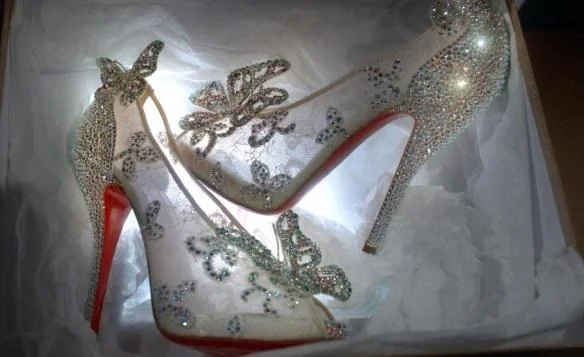
Every little girl who sat through Cinderella or Sleeping Beauty remembers the shoes as much as the story. That glass slipper glinting under candlelight, the promise that footwear could actually change your life, it left a mark on how many of us think about heels decades later. Luxury shoe designers know it too, which is why some of the most talked-about, most collected heels in recent memory have been built entirely on that nostalgia.
This roundup pulls together the designer heels inspired by fairytales that actually earned their place in fashion history rather than just riding a trend cycle: [Christian Louboutin](/buying-guides/red-designer-pieces-for-holidays-style-guide/)’s Cinderella glass slippers, Stuart Weitzman’s Broadway-born glass shoes, and Charlotte Olympia’s entire “Once Upon a Time” universe of princesses, princes and one very charming frog. I’ve handled several of these pieces over the years buying and selling luxury shoes, and I’ll be upfront: these are not everyday heels. They’re conversation pieces, collector’s items, and in some cases genuinely rare investment pieces. Here’s what makes each one worth knowing about, and what to think through before you buy one.
Cinderella-Inspired Glass Slipper Heels#
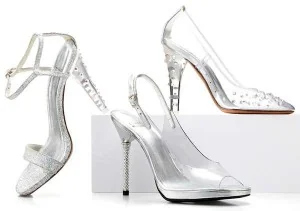
Two names dominate this category, and they took very different approaches to the same fairytale.
Christian Louboutin’s Cinderella slipper is the more editorial of the pair. Louboutin designed it to mark Disney’s Cinderella diamond anniversary, and he was refreshingly poetic about why: “Cinderella is not only an iconic character when it comes to beauty, grace and fairytale love, but also shoes.” The shoe itself is a clear PVC pump embellished with crystals and delicate butterfly motifs, finished with his signature red sole. It’s less about being wearable and more about being sculptural. He called the slipper “the magic wand of transformation,” and honestly, as a display piece on a shelf, it lives up to that. As a shoe you’d actually walk in, it’s a different story, more on that below.
Stuart Weitzman’s glass slipper has a more theatrical origin story. It was created for the Broadway production of Rodgers + Hammerstein’s Cinderella, and the brief was practical in a way Louboutin’s wasn’t: Weitzman needed a shoe that would catch light and read clearly from the back row. His solution was to cover it in over five thousand Swarovski crystals. That’s not a rounding-up number, it’s the actual figure he cited, and it shows in how the shoe throws light compared to Louboutin’s more restrained crystal placement. Weitzman also spun the moment into a small retail collection of transparent, crystal-embellished heels and flats, which is worth knowing if you’re hunting for something in this vein that wasn’t a one-off stage prop.
If you’re comparing the two: Louboutin’s version leans fashion-house and sculptural, with the red sole as a permanent signature and resale marker. Weitzman’s leans maximalist and theatrical, with sheer crystal density as the selling point. Neither was designed with all-day comfort in mind, and that’s worth sitting with before you get swept up in the romance of either one.
Sleeping Beauty and Other Fairytale-Inspired Designs#
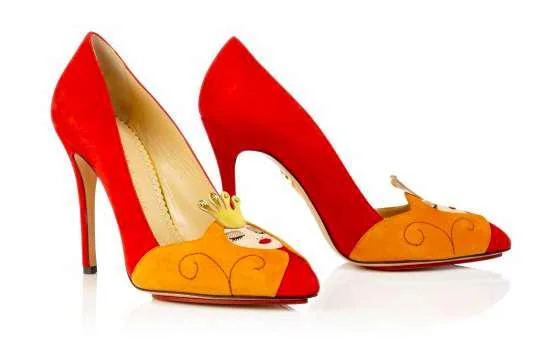
If Louboutin and Weitzman own the Cinderella lane, Charlotte Olympia owns pretty much every other fairytale. Her Fall 2013 “Once Upon a Time” collection is the most extensive fairytale-themed heel lineup in [luxury footwear](/buying-guides/best-luxury-sneakers-2026-buying-guide/), and it’s worth understanding piece by piece because the craftsmanship and rarity vary quite a bit between styles.
The Sleeping Beauty pumps are the collection’s most literal design: a portrait of the sleeping princess wearing her crown, rendered directly on the toe. It’s whimsical rather than subtle, and that’s the point. These aren’t shoes that blend in, they’re meant to be the thing people ask you about.
The Rapunzel platforms take the “let down your hair” line and turn it into braided detailing that wraps the shoe, finished with Swarovski crystal accents. Of everything in the collection, this is the one where the craftsmanship is most obvious close up. The braiding work is genuinely intricate, and it’s the style I’d point serious collectors toward if hand-finishing matters to you.
The “Happily Ever After” pumps are the most wearable of the bunch, at least on paper. Black and gold platform pumps with embroidered text, “Happily Ever After” on one shoe, “Once Upon a Time” on the other, give you the fairytale reference without a literal character on your foot. It’s a smart design compromise for anyone who wants the story without the costume element.
And then there’s the “Kiss Me Quick” pump, inspired by the Frog Prince, which puts a small frog figurine on an otherwise classic suede pump. It’s the most playful piece in the lineup and honestly one of the more clever bits of storytelling in the whole collection, because the base shoe is simple enough to wear on its own merits.
Across all of these, Charlotte Olympia’s strength is turning a narrative idea into a shoe that still functions as a shoe, which isn’t a given in novelty footwear. The tradeoff is that some pieces (Sleeping Beauty especially) are more costume than closet staple.
Styling These Statement Heels in Real Life#
Here’s where I’ll be honest in a way most retail copy won’t be: most of these shoes are not built for regular rotation, and buying one expecting to wear it weekly is setting yourself up for disappointment.
The glass slipper styles from Louboutin and Weitzman are, structurally, closer to art objects than shoes. PVC and heavy crystal embellishment don’t flex or breathe the way leather does, and neither was designed for a full night standing at a bar or walking city blocks. If you want to wear one, treat it like a seated-event shoe: a gala, a photographed moment, somewhere you’re sitting more than walking. Pair it with something otherwise simple, a slip dress or a tailored column gown, so the shoe stays the focal point rather than competing with your outfit.
Charlotte Olympia’s pieces are generally more forgiving because they’re built on more traditional pump and platform lasts. The “Happily Ever After” pumps and “Kiss Me Quick” style are the two I’d actually recommend wearing out. Style them the way you would any statement shoe: neutral, unfussy clothing, and let the embellishment carry the outfit. The Sleeping Beauty and Rapunzel styles are harder to style down, the imagery is too specific, so they tend to work best as a deliberate styling moment rather than a versatile piece in your rotation.
My honest take: buy these for the craftsmanship, the story, and the collectability. Don’t buy them expecting them to replace your go-to evening pump.
Investment Value and Resale Potential#
This is the category where these shoes genuinely earn attention beyond nostalgia. Limited-edition, collaboration-driven, or single-purpose designer pieces like these tend to hold or grow in value in a way mass-produced seasonal shoes simply don’t, and there are a few reasons why.
First, scarcity. The Louboutin Cinderella slipper and Weitzman’s Broadway glass slipper were both created for specific promotional or theatrical moments rather than ongoing retail lines, which means original pairs, especially any tied directly to the campaign or production, are genuinely hard to find. That kind of story-backed rarity is exactly what resale collectors look for.
Second, the collaboration factor. Anything tied to a recognizable IP moment (a Disney anniversary, a Broadway run) tends to attract buyers beyond the usual shoe collector, including memorabilia and pop culture collectors. That widens the resale pool.
Third, condition and completeness matter enormously here. Crystal embellishment sheds, PVC yellows and scratches, and figurine details (like the frog on the “Kiss Me Quick” pump) can chip or come loose. A pristine, boxed, unworn pair of any of these will always outperform a worn one on resale, often by a significant margin, because buyers in this category are collecting as much as wearing.
If you’re buying with resale in mind, prioritize the Charlotte Olympia “Once Upon a Time” pieces with the most distinctive, hard-to-replicate detailing (Rapunzel’s braiding, the Sleeping Beauty portrait) over the more widely produced retail pieces from Weitzman’s spin-off collection, which were made in higher volume and therefore carry less scarcity value.
What to Consider Before Buying#
A few things I’d genuinely tell a friend before they spend real money on any of these:
- Fit first, story second. Novelty and embellished heels are notoriously less forgiving on fit than a classic pump. Crystal and PVC uppers don’t stretch. If you’re between sizes, size up rather than down.
- Ask about wearability, not just looks. Get a real answer on heel height, platform structure, and how the shoe actually feels standing versus sitting. Photos flatter these shoes; your feet will tell you the truth after twenty minutes.
- Check the price against rarity, not just the design. A heavily produced retail piece and a one-of-a-kind or limited-run promotional piece can look similar in photos but sit worlds apart in value. Ask specifically what production run or edition you’re buying.
- Inspect embellishment condition closely. Crystal drop-off, cracked PVC, loose figurines and worn soles are common issues on secondhand pieces. Ask for close-up photos of the embellishment, not just the overall shoe.
- Authenticate before you pay, especially secondhand. Fairytale-themed designer heels attract counterfeits precisely because they’re so recognizable. Buy from the brand directly, an authorized retailer, or a reputable luxury resale platform that authenticates inventory, and ask for the original box, dust bag and any accompanying certificate of authenticity.
- Factor in aftercare. These aren’t shoes you drop off at a generic cobbler. Crystal and specialty embellishment repairs need a luxury shoe specialist, and that service isn’t cheap or always available.
Frequently Asked Questions#
Are these fairytale-inspired designer heels still available to buy new? Not generally. The Louboutin Cinderella slipper and Weitzman’s Broadway glass slipper were created for specific promotional and theatrical moments, not ongoing retail. Weitzman did release a related retail collection of crystal-embellished transparent heels and flats around the same period, which occasionally surfaces. Charlotte Olympia’s “Once Upon a Time” pieces were part of a Fall 2013 collection, so new stock is no longer produced; your best bet for any of these today is the secondary luxury resale market.
How much do designer heels inspired by fairytales typically cost? It varies enormously by piece and rarity. Charlotte Olympia’s “Once Upon a Time” pumps generally sat in line with the brand’s standard embellished heel pricing at retail, while true limited or promotional pieces like the Louboutin and Weitzman glass slippers command significantly more on resale due to scarcity and story value, often several times their original estimated worth.
Can you actually wear these heels comfortably? Some more than others. Charlotte Olympia’s “Happily Ever After” and “Kiss Me Quick” pumps are built on relatively standard, wearable lasts. The glass slipper styles from Louboutin and Weitzman are less about all-day comfort and more about visual impact for short, seated occasions.
How do I care for embellished or crystal-covered heels? Store them boxed with the dust bag in a cool, dry place away from direct light, since PVC can yellow and adhesive holding crystals can weaken over time. Avoid wearing them in wet weather, and have any loose stones or embellishments repaired promptly by a specialist rather than waiting, since one loose crystal often leads to more falling off.
Are these heels a good investment? The rarer, story-driven pieces (limited promotional runs, one-off collaborations) tend to hold value well, particularly in excellent, boxed condition. Higher-production retail pieces are less reliable as investments and are better bought simply because you love them, not because you expect a return.
Related Articles#
Related guides
- Online Bag Authentication: What Photos Can and Cannot Prove
- Fake Goyard Bag Guide: How to Spot Real vs Fake (2026)
- How to Spot a Fake Chanel Flap Bag: Authentication Guide
- How to Spot a Fake Hermès Birkin: Expert Checklist
- How to Buy an Authentic Luxury Bag from China Safely
- New vs Pre-Owned Luxury Bags: Which Route Is Right for You?
- Chanel Bag Guide: What to Know Before You Buy
- Luxury Bag Houses


Keyword index