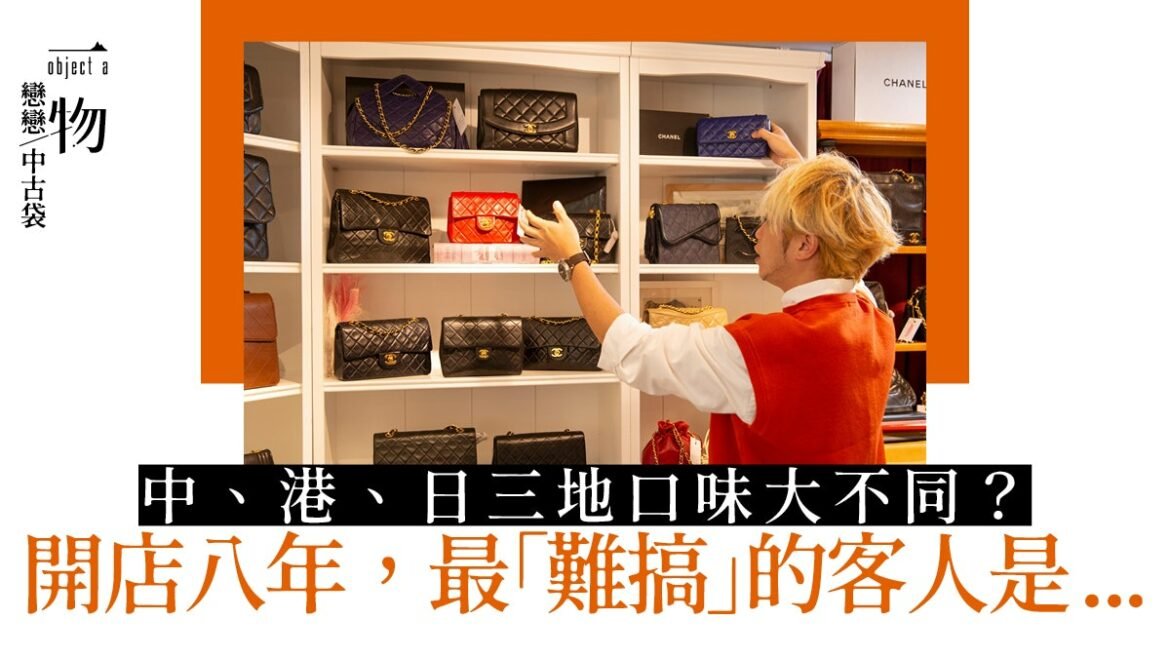
Lovintage founder Zijian began selling pre-owned handbags on eBay in 2012 and 2013. Eight years on, he had become a shop owner with monthly turnover of one million yuan. As the saying goes, starting a business is easy; sustaining one is hard. Over those eight years, Zijian faced plenty of “difficult and complicated problems.” In the second episode of [Love for Vintage Bags], we look at the “difficult” customers and situations Zijian has encountered, and explore how buyer preferences differ across mainland China, Hong Kong, and Japan.
Photography: Gong Jiasheng
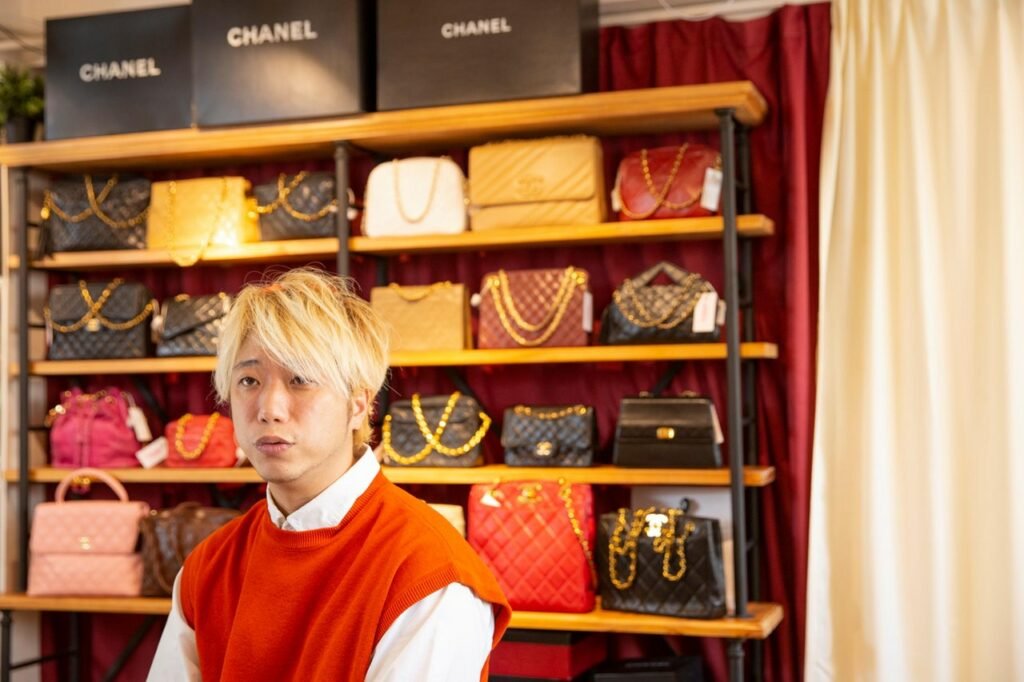
It is easy to start a business, but difficult to maintain it. In the eight years of running a business, Zijian has also encountered many “difficult problems”. (Photo: Gong Jiasheng)#
CHANEL is a brand many women dream of owning, but linking “CHANEL” with “second-hand” makes Lovintage’s success far less straightforward than it appears. The challenges boil down to two factors: fear of counterfeits and a lack of understanding about what “vintage” really means.
Shortly after returning to Hong Kong, Zijian found that the general public knew very little about pre-owned handbags and held many misconceptions. He recalled: “When we first came back to Hong Kong, we had not yet started retail locally, but we worked with companies in Shanghai and took part in auctions. Handbags sold extremely well there. At the time, almost no one in Hong Kong knew about pre-owned bags, there were no pre-owned handbag auctions in the city, and there still are none today.”
In the next article, Zijian will personally teach you some tips on second-hand bags. (Photo: Gong Jiasheng)#
Beyond the absence of auctions, many Hong Kong residents cannot even distinguish between “pre-owned” and “vintage.”
In industry terms, the key difference is that “pre-owned” covers any bag that has been used, while “vintage” refers to bags more than 20 years old. Zijian noted that the trade generally treats CHANEL bags made before 2005 as vintage.
For any culture to take root, the right conditions must exist and time must be allowed for it to develop. The Japanese once viewed second-hand shops unfavorably, but because such stores symbolize fashion and style in Europe and America — cultures the Japanese greatly admire — attitudes gradually shifted. A group of vintage experts then helped spark a local retro movement.
The vintage trend later spread from Japan across Asia, including Hong Kong. Vintage style is increasingly popular, and more pre-owned bag shops are opening, reflecting strong market demand. Yet as Zijian pointed out, Hong Kong has not fully developed that cultural foundation, so misunderstandings about “vintage” persist — and those misunderstandings give rise to many “strange and complicated problems.”
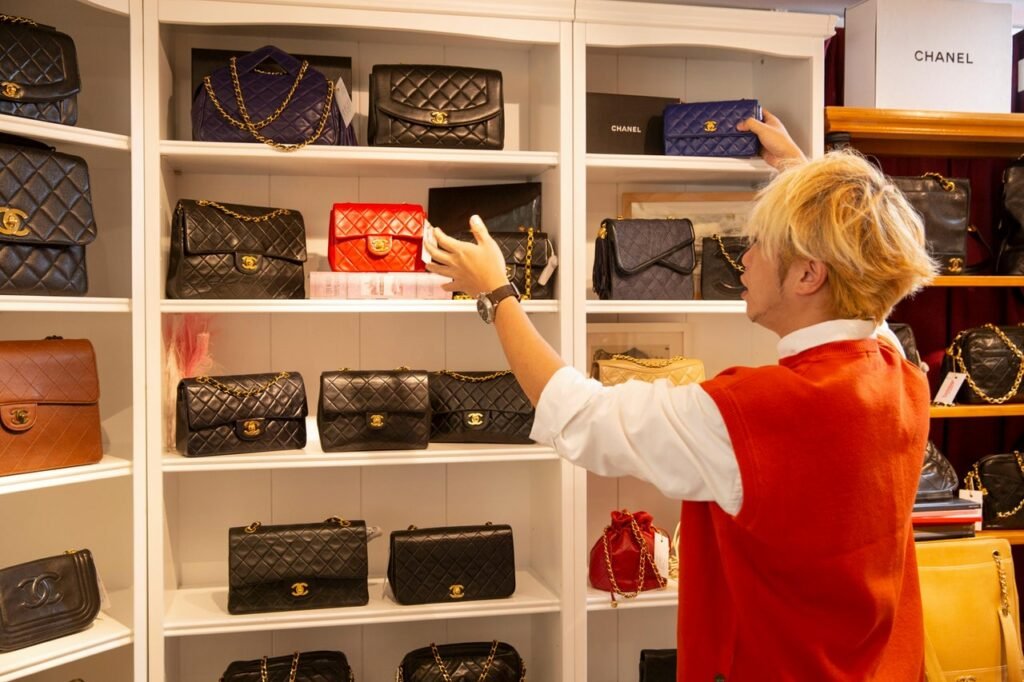
The knowledge of CHANEL handbags is as deep as the sea (Photo: Gong Jiasheng)#
Regarding vintage CHANEL bags, Zijian said many Hong Kong customers believe authenticity depends on having a serial number that matches the card. He offered an example: “A customer might accidentally mix up two serial numbers while inspecting a bag. When another customer notices, they insist the bag is fake. If you know the full story, you realize it is a minor misunderstanding. Think about it — this can happen in a small shop, and it can just as easily happen at auction houses in Japan.”
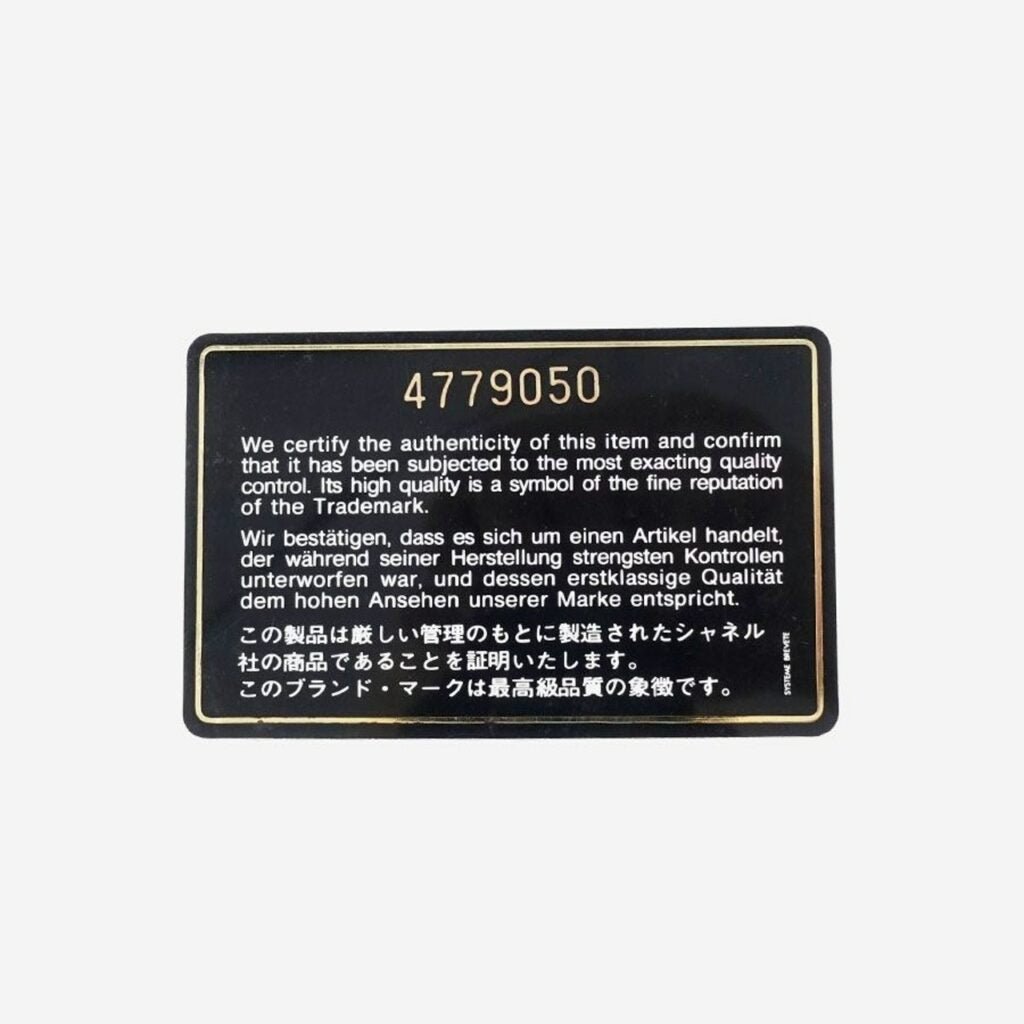
The number card has caused Zijian to encounter many “difficult” customers. (Lovintage)#
If a number card could prove authenticity, there would be no need for forensics in the world.
He cited another serial-number misconception: “A few years ago, a friend of a friend bought a bag from me. Later, the metal chain broke, so she took it to a CHANEL boutique for repair. She happened to meet a sales associate I considered less than professional. After searching the bag’s serial number on the computer and finding no record, the associate insisted it was fake. She later told me, ‘It does not matter — it is so normal if it is fake.’”
When Zijian learned what had happened, he asked her to hand over the bag and sent it to CHANEL Japan for repair. He sighed, “If an authenticity card alone could prove genuineness, forensic experts would be out of a job. It is not that simple. A vintage bag that has changed hands countless times over decades will often lose or damage its card along the way.” On one occasion, he spent two hours on the phone with a customer explaining exactly this.
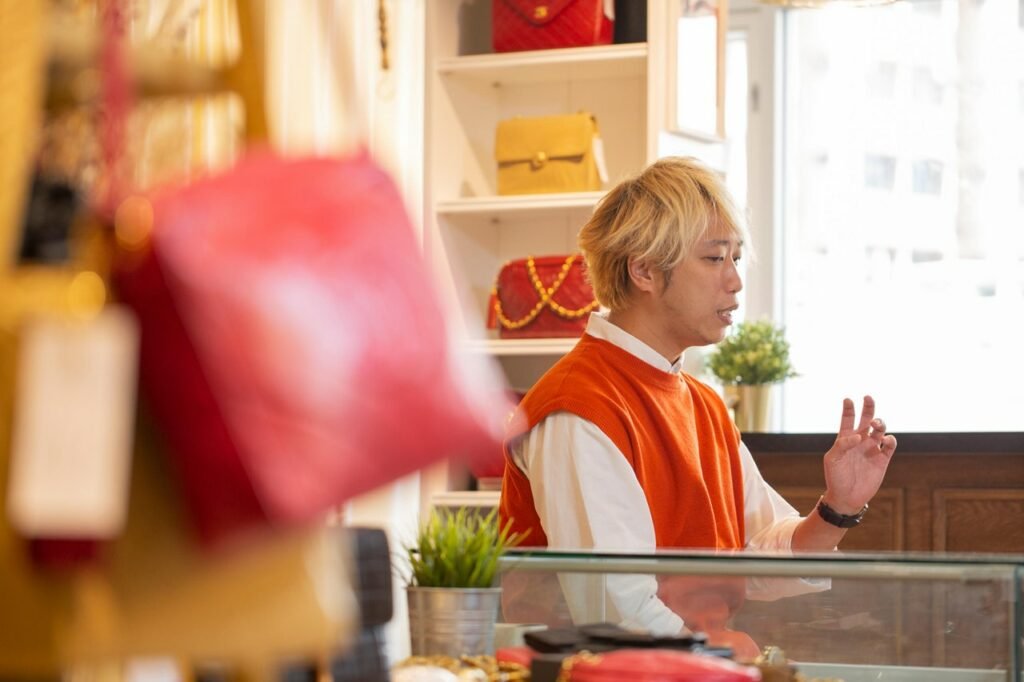
Zijian explains in detail how to distinguish the authenticity of CHANEL handbags (Photo: Gong Jiasheng)#
Beyond card-related issues, the exacting standards of Hong Kong buyers have created other challenges. Some expect near-mint condition at bargain prices. Zijian recalled customers who claimed they had bought fakes because a bag looked different from a friend or relative’s CHANEL, and others who compared two entirely different models and asked why they did not match. He said with a sigh: “Even within the same style, older CHANEL bags were largely handmade, so slightly crooked logos are perfectly normal.” He added that such customers are a minority, and that patience backed by evidence is the best response to these “difficult” situations.
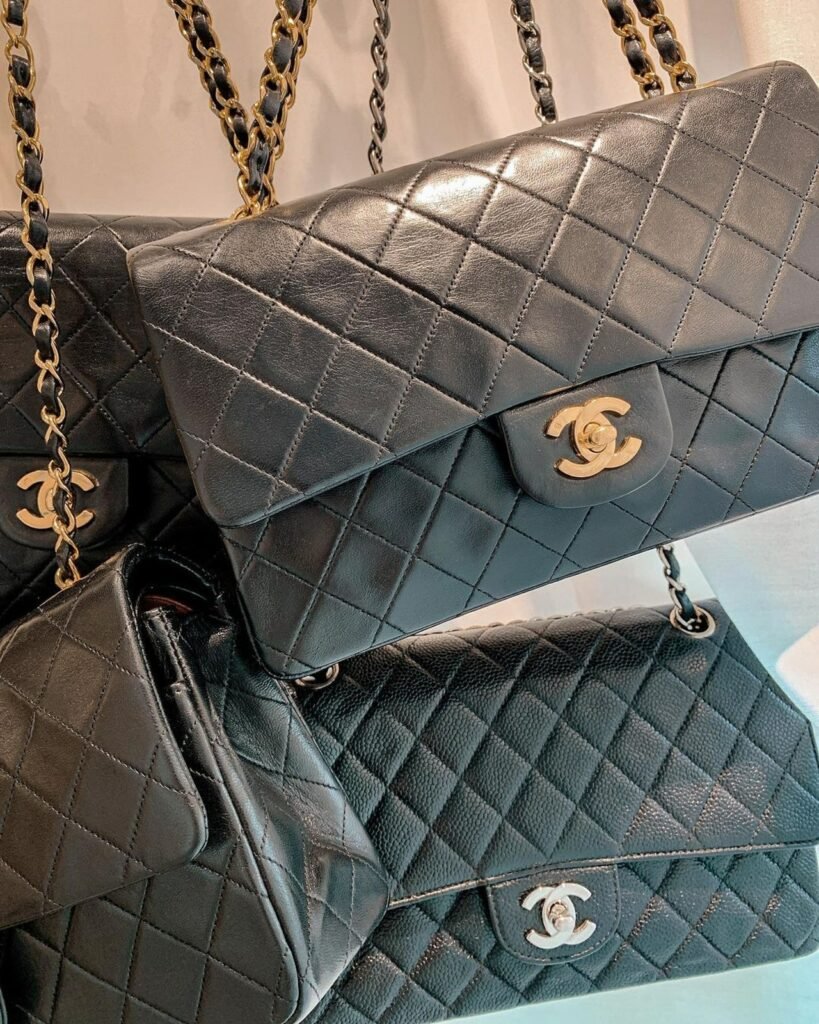
Zijian said: “Since second-hand CHANEL is all handmade, it is normal for the logo to be printed crookedly. " (Lovintage)#
After eight years in business, Zijian operates across Japan and Hong Kong. Before the pandemic, he also served many mainland customers. Asked about differences among the three markets, he said Japanese buyers generally spend less than those in Hong Kong and mainland China and are more accepting of wear on pre-owned bags. Hong Kong customers, meanwhile, tend to be more brand-enthusiastic and loyal than Japanese buyers. Japan’s local vintage market skews toward young women, while Zijian’s Hong Kong clientele is mostly mature ladies.
In terms of taste, Hong Kong consumers favor practical styles for everyday use. Mainland buyers are bolder and more open to the mini bags that have trended in recent years, though both groups gravitate toward classic CHANEL designs. When asked whether a mainland customer had ever walked in and said, “Except for this one and that one, I want everything else,” Zijian laughed and replied, “I want them all.” By contrast, a Hong Kong customer once bought five or six CHANEL bags in a single visit, spending nearly 100,000 yuan. Experts are everywhere, and Hong Kong’s spending power should never be underestimated.
【Love for Vintage Bags】In the third episode, Zijian will share practical knowledge about vintage handbags and showcase several exceptionally rare and valuable vintage CHANEL pieces. Stay tuned.
Related guides
- Online Bag Authentication: What Photos Can and Cannot Prove
- Fake Goyard Bag Guide: How to Spot Real vs Fake (2026)
- How to Spot a Fake Chanel Flap Bag: Authentication Guide
- How to Spot a Fake Hermès Birkin: Expert Checklist
- How to Buy an Authentic Luxury Bag from China Safely
- New vs Pre-Owned Luxury Bags: Which Route Is Right for You?
- Chanel Bag Guide: What to Know Before You Buy
- Luxury Bag Houses

Keyword index