How to Spot a Fake [Hermès Birkin Bag](/brands/kelly-vs-birkin-hermes-bags-buying-guide/)#
Introduction#
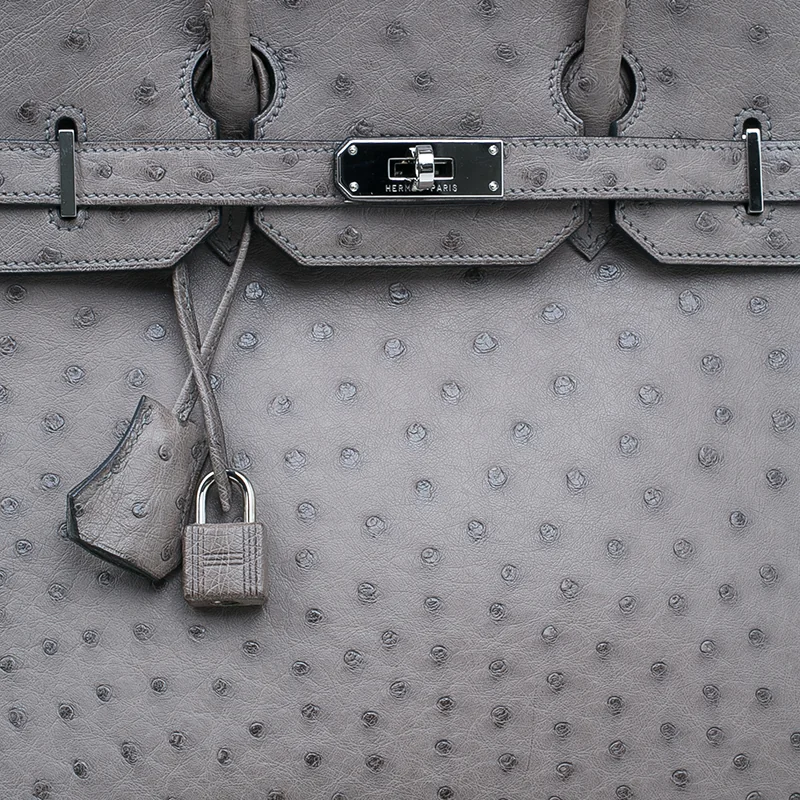
Ask any handbag specialist how much of the “Hermès” inventory circulating on resale sites, social media marketplaces and even some brick-and-mortar consignment shops is genuine, and you’ll get a sobering answer. Estimates from authentication services and customs seizure reports consistently put counterfeit Birkin volume in the double digits of overall market listings, and in some secondary channels, fakes reportedly outnumber the real thing. That’s not a scare tactic, it’s the reality of buying the world’s most counterfeited handbag.
The Birkin’s combination of extreme scarcity, six-figure resale potential and near-universal brand recognition makes it the single most profitable bag for counterfeiters to replicate. Unlike a logo-heavy monogram bag, a Birkin’s authenticity lives in details most buyers never think to check: the weight of a turn-lock, the angle of a saddle stitch, the placement of a blind stamp inside the strap. I’ve handled hundreds of Birkins over the years, genuine and fake, and the fakes have gotten remarkably good. Some pass a glance-level inspection. Very few pass a full physical exam.
This guide walks through that exam step by step, in the order I’d actually inspect a bag if it landed on my desk: exterior craftsmanship first, then hardware, then leather and stamps, then the interior details buyers routinely skip, and finally the non-physical warning signs that often tell you a bag is fake before you’ve even touched it. None of these checks require insider access or lab equipment. They require patience and knowing exactly where to look.
Craftsmanship Clues: Stitching, Handles and Bag Shape#
Start with the stitching, because it’s the fastest way to weed out a low-effort fake. Every Birkin is hand-cut and hand-stitched by a single craftsperson using a saddle stitch, a technique where two needles pass through the same hole from opposite sides. Done by hand, this produces stitches that are slightly uneven in a natural, organic way, but always straight in their line, evenly spaced, and tight against the leather with no slack.
Run your finger along a seam rather than just looking at it. Machine-stitched fakes often look convincing in photos but feel wrong: stitches sit in a perfectly uniform grid (too mechanical), or they wander slightly off the seam line (too sloppy). Check the stitch count too. Hermès is precise about stitch density per panel, and while I won’t pretend most shoppers have memorized exact counts, a Birkin with visibly fewer, larger stitches than a reference bag of the same size and leather is a strong warning sign. Pay particular attention to the base corners and the point where the handles attach to the body, these are the highest-stress, highest-difficulty areas, and where corner-cutting on a fake shows up first.
Next, let the bag stand on a flat surface without anything propping it up. A genuine Birkin holds its shape: the sides stay taut, the base sits flat and square, and the silhouette doesn’t slouch or lean. Cheaper leather and less rigid internal structure cause fakes to sag, bulge at the sides, or list to one direction. The handles matter just as much. Authentic Birkin handles are stiff enough to stand upright on their own when the bag is empty, with a clean, slightly flattened oval cross-section. Rounded, floppy, or unevenly shaped handles, or handles that flop to one side, almost always indicate poor-quality leather and a counterfeit build.
One honest caveat: a well-loved genuine Birkin, especially in a softer leather like Togo or Clemence, will develop some natural slouch with age and use. Structure alone isn’t a definitive test on a worn bag, but excessive, uneven slouching on a bag advertised as lightly used is worth questioning.
Hardware and Metal Fittings#
Hardware is where I spend the most time on any inspection, because it’s expensive to fake well and counterfeiters routinely cut corners here to save cost. Genuine Birkin hardware is solid brass, plated in gold or palladium, or in higher-tier pieces, made from palladium itself. That means real weight. Pick up the bag by the handles and feel the turn-lock, the clochette (the little bell-shaped padlock cover), and the base studs. They should feel substantial, not hollow or tinny. Fakes frequently use lightweight zinc alloy that plates well in photos but feels noticeably cheap in hand.
Look closely at the finish. Genuine plating is smooth, consistent and doesn’t show brassing, pitting or discoloration except through years of honest wear. Fake hardware often has a slightly too-shiny or too-yellow gold tone, visible seams from the casting process, or a finish that’s already flaking on a “new” bag.
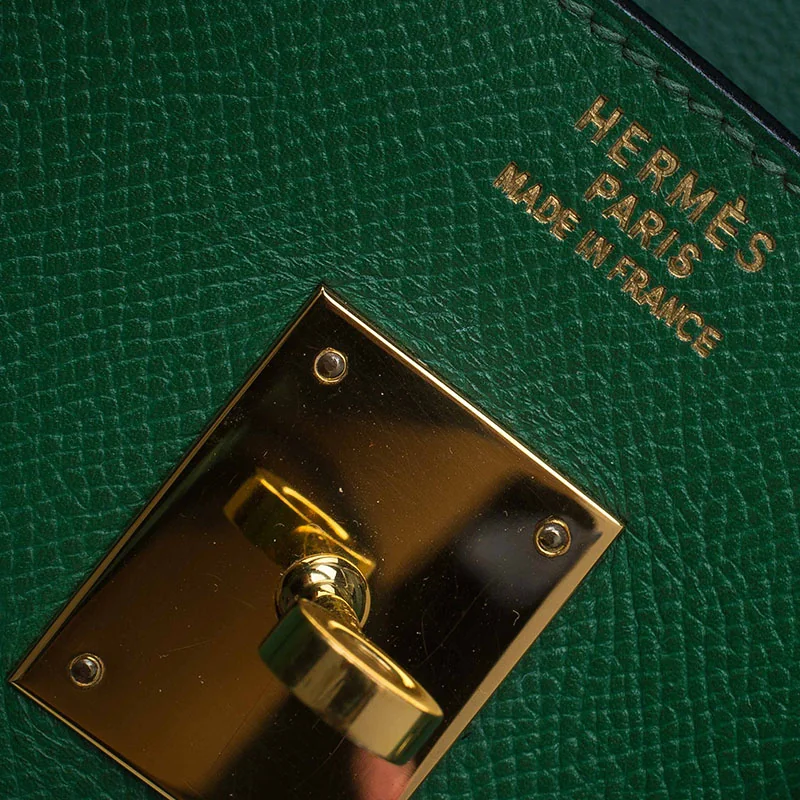
Check the engravings. The Hermès stamp on the front of the lock and the back of the padlock should be crisp, evenly weighted and centered, with clean serifs on the lettering. On fakes, engraving is often shallow, blurry, slightly off-center, or spaced incorrectly. If the bag has a blind stamp date code stamped into the metal lock (used on some vintage pieces) or a separate square stamp for the year, verify that the format matches the era the seller claims for the bag.
Also examine the small hardware pieces most people ignore: the keys should have weight and a clean cut, the key ring should be soldered smoothly, and the clochette’s leather strap should be neatly finished at the fold. Loose threads, glue residue or uneven leather folding around any hardware attachment point is a bad sign on a bag supposedly made to Hermès standards.
Leather Quality and Blind Stamps#
Leather is where Hermès spends the bulk of its production cost, and it’s genuinely difficult to fake convincingly, though not impossible for a trained eye to miss on a rushed inspection. Authentic Birkin leathers, whether Togo, Epsom, Clemence, Swift or an exotic like porosus crocodile, have a distinct grain pattern, weight and hand-feel specific to that leather type. Togo, for instance, has a pebbled, scar-like grain that runs in a slightly irregular pattern and feels supple but structured. Epsom has a more uniform, pressed cross-hatch grain and a stiffer feel. If a leather type looks “off” compared to reference images from Hermès or a trusted authenticator, that’s worth pausing on, because replicating the exact tanning and embossing process is one of the hardest things for counterfeiters to nail.
Smell is an underrated test. Genuine Hermès leather has a rich, slightly sweet, distinctly “expensive” scent from the vegetable tanning process. Cheap PVC or bonded leather fakes often smell chemical, plasticky, or faintly of glue, especially noticeable when the bag is new or the interior is unzipped.
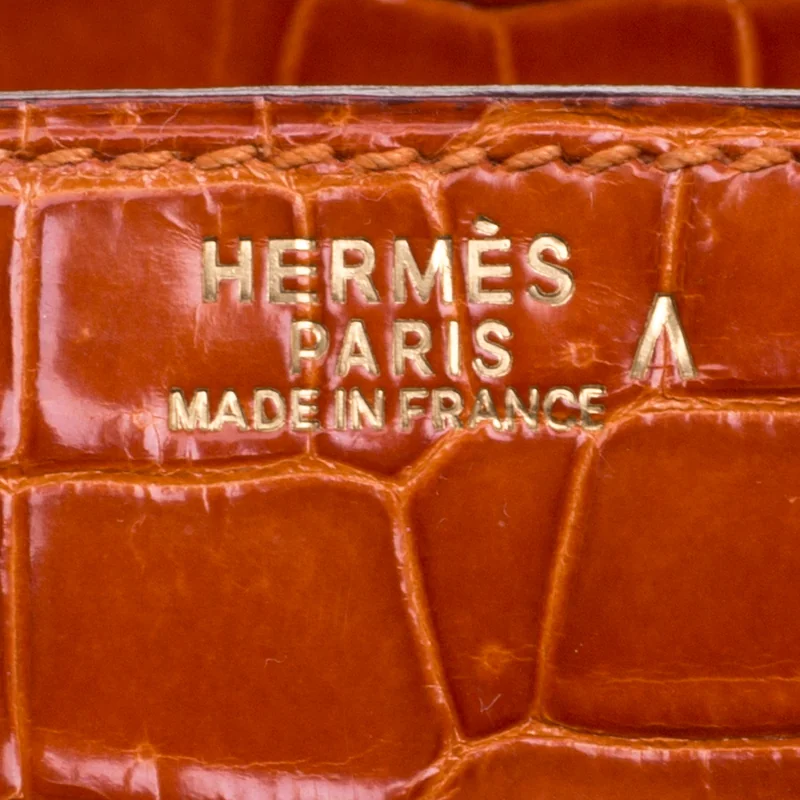
The blind stamp is one of the most reliable physical checks, and one of the most misunderstood. This is a small stamp, usually found on the leather strap near the base of the handle attachment or on the underside of a strap, that identifies the individual craftsperson who made the bag along with a number. It’s typically a stylized shape (a circle, square, diamond, oval, and so on depending on the era) containing a letter and number combination. It should be cleanly and evenly stamped, not smudged, doubled, or crooked. Counterfeiters often skip the blind stamp entirely, place it in the wrong location, or use a generic stamp that doesn’t correspond to any known craftsperson code. Note that the exact shape and placement of the blind stamp changed over decades of production, so cross-reference against the claimed year of manufacture rather than assuming there’s one universal format.
Interior Markings: Date Stamps, Lock and Keys#
The interior of a Birkin holds some of the most reliable authentication evidence, and it’s exactly what most casual buyers skip because it requires actually opening and digging into the bag rather than admiring it from the outside.
Look for the date stamp, a small embossed or blind-stamped code (letter inside a shape) indicating the year of manufacture, typically located near the blind stamp on the strap or inside the bag on a leather tab. Hermès has used a consistent letter-coding system across specific year ranges, and a bag whose seller-claimed year doesn’t match its stamp format is an immediate red flag. If you’re not confident reading these codes, a professional authenticator can confirm it in minutes, but knowing the stamp exists and checking that it’s present, legible and plausible is a check any buyer can do themselves.
Examine the lock mechanism itself, not just the exterior turn-lock but how it engages. Genuine Hermès locks turn smoothly with a satisfying, precise mechanical action and the key should insert and turn cleanly without force. Fakes often have locks that feel loose, sticky, or gritty, or that don’t fully engage the closure. The keys themselves should match in finish and weight to the rest of the hardware, stamped with the Hermès name, and the number etched on the key should correspond to the number on the lock, this pairing is a genuine security feature Hermès uses, and mismatched numbers between a lock and its supposed matching keys is a serious problem.
Check the interior lining and pocket construction. Depending on the leather and era, the interior may be lined in matching leather or a canvas-style material, but either way, stitching quality inside should match the exterior: even, tight and free of loose threads. A zip pocket, if present, should have a smooth-running, well-finished zipper, often branded, and the pocket itself should be stitched with the same precision as the bag’s exterior. Sloppy interior work is one of the most common places counterfeiters cut corners, since they’re betting buyers focus their scrutiny outside the bag.
Red Flags Beyond the Bag: Price, Packaging and Seller Reputation#
Some of the most reliable tells have nothing to do with stitching or hardware at all.
Price is the first and most obvious signal. Birkins do not sell below market value, full stop. Hermès doesn’t discount them, retail allocation is famously restrictive, and resale prices for genuine bags in good condition typically hold or exceed original retail, sometimes significantly, depending on size, leather and hardware. If you see a “Birkin” priced dramatically below what comparable authenticated examples are selling for, that price is doing the talking, and it’s telling you the bag isn’t real. There’s no such thing as a hidden Birkin bargain from an unverified seller.
Packaging matters, but it’s also the easiest thing for counterfeiters to fake convincingly, so don’t rely on it alone. A genuine retail Birkin ships in a Hermès box with the correct proportions, a felt or dust protection layer, and a dust bag in the correct light beige or orange tone with a dark brown stamped logo and a matching cotton drawstring. One detail worth flagging clearly: Hermès does not issue a plastic “authenticity card” with its handbags the way some other luxury brands do. If a seller presents an orange plastic card as proof of authenticity, that’s not a Hermès practice, it’s a counterfeiter’s addition, and it should raise suspicion rather than reassure you.
Seller reputation is where I’d put the most weight for a purchase at this price point. Unverified individual sellers on general marketplaces, especially those unwilling to provide close-up photos of blind stamps, date codes and hardware engravings, or those pressuring a fast decision, are the highest-risk channel by a wide margin. Watermarked or low-resolution stock-style photos instead of real images of the actual bag, inconsistent stories about provenance, and refusal to allow a third-party authentication before payment are all patterns worth walking away from, regardless of how good the price looks.
Where to Buy an Authentic Hermès Birkin Safely#
The most reliable way to buy a Birkin, new, is directly through an Hermès boutique, though buyers should go in with realistic expectations: Birkins are not typically available to purchase on demand. Allocation is relationship-based, often requiring an established purchase history with a specific store and sales associate before you’re offered one. This system is a genuine source of frustration for new luxury shoppers, and it’s exactly why the resale market exists at the scale it does.
For resale or pre-owned purchases, stick to established platforms and consignment houses with in-house authentication teams and a public, standing reputation, rather than peer-to-peer marketplaces with minimal seller vetting. Reputable resellers will typically provide detailed photos of the blind stamp, date stamp and hardware engravings before purchase, and stand behind the bag with a return policy or authenticity guarantee. That guarantee matters: it shifts the risk off the buyer and gives you real recourse if something is wrong.
If you’re buying privately, through an estate sale, a friend, or a marketplace listing, factor the cost of independent third-party authentication into your budget and timeline. Services that specialize in Hermès authentication can review detailed photos or physically inspect the bag and provide a written opinion, and this cost is trivial compared to the risk of losing tens of thousands of dollars on a counterfeit. I’d treat this as a non-negotiable step for any private-party Birkin purchase, not an optional nicety.
Whichever channel you choose, ask for and keep documentation: original receipt, box, dust bag, and any authentication paperwork. Beyond peace of mind, this paper trail materially affects resale value down the line, since buyers on the collector market pay a premium for full, documented provenance.
FAQ: Common Questions About Fake Hermès Birkin Bags#
How can I tell if a Birkin is real without seeing it in person? You can get a strong read from detailed, high-resolution photos of the blind stamp, date stamp, hardware engravings and stitching, but photos have limits, especially for leather feel, hardware weight and smell. For a five- or six-figure purchase, I wouldn’t rely on photos alone. Request a video call walk-through or use a professional authentication service before finalizing payment.
Does Hermès offer an authenticity card with the Birkin? No. Hermès does not include a plastic authenticity card with its handbags. If a seller offers one as proof, treat it as a warning sign rather than reassurance, it’s a detail counterfeiters commonly add because they assume buyers expect it.
Are all fake Hermès Birkin bags poor quality? Not anymore. The best “super fakes” use decent leather, get the general silhouette right, and can fool a casual glance or even a moderately trained eye on photos alone. This is exactly why physical, detail-level checks, stitching, blind stamps, hardware weight, interior date codes, matter more than ever.
Can I authenticate a Birkin myself, or do I need a professional? You can catch obvious fakes yourself using the checklist in this guide, particularly stitching quality, hardware weight and the absence of a plastic authenticity card. But for a purchase at this price point, especially from a private seller, I’d still recommend a professional authentication service as a final check. It’s a small cost relative to the risk.
Do genuine Birkin bags always have a blind stamp? Yes, every genuine Birkin has a craftsman’s blind stamp, though its exact shape, letter and placement vary depending on the year of manufacture. A missing, smudged, or clearly mismatched-to-era blind stamp is one of the most reliable red flags available to buyers.
Why are Birkin bags counterfeited so heavily compared to other [[luxury handbags](/buying-guides/most-loved-chloe-bags-collection/)](/buying-guides/designer-must-have-bags/)? The combination of extreme retail scarcity, high resale value and instant brand recognition makes the Birkin uniquely profitable to fake. Unlike bags that rely on visible logos, which are relatively easy to replicate, the Birkin’s authenticity markers are hidden in craftsmanship details, which historically discouraged casual counterfeiters but hasn’t stopped increasingly sophisticated ones.
Related Articles#
- Best It Bags to Buy This Year: A Definitive Guide
- Hermès Leathers Guide: Togo, Epsom, Exotic Skins Explained
- Authentic vs Fake Hermès Kelly Bag: How to Tell
- Popular Handbag Brands: Which One Is Right for You?
- Best Time to Buy a Luxury Handbag: Save More in 2025
Related guides
- Online Bag Authentication: What Photos Can and Cannot Prove
- Fake Goyard Bag Guide: How to Spot Real vs Fake (2026)
- How to Spot a Fake Chanel Flap Bag: Authentication Guide
- How to Spot a Fake Hermès Bag: Authentication Guide
- How to Buy an Authentic Luxury Bag from China Safely
- New vs Pre-Owned Luxury Bags: Which Route Is Right for You?
- Chanel Bag Guide: What to Know Before You Buy
- Luxury Bag Houses


Keyword index