Introduction#
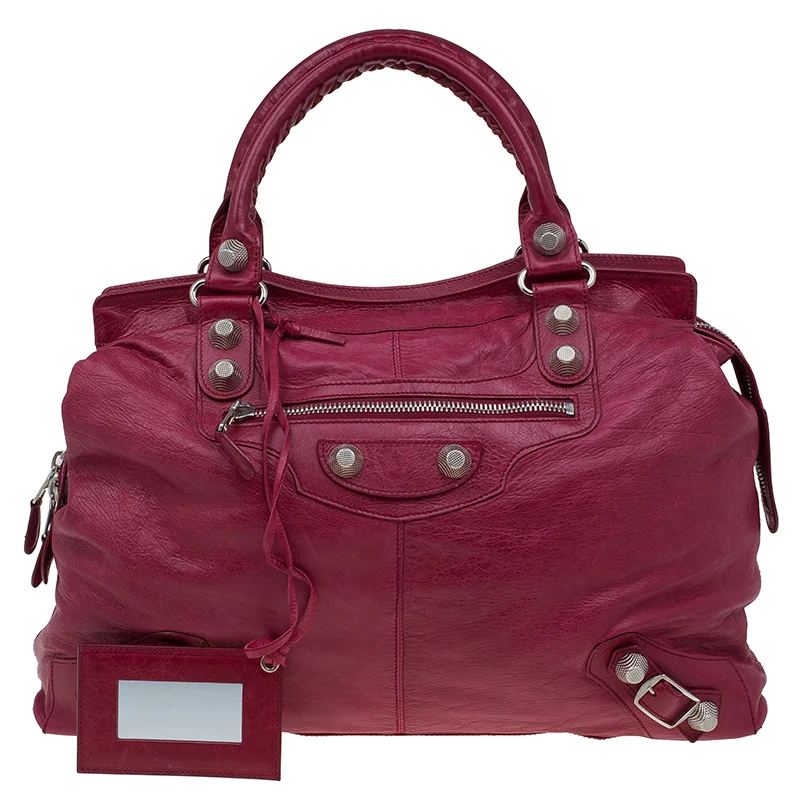
[Balenciaga](/authentication/how-to-authenticate-balenciaga-bag/)’s leather goods hold up remarkably well on the resale market, which is exactly why they’ve become such a magnet for counterfeiters. The City bag, the Neo Classic, the Hourglass, the All Afternoon tote — these aren’t just popular silhouettes, they’re pieces that hold real value years after their original season. That combination of desirability and strong resale pricing is precisely what makes a market flood with fakes.
I’ve handled hundreds of Balenciaga bags over the years, both authentic and counterfeit, and the fakes have gotten noticeably better. Ten years ago you could spot a bad one from across a room. Today, some replicas get the silhouette, the hardware color, and even the leather texture close enough that casual buyers get fooled. This is not a guide built on guesswork — it’s built on the specific, physical details that actually separate real from fake, and where sellers and counterfeiters tend to slip up.
If you’re buying secondhand or through resale platforms, treat authentication as part of the purchase price. A bag that’s 20% cheaper than comparable listings isn’t a deal if it’s not real.
Check the Main Label, Style Number and Engravings#
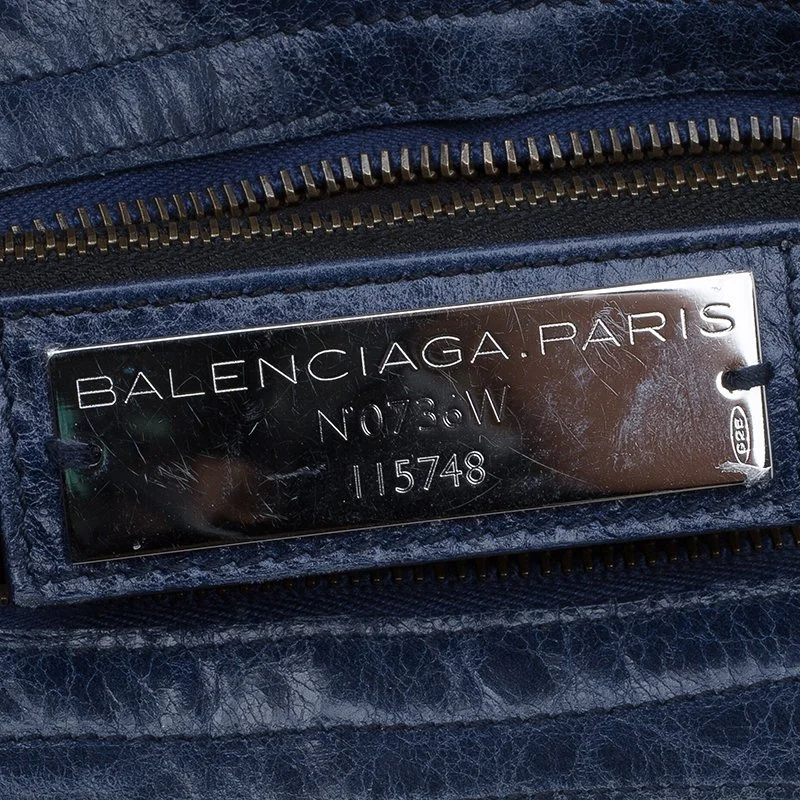
Every authentic Balenciaga bag carries a style number etched into the metal main label, and that number corresponds to a specific bag design. This is your first and easiest checkpoint. Look up the style number against the actual silhouette you’re holding — a real City bag will have a City-appropriate number, not a random string or a number lifted from a completely different style. Counterfeiters frequently get lazy here, either duplicating a number from another Balenciaga model or stringing together digits that don’t correspond to anything at all.
The wording on the label itself has changed in ways that can actually help date a bag. Before 2005, the main label read “Balenciaga_Paris” with an underscore between the two words. From 2005 onward, that underscore was replaced with a period. If a bag is represented as pre-2005 but shows the period, something’s off.
Metal composition matters too. Before 2008, the main label plates were sterling silver and stamped “925.” After that, Balenciaga moved to nickel plates. A bag claiming to be from an earlier era with a nickel plate — or a “925” stamp on a bag sold as more recent — is a red flag worth pausing on.
Examine Interior Labels and Stitching#
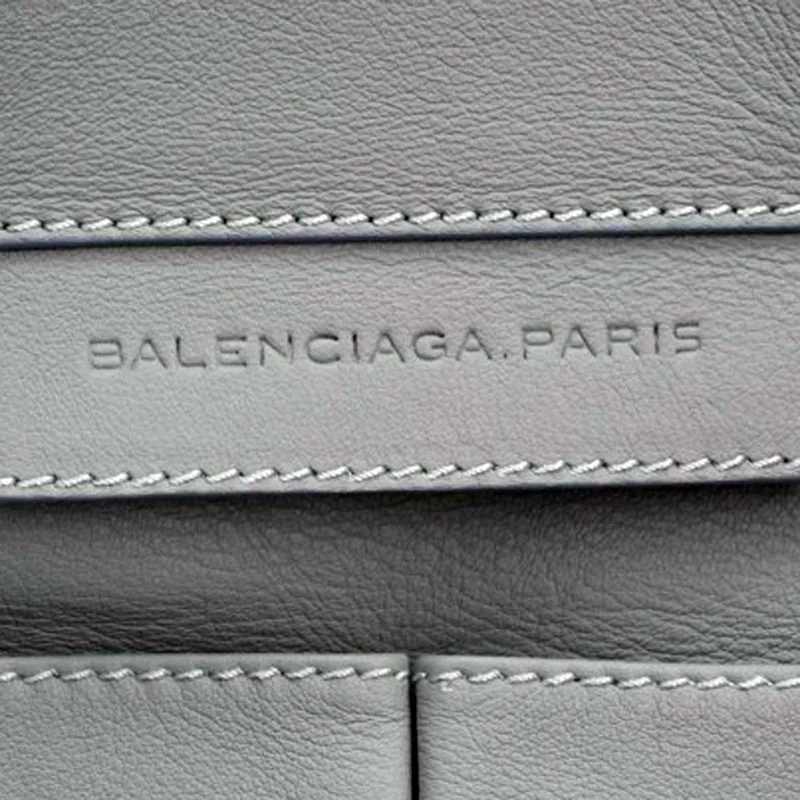
The interior label is one of the more reliable authenticity markers, and it’s also one buyers tend to skip because it’s less visible in photos. Depending on the era, you’ll find either an etched metal nameplate or a leather-stamped label inside the bag. On a genuine Balenciaga, that stamping is clean, evenly pressed, and crisp — no blurring, no uneven depth, no letters that look slightly off-kilter.
Stitching is where I see counterfeiters cut corners most often. Regardless of the bag’s exterior color — black, red, pale pink, whatever the season’s palette — Balenciaga uses black thread throughout. If you’re looking at a burgundy or tan bag with matching-colored stitching, that’s inconsistent with how the brand actually constructs its bags. Beyond color, look at stitch spacing and tension. Authentic construction is even and tight; fakes often show slightly irregular spacing or loose threads, especially around stress points like handle attachments.
Inspect the Hardware and Zippers#
Hardware is where Balenciaga’s identity really lives, and it’s also one of the hardest things for counterfeiters to nail because the finishes are specific and the tooling has evolved across eras.
Start with the zipper pulls. On an authentic bag, the pull should be properly soldered (not glued or crimped) and marked with “Lampo,” the brand’s longtime zipper manufacturer. Zippers should match the rest of the hardware finish, and the bales connecting the shoulder strap to the body should be rounded, not flat or sharp-edged. Fake hardware tends to run too shiny or too yellow — genuine Balenciaga hardware has a slightly matte, worn-in quality even when new.
It also helps to know the hardware families, since they map to specific eras and can help you spot an anachronism:
- RH — Regular Hardware, brass
- FBH — Flat Brass Hardware, the earliest style, rarely seen in circulation now
- PH — Pewter Hardware, used on 2003–2004 bags
- RGGH G21 — Rose Gold Giant Hardware, now referred to as Giant 21 Gold City
- GSH/SGH G21 — Silver Giant Hardware, now referred to as Giant 12 Silver City
- GCH — Giant Covered Hardware, where the metal is wrapped in leather
Size designations matter here too. The G21 was the largest hardware size before being phased out in favor of the G12, and the Mini Giant Hardware sits between the G21 and standard hardware sizing. One detail that trips up a lot of casual sellers: Balenciaga has not produced rose gold hardware since Spring/Summer 2013. Any bag marketed as newer with rose gold fittings should raise an immediate question.
Assess Leather Quality and Craftsmanship#
This is the section where hands-on experience really pays off, because leather quality is hard to fake convincingly and hard to describe from photos alone.
Balenciaga’s signature is distressed, veined leather that’s genuinely soft to the touch but still structurally sturdy — it’s not delicate, but it’s also not stiff. Run your hand over an authentic bag and you’ll feel natural variation in the surface; the veining is a real characteristic of the hide, and over time it can develop light white marking, which is normal aging, not damage. Fakes frequently use leather that’s uniformly smooth with no organic texture, or worse, leather with veining printed on rather than occurring naturally. Printed veining looks flat and repeats in a way real hide never does.
The handles deserve a separate look. Balenciaga calls this “sueded leather” — a raw, unfinished appearance rather than a glossy, coated one. There’s no protective topcoat on genuine handles, which is part of why they age and patina the way collectors like. A handle that feels lacquered or plasticky is a strong indicator of a fake.
Construction details back this up. Since 2005, the front pocket on Balenciaga bags is partially lined in leather. Unzip it and you shouldn’t see raw black canvas exposed — if you do, that’s inconsistent with how the brand builds its bags post-2005. Also check the shoulder strap: it should be one continuous piece of leather with openings cut at the ends for the hardware, not a detachable strap wrapped in plastic and tucked inside a dust bag, which is a common shortcut on replicas.
Two smaller details worth checking: the mirror, usually attached to the handle and stored in the exterior pocket with a leather frame, should already be attached on a genuine bag rather than loose in bubble wrap. And the zipper tassels should feel as soft and supple as the bag itself — stiff, short, or mismatched-color tassels are a tell.
Watch for Red Flags: Price, Packaging and Seller Reputation#
Physical inspection matters, but plenty of fakes get caught before you ever touch the bag, just by paying attention to context.
Price is the most obvious signal. If a listing is priced dramatically below the going resale rate for that style and condition, ask why before you ask for photos. Legitimate sellers price competitively, not suspiciously.
Packaging inconsistency is another tell I watch for. Balenciaga’s dust bags, boxes, and care cards have specific fonts, materials, and proportions that have stayed fairly consistent within eras. Blurry logos, wrong fonts, or a dust bag that feels like cheap synthetic material rather than the brand’s actual felt-like cotton are worth flagging, even if the bag itself looks convincing.
Seller reputation carries real weight here. A private seller with no transaction history, no return policy, and reluctance to provide close-up photos of the label, hardware, and stitching should make you cautious. Established resale platforms and consignment stores that authenticate in-house are a meaningfully safer starting point than an anonymous marketplace listing, even if the price looks slightly better elsewhere.
Where to Buy an Authenticated Balenciaga Bag#
If you’re buying secondhand, the safest route is a platform or consignment house that performs its own authentication before listing, rather than relying solely on your own inspection from photos. Reputable resale sites typically have in-house specialists who physically examine hardware, stitching, and leather before a bag goes live, and many will provide a certificate of authenticity or guarantee.
When you’re evaluating a seller directly, ask specific questions rather than general ones: request close-up photos of the interior stamping, the main label engraving, the zipper pull markings, and the underside of the hardware. A legitimate seller will have no problem providing these. Hesitation, vague answers, or stock photos instead of the actual item are reasons to walk away.
For higher-value pieces — Giant Hardware City bags, limited editions, or anything priced at a premium — it’s worth paying for a third-party authentication service before finalizing the purchase, especially on peer-to-peer marketplaces without built-in guarantees. The fee is small relative to the protection it buys.
Quick Authentication Checklist#
- Style number etched on the main label matches the actual bag silhouette
- Label wording reflects the correct era: underscore before 2005, period after
- Metal plate is sterling silver stamped “925” pre-2008, nickel after
- Interior stamping is crisp and evenly pressed, not blurred or shallow
- Stitching is black regardless of exterior leather color
- Zipper pulls are soldered and marked “Lampo”
- Hardware finish and size match a known era (RH, FBH, PH, GSH, GCH) with no rose gold after SS13
- Leather has natural veining and texture, not a printed pattern
- Handles are raw sueded leather, not glossy or coated
- Front pocket is leather-lined since 2005, with no exposed black canvas
- Shoulder strap is one continuous piece, not detachable and bagged separately
- Mirror is attached, not loose in packaging
- Zipper tassels are soft and color-matched, not stiff or short
- Price, packaging, and seller history are all consistent with a legitimate sale
FAQ#
Can I authenticate a Balenciaga bag from photos alone? You can rule out obvious fakes, but a full authentication really requires close-up images of the label, stitching, hardware markings, and leather texture — and ideally, an in-person or third-party physical check for anything above entry-level pricing.
Does the “925” stamp guarantee a bag is authentic? No single detail guarantees authenticity on its own. The “925” stamp is only correct on bags made before 2008; it needs to line up with the label wording, hardware era, and construction details to mean anything.
Why do Balenciaga bags hold [resale value](/buying-guides/sneaker-trends-2025-styles-worth-the-hype/) so well? Limited production runs on certain hardware and colorways, strong brand recognition, and leather that ages into a desirable patina rather than looking worn out all contribute. Giant Hardware and rare colorways in good condition tend to hold value best.
Is it safe to buy a Balenciaga bag with no interior label? Be cautious. Every authentic Balenciaga carries some form of interior marking, whether etched metal or leather stamping. A complete absence of any interior label is a serious red flag, not a quirk of an older production run.
Should I trust a seller who offers a “certificate of authenticity” with no other proof? Certificates alone are easy to fake and mean little without supporting documentation or a reputable authenticator’s name attached. Treat them as one data point, not proof on their own.
Related Articles#
- Why the Chanel Crossbody Bag Never Goes Out of Style
- How to Spot a Fake Burberry Bag: Full Guide
- 4 Reasons Bally Bags Are Worth Buying: A Buying Guide
Related guides
- Online Bag Authentication: What Photos Can and Cannot Prove
- Fake Goyard Bag Guide: How to Spot Real vs Fake (2026)
- How to Spot a Fake Chanel Flap Bag: Authentication Guide
- How to Spot a Fake Hermès Birkin: Expert Checklist
- How to Buy an Authentic Luxury Bag from China Safely
- New vs Pre-Owned Luxury Bags: Which Route Is Right for You?
- Chanel Bag Guide: What to Know Before You Buy
- Luxury Bag Houses


Keyword index